
Locally Owned & Operated
About Fullerton Water Damage Pros
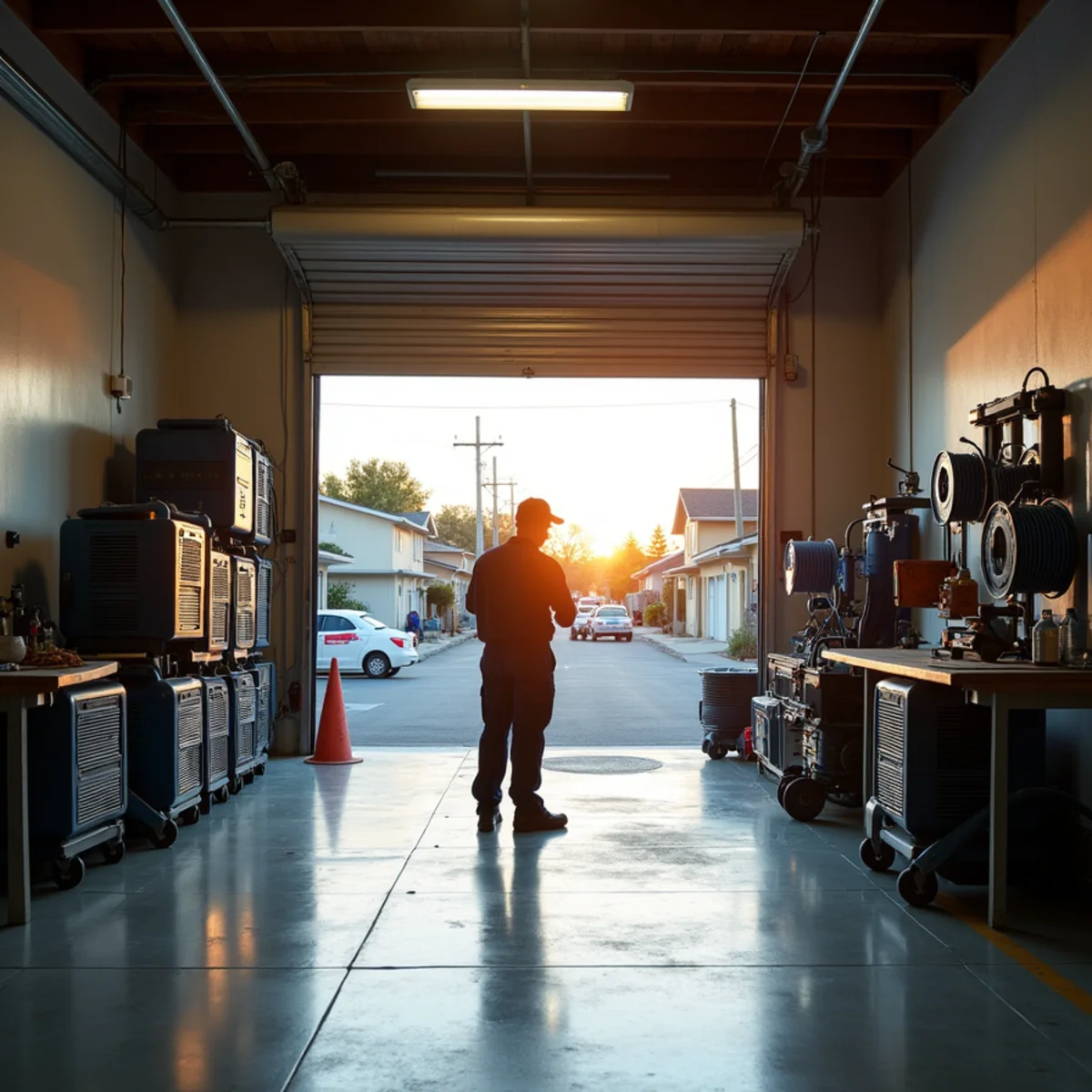
A Fullerton restoration company, not a franchise territory. Our trucks stage on S Raymond Ave, the person who answers your call dispatches the crew, and the project manager who writes your scope walks the final punch list with you.
- On-site in 60–90 minutes
- IICRC-aligned · licensed & insured
- Staged on 1500 S Raymond Ave
Our Story
Built around the losses this city actually has
Downtown, Lemon Park and the Heritage streets hold 1920s to 1940s houses still running original or first-replacement galvanized supply lines. Galvanized corrodes from the inside out. It does not warn you loudly — it weeps for weeks, then it splits, usually inside a lath-and-plaster wall that takes twice as long to dry as drywall.
The 1950s through 1970s tracts across Sunny Hills, Valencia, Commonwealth and West Fullerton were poured slab-on-grade on expansive clay. That clay swells every wet winter and shrinks every dry summer, the slab flexes, and the copper cast into it abrades. Add Orange County’s hard water at 14 to 25 grains per gallon and you get pinhole leaks in pipe that performed perfectly for forty years.
Then there is water from outside. Roughly 14 inches of rain a year, nearly all of it between November and March, arriving in a handful of hard storms rather than steady drizzle. Coyote Creek runs along the north and east edge of the city, and the low flats south of Commonwealth have no grade to shed anything.
And the city’s own network: roughly 420 miles of water main, about half of it more than fifty years old by the city’s own estimate.
None of that is visible from a phone description, which is why we map every loss with meters before we decide anything.
What we will not do
- Quote a restoration over the phone. A real estimate needs moisture readings. Anyone giving you a firm number sight-unseen is guessing or building in a margin for the guess.
- Publish testimonials we wrote. Every review on this site will be a verified customer review, published verbatim and with permission — which is why that page is currently empty rather than full.
- Sell you a repipe. We are a restoration company, not a plumbing contractor. We tell you what we saw inside the wall and you make the decision with your plumber.
- Dry the room you can see and leave. If the wall cavity two rooms away is still wet, the job is not finished, regardless of what the surfaces feel like.
Standards
How we work, in four commitments
The response promise
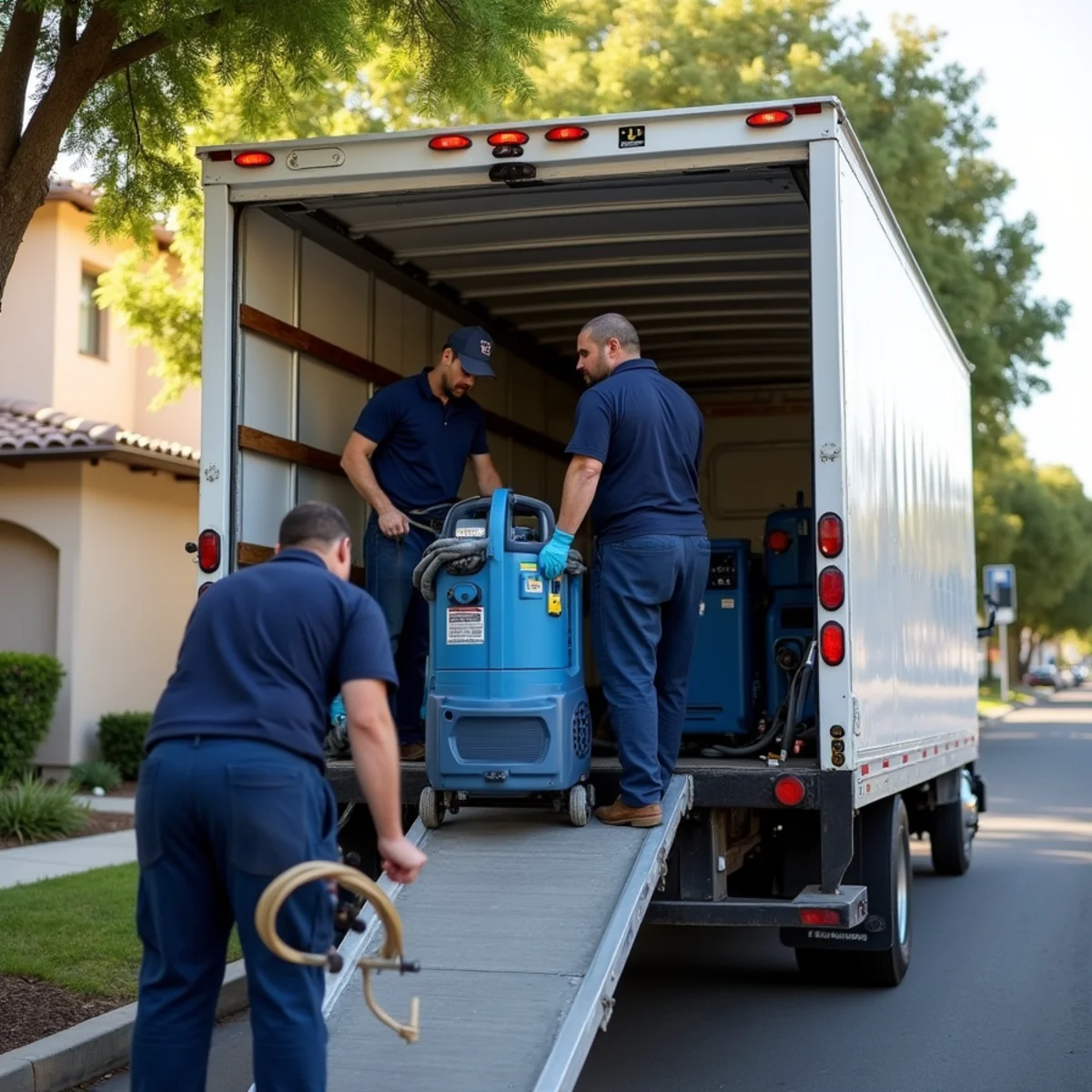
Crews dispatch within 60 minutes and are on-site in 60 to 90 anywhere in Fullerton. Outside the city we quote the real drive time for your address rather than a single county-wide number.
IICRC-aligned standards
Water is classified by category before anything is decided. Materials are dried to a documented standard taken from an unaffected part of your own building — not to the point where a surface feels dry.
Documentation as standard
Photographs and video before any cleanup, a moisture map with baseline readings, daily drying logs, and a line-item scope of work in the estimating format your carrier already uses.
Local knowledge, applied
Which tracts are slab-on-grade, which streets have clay-tile laterals under sixty-year-old ficus, which hillsides shed water in a storm. It changes what we check on arrival.
Credentials
Licensing, certification and honesty about both
We work to IICRC-aligned restoration standards — the Institute of Inspection, Cleaning and Restoration Certification sets the industry standards for water damage restoration, structural drying and mold remediation. In practice that means classifying water by category before deciding anything, mapping moisture rather than estimating it, and drying to a documented standard rather than to a schedule.
We are a licensed and insured California contractor. Ask any restoration company for proof of licensing, liability insurance and workers compensation before you let them on site — a legitimate operator will hand it over without hesitating.
Also worth asking: can they show you a moisture map, a daily drying log and a written scope of work? Those three documents are what separate a measured job from a guess, and they are what your insurer needs.
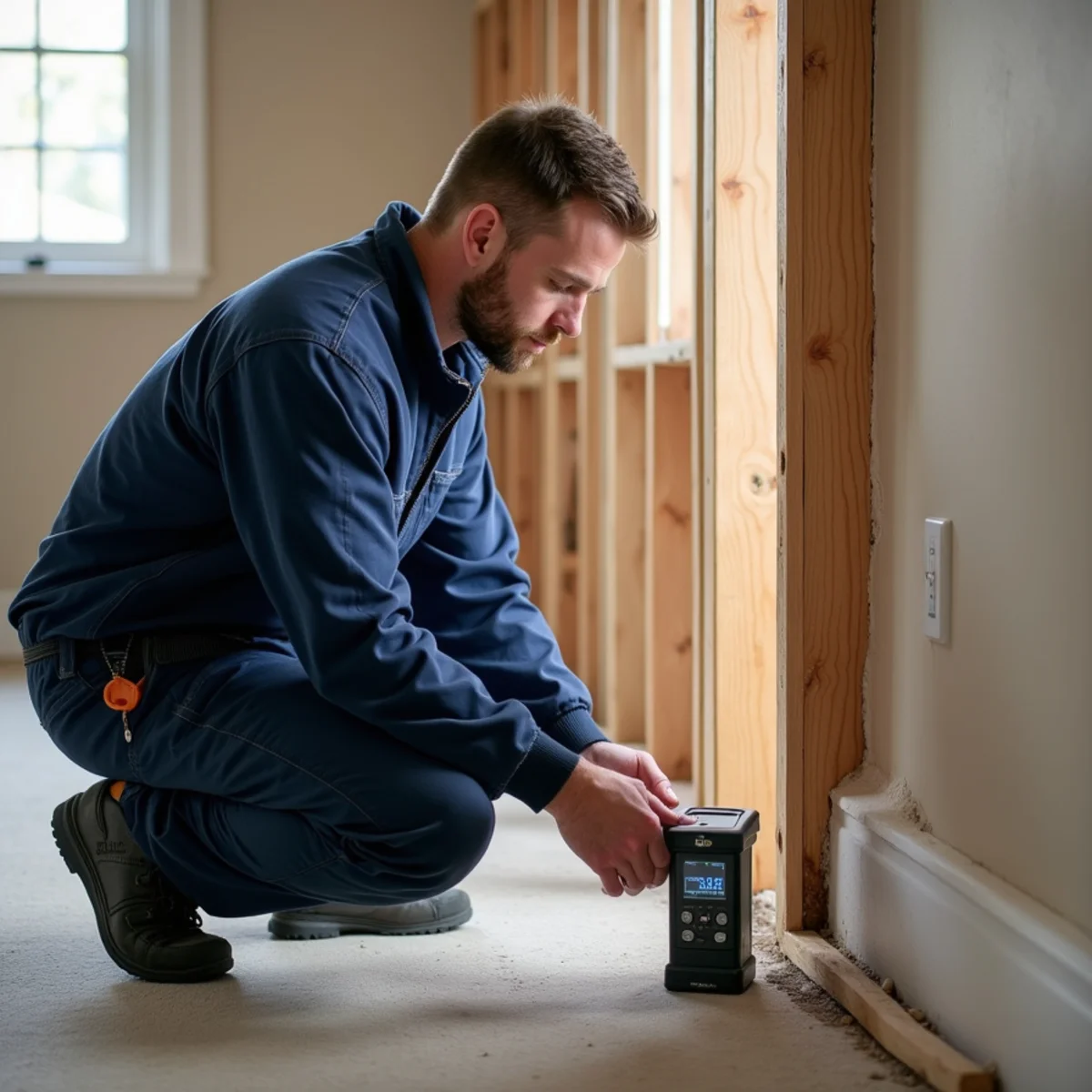
Restoration technician verifying materials against a documented dry standard in Fullerton

Written scope of work and daily drying log prepared for a Fullerton insurance adjuster
Our Process
What a job actually looks like, start to finish
- 01
The call, and the first two minutes
A person answers, at any hour. Before anything else they talk you through stopping the water and deciding whether to cut power — that part is free, it happens before we have taken a job, and it does more to limit the loss than anything that happens afterwards.
- 02
Arrival, assessment, documentation
Water category established first, because it governs every subsequent decision about what is saved and what is removed. Then thermal imaging and meters across every affected material, and photographs and video before anything is moved or lifted.
- 03
Extraction
Truck-mounted extraction with weighted heads, in repeated overlapping passes until the recovery tank stops filling and the meter agrees. This is the stage that decides whether carpet, pad and subfloor survive, and it is not something a wet-vac substitutes for.
- 04
Controlled demolition, only where it is warranted
Flood cuts above the wick line, pad removal, cabinet kick removal where water is trapped behind it. We open what has to be opened and nothing else, and we tell you why each cut is being made before it is made.
- 05
Structural drying, monitored daily
Air movers and dehumidification placed to a calculated load rather than by eye, with readings taken at the same marked points every day and equipment repositioned toward whatever is drying slowest. Nothing comes out on a schedule — it comes out on a reading.
- 06
Verification against your own building
Dry standard is taken from an unaffected area of the same material in the same building, not from a table. Materials are dried until they match it, and the readings are logged for your carrier.
- 07
Reconstruction
Drywall, texture, paint, flooring, cabinetry and trim, in-house rather than handed to a subcontractor you have not met. One scope, one file, and nobody arguing about where mitigation ended and rebuild began.
- 08
The walk-through
The project manager who wrote the scope walks the punch list with you. You get the full documentation package — moisture map, daily logs, photographs and line-item scope — whether or not you are making a claim.
Questions
About the company
No. We are locally owned and operated, staging out of S Raymond Ave in Fullerton. That matters mainly for two reasons: the person answering your call dispatches the crew rather than routing you to a territory owner elsewhere, and the local knowledge is genuinely local — which tracts are slab-on-grade, which streets have clay laterals under mature ficus, which hillsides shed water in a storm.
Both, in-house. It is worth asking any restoration company this before you sign, because a mitigation-only company hands you off after the drying and you then manage a second contractor through the rebuild yourself. One company across both means one scope of work, one insurance file, and no gap where each contractor says the other owns a problem.
The Institute of Inspection, Cleaning and Restoration Certification publishes the industry standards for water damage restoration, structural drying and mold remediation. Working to them means classifying water by category before scoping, calculating dehumidification load rather than guessing at fan counts, and drying to a documented standard taken from your own building rather than to a fixed number of days.
Yes, and it happens regularly. A stain that turns out to be an old dried leak, a musty smell that turns out to be a trap that dried out, a warm floor patch that turns out to be a sunlit window. We would rather take the meter reading, tell you there is nothing to do, and be the company you call when there is.
We document to the standard adjusters work from — moisture maps, daily drying logs, before-and-after photography and line-item scopes in the estimating format carriers already use. We do not decide coverage, and we do not tell you what your policy says. We give your adjuster the evidence to make that determination properly.
It changes nothing about how the job is run. You get the same documentation package regardless, because the moisture map and drying logs are how you know the work was actually finished rather than just stopped. Plenty of smaller losses are worth paying for directly rather than filing against a deductible, and we will say so if that looks like the case.
Service Area
Where we work
Fullerton and all 24 of its neighbourhoods, plus the bordering cities. Sixty area pages in total, each with an honest drive time from our base.
Downtown Fullerton
1920s–40s historic core on the Fullerton Heritage register; the oldest plumbing stock in the city plus bar and restaurant commercial losses.
The Hill
Cal State Fullerton student-housing district; high rental turnover, shared housing, and frequent appliance-overflow jobs.
Sunny Hills
1950s–60s post-war tracts; original slab-on-grade construction now at peak slab-leak and galvanized-pipe failure age.
Anaheim
OC's largest city; Disneyland Resort corridor commercial losses plus dense 1950s–70s tract housing with aging plumbing.
Buena Park
Knott's Berry Farm tourism corridor plus 1960s–70s tract homes; high rental turnover and commercial water-loss volume.
La Habra
Hillside 1950s–70s tracts with clay-soil foundation shifts; La Habra Heights luxury estates above with private wells.
Fullerton Water Damage Pros
1500 S Raymond Ave, Fullerton, CA 92831
+1 (201) 277-934424 hours a day, 7 days a week — including holidays
Water damage in Fullerton? We are already loading the truck.
Crews dispatched within 60 minutes — on-site in 60–90 minutes, anywhere in Fullerton. A real person answers the line at any hour, and we document everything your insurance adjuster will ask for.
- 60-minute dispatch, anywhere in Fullerton
- IICRC-aligned · licensed & insured
- Direct insurance documentation