24/7 emergency line — crews dispatched within 60 minutes

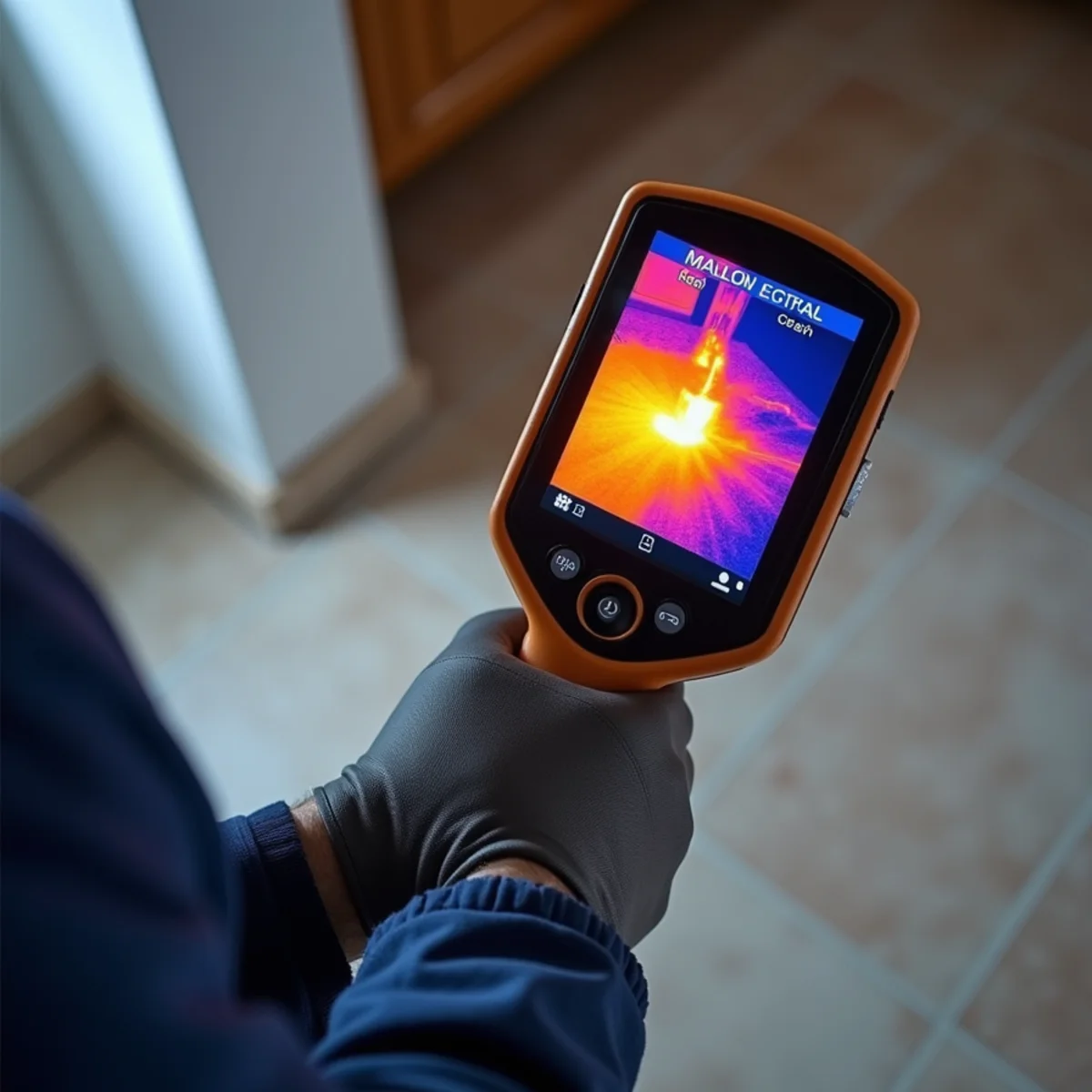
Technician using thermal imaging camera for hidden leak detection in a Fullerton, CA home

Fullerton, CA

Leak Detection Services in Fullerton, CA

A hidden leak is a slow-motion water loss. It does not flood the room, so nobody calls anyone, and it runs for months into a wall cavity, under a slab or below a cabinet until something visible finally fails.

  • On-site in 60–90 minutes
  • IICRC-aligned · licensed & insured
  • Staged on 1500 S Raymond Ave

By then you are not paying for a plumbing repair. You are paying for a plumbing repair plus drying plus mold remediation plus reconstruction — and often arguing with an insurer about whether it was gradual.

Detection is the cheap part of that sequence. We find the leak without opening the building, so the repair is one small access point instead of exploratory demolition across three rooms.

Crews dispatched within 60 minutes — on-site in 60–90 minutes

+1 (201) 277-9344

Signs Of A Hidden Leak

Any single one of these is worth a call. Two or more together means water is running somewhere it should not:

  • A water bill that jumped with no change in household usage or irrigation
  • A warm or hot spot on a slab floor — the classic hot-water slab leak in Fullerton's post-war tracts
  • The sound of running water when every fixture in the house is off
  • Low water pressure that developed gradually over weeks
  • A damp or discoloured patch on a wall, ceiling or the base of a cabinet
  • A persistent musty smell in one room, or in a closet on an exterior wall
  • Cracking or lifting in flooring over a slab, or a section of floor that stays cooler or warmer
  • Grass or landscaping that is greener over one line in the yard, or soil that never dries
Thermal imaging showing a hot water slab leak plume in a Fullerton home

What Leak Detection Includes

A fixed-scope diagnostic that ends with a marked location, not a guess and an open floor:

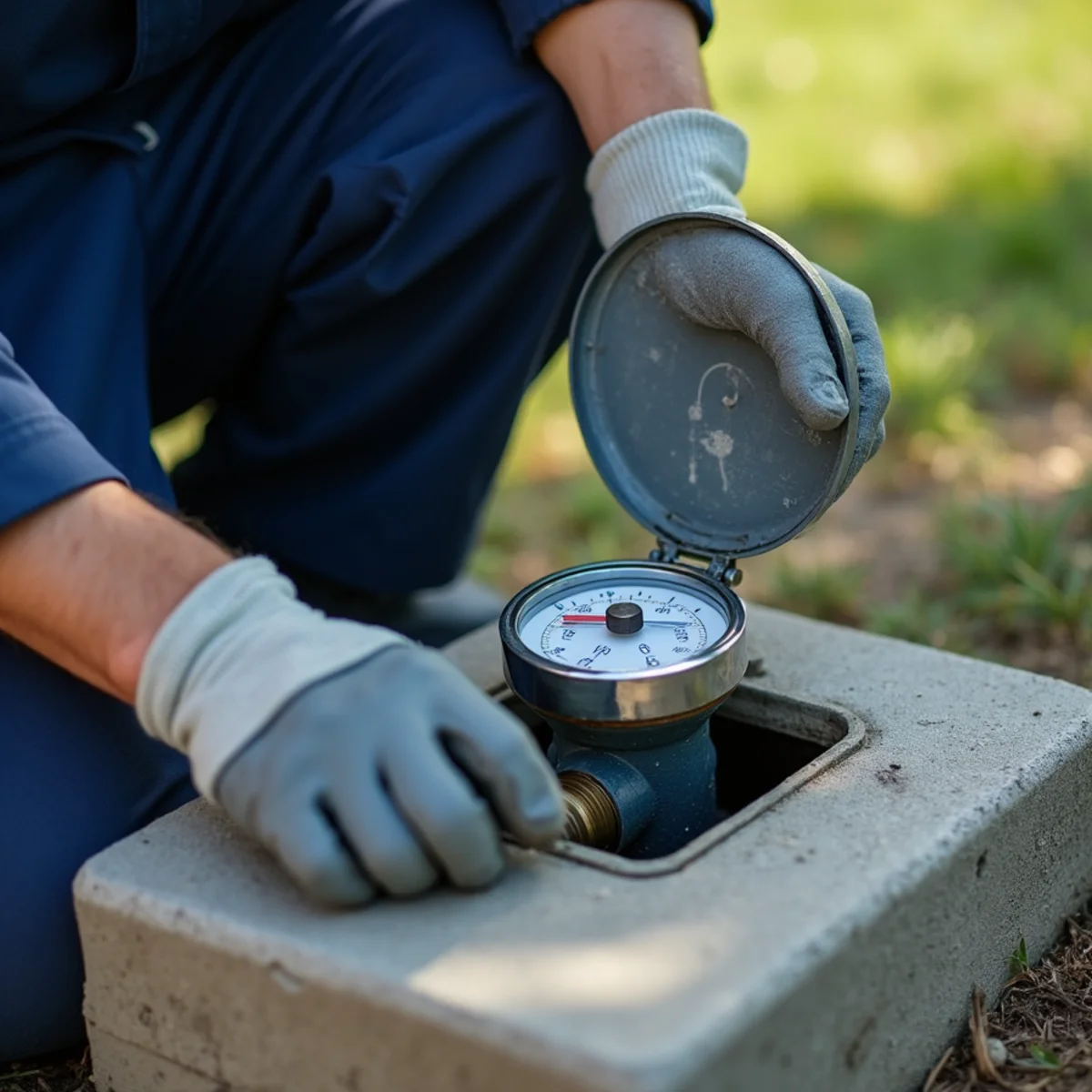
Meter isolation testing
House shut down and the meter watched, then the main closed and repeated — which separates a leak inside the building from one between the meter and the house.
Hot and cold line isolation
Closing the water heater inlet takes the hot system out of the equation, confirming which side has failed before anything is opened.
Thermal imaging survey
Hot-water leaks read as a warm plume through slab or wall; cold-water leaks as an evaporative cool signature spreading from a point.
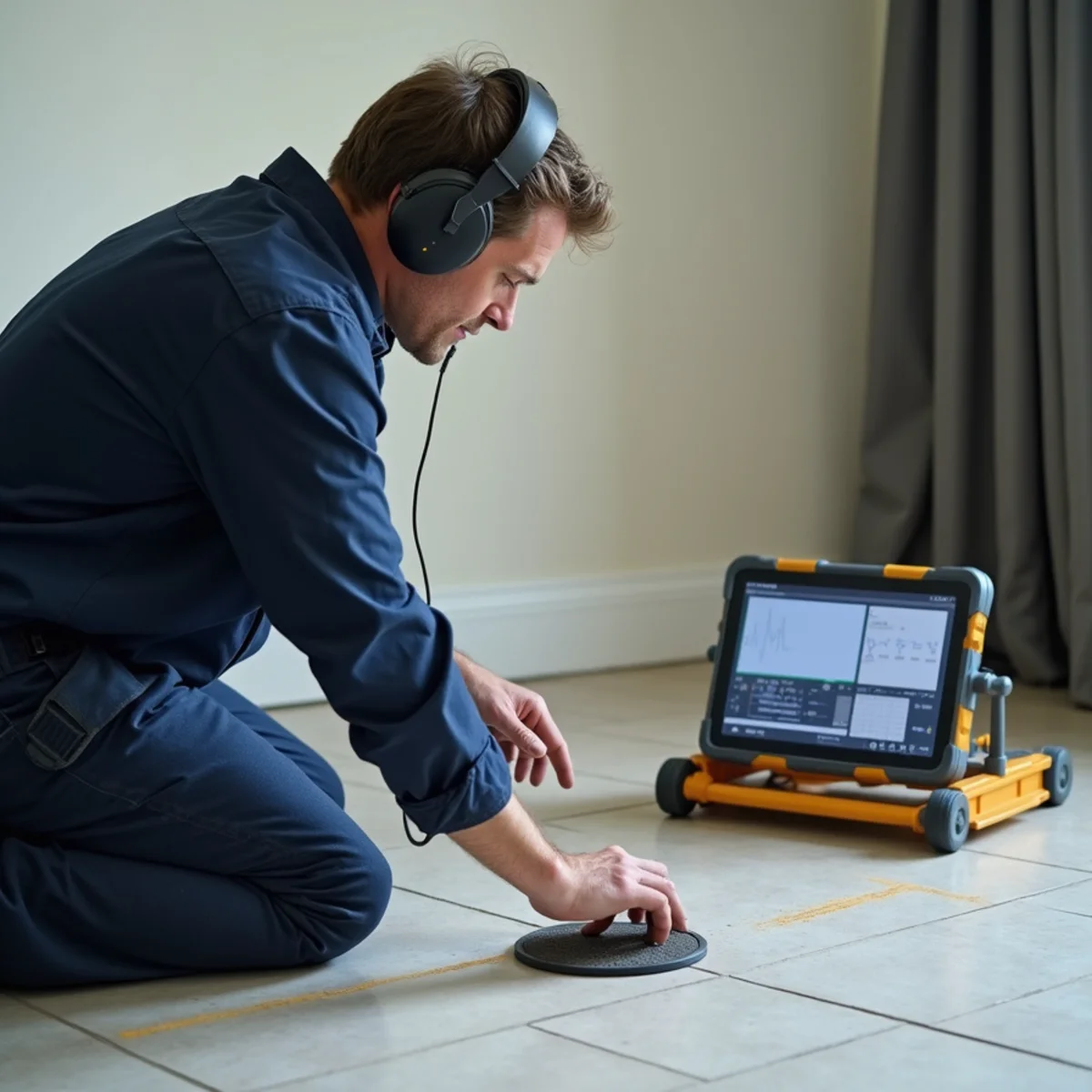
Acoustic detection and correlation
Ground microphones and correlators locate the escape point to within inches by timing the sound signature at two points on the line.
Pressure testing to confirm
Individual branches isolated and charged, so the finding is verified by a second method before concrete or drywall is opened.
Sewer camera inspection
Where the suspect line is waste rather than supply, showing root intrusion, offsets, bellies and cracks directly.
Marked location and written findings
The point marked on the floor or wall, with readings and images you can hand to whichever plumber does the repair.

How We Find A Leak Without Tearing Up Your House

Detection is a process of elimination that starts at the meter and narrows down.

  1. Meter isolation test

    Everything in the house off, then we watch the meter. Movement means water is leaving the system. Then we close the house main and repeat, which tells us whether the leak is on the supply side before the house or inside it.

  2. Thermal imaging

    An infrared camera reads surface temperature differences. Hot-water leaks are obvious. Cold-water leaks show as evaporative cooling — a cool signature spreading from a point on a slab or wall.

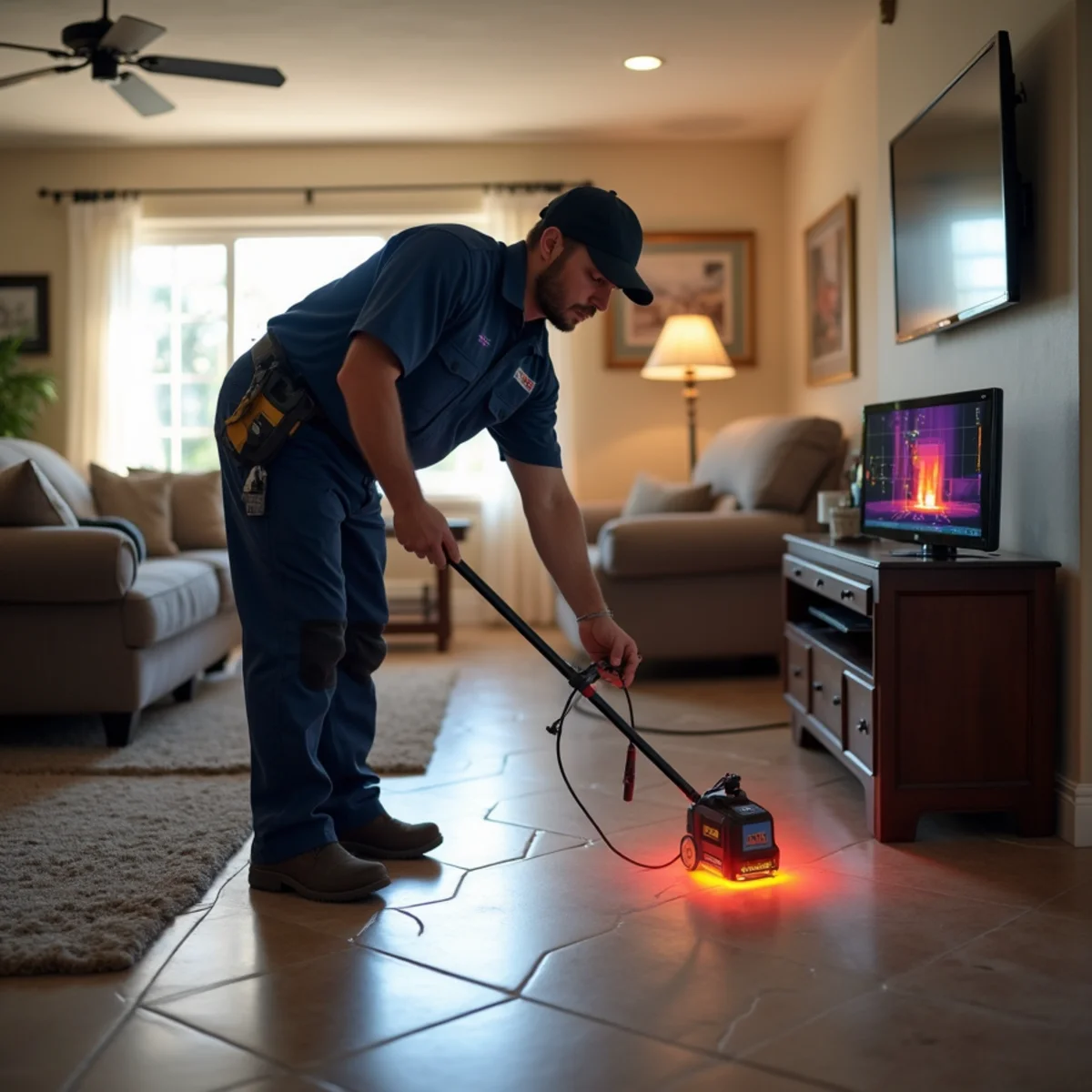
  3. Acoustic and correlation equipment

    Pressurised water escaping a pipe makes a specific sound signature that carries through slab and soil. Ground microphones and correlators pinpoint it to within inches, which is what turns a wide search area into a single core hole.

  4. Moisture mapping

    Pin and pinless meters trace the wet zone back toward its source and — just as importantly — define the boundary of what already needs drying.

  5. Pressure and isolation testing

    Isolating supply branches, hot from cold, and pressure testing each in turn. This confirms which line has failed before anything is opened.

  6. Camera inspection for drains

    Where the suspect line is waste rather than supply, a sewer camera shows root intrusion, offsets, bellies and cracks directly.

Why Fullerton Has So Many Hidden Leaks

Two local factors do most of the damage here.

The first is hard water. Orange County's supply runs roughly 14 to 25 grains per gallon. Over decades, mineral scale builds inside copper, flow turbulence increases at the deposits, and the copper pits from the inside. The result is a pinhole leak — a weep rather than a burst, which is exactly why it goes unnoticed for so long. Homes built in the 1960s and 1970s across Parks, Gilbert and Commonwealth are squarely in that failure window now.

The second is expansive clay soil under slab-on-grade construction. Fullerton's clay swells in the wet season and shrinks in the dry one. The slab flexes with it, and copper cast into or running beneath that slab abrades against concrete at every movement cycle until it wears through. That is why slab leaks in Sunny Hills, Valencia and West Fullerton cluster the way they do.

Add the city's aging distribution network — roughly half of about 420 miles of main is over fifty years old — and a sudden change in your water bill occasionally is not your leak at all. Worth checking before you open a floor.

What We Do After We Find It

We are a restoration company, not a plumbing contractor, and being straight about that is part of doing this honestly.

We locate the leak, document it, and coordinate a licensed plumber for the repair — either yours or one of the local plumbers we work with regularly. You are not paying us a markup to stand and watch.

What we do own is everything the water touched. Once the repair is made we dry the structure to a documented standard, remediate any mold that has established, and handle the reconstruction. And because we documented the loss from the first reading, your insurer gets a clean file showing when the failure was found and how quickly it was addressed — which matters enormously when the carrier's first question is whether the damage was gradual.

  • Acoustic ground microphone pinpointing a slab leak in Fullerton, CA

    Acoustic ground microphone pinpointing a slab leak in Fullerton, CA

  • Water meter isolation test confirming a hidden leak at a Fullerton property

    Water meter isolation test confirming a hidden leak at a Fullerton property

  • Acoustic correlation pinpointing a leak to within inches

    Acoustic correlation pinpointing a leak to within inches

  • Water meter low-flow dial checked during leak isolation

    Water meter low-flow dial checked during leak isolation

Why Have Us Locate It Rather Than Open the Floor

Detection is the cheapest step in the whole sequence, and it is the one that decides how destructive the repair has to be.

  • Four methods, one answer

    Meter test, thermal, acoustic correlation and pressure test should all point at the same place before anyone picks up a saw. One method on its own is a guess with equipment.

  • We do not sell the repair

    We are a restoration company, not a plumbing contractor. There is no incentive for us to find a bigger problem than the one you have, and no markup on the plumber.

  • We own everything the water touched

    Once the repair is made we dry, remediate and rebuild on the same file — with the loss documented from the first reading, which matters when a carrier asks whether the damage was gradual.

  • Built for Fullerton's failure modes

    Hard water pinholes in 1960s copper and slab abrasion on expansive clay behave differently from a burst. We look for the local pattern, not the textbook one.

What Affects Leak Detection Cost

Detection is a fixed-scope diagnostic, and it is almost always cheaper than the demolition you avoid. Variables:

Property size and number of fixtures
More bathrooms and longer runs mean more isolation testing.
Slab versus accessible plumbing
Slab leaks need acoustic correlation; an accessible crawl space or wall is faster.
Supply versus drain line
Drain leaks need camera inspection rather than pressure testing.
How localised the symptoms are
One warm spot on a floor narrows the search quickly; a whole-house pressure drop does not.
Whether drying is already needed
If the leak has been running, mitigation begins alongside detection.
Irrigation and yard lines
Exterior leaks need line tracing and sometimes a separate correlation pass.

Leak Detection in Fullerton — Common Questions

The reliable tells are a warm spot on the floor, the sound of running water with everything off, a water bill that climbed without explanation, and unexplained damp at the base of a wall. In Fullerton's 1950s to 1970s slab-on-grade tracts a warm floor spot is a hot-water slab leak until proven otherwise.

Where we provide leak detection

Crews dispatch within 60 minutes across Fullerton and north Orange County.

Fullerton neighbourhoods

Nearby cities

All 60 service areas

Further Reading

Guides on this topic

Written for Fullerton property owners, with the local risk factors that actually apply here.

Need leak detection in Fullerton right now?

Crews dispatched within 60 minutes — on-site in 60–90 minutes. We extract, dry to a documented standard, and hand your adjuster a file they cannot argue with.

  • 60-minute dispatch, anywhere in Fullerton
  • IICRC-aligned · licensed & insured
  • Direct insurance documentation
Call 24/7Free Estimate