
Problem Solving
Hidden Leak Symptoms: Warm Floor Spots, High Water Bills, and the Sound of Running Water
Hidden leaks are slow-motion water losses. Seven signs, what each one points to, and a free test that takes ten minutes.

The short answer
Seven signals: an unexplained water bill rise, a warm spot on a slab floor, running water heard with everything off, gradually declining pressure, a musty smell confined to one room, bubbling paint at a wall base, and greener grass along one line in the yard. Any two together mean water is going somewhere.
A hidden leak does not flood a room, so nobody calls anybody. It runs quietly into a wall cavity or under a slab for weeks or months until something visible finally fails.
By then you are not paying for a plumbing repair. You are paying for a plumbing repair plus drying plus, very often, mold remediation — and arguing with a carrier about whether the damage was gradual.
Dealing with this right now?
Crews dispatched within 60 minutes — on-site in 60–90 minutes, anywhere in Fullerton. Call and we will talk you through the first two minutes while a crew is dispatched.
- 60-minute dispatch, anywhere in Fullerton
- IICRC-aligned · licensed & insured
- Direct insurance documentation
The Seven Signs
Any one of these is worth investigating. Two or more together means water is going somewhere it should not.
- A water bill that increased with no change in usage. The most reliable single indicator there is.
- A warm or hot spot on a slab floor. In Fullerton's slab-on-grade tract housing this is a hot-water slab leak until proven otherwise.
- The sound of running water with every fixture and appliance off. Stand still in a quiet house and listen.
- Water pressure that has declined gradually over weeks or months.
- A musty smell confined to one room, or in a closet on an interior or exterior wall.
- Damp, discoloured or bubbling patches on walls, ceilings, or at the base of cabinets.
- Grass or landscaping that is greener along one line in the yard, or soil that never dries.
The Free Test That Takes Ten Minutes
Before calling anyone, do this. It costs nothing and it narrows the problem dramatically.
Turn off every water-using fixture and appliance in the house — taps, dishwasher, washing machine, ice maker, irrigation controller. Then find your water meter in the box at the kerb and look at the low-flow indicator, usually a small triangle, star or dial that spins with even tiny flow.
If it is moving, water is leaving the system somewhere.
Now close the main shut-off valve at the house and look again. If the indicator stops, the leak is inside the building. If it keeps moving, the leak is between the meter and the house — a service line or irrigation problem, which is much better news for your floors.
Do the toilet check while you are at it: a dye tab or a few drops of food colouring in each tank, wait fifteen minutes without flushing, and if colour appears in the bowl the flapper is passing water continuously. Running toilets account for a surprising share of unexplained bill increases and they are the cheapest fix on this page.
What Each Symptom Points To
A warm floor spot is a hot-water line under the slab. Heat accelerates corrosion and thermal cycling adds mechanical stress the cold line never sees, which is why hot lines fail first and why this symptom is so specific.
Running water with everything off usually means a supply-side leak somewhere under pressure — slab, wall, or service line.
Gradual pressure loss more often points at internal corrosion narrowing the pipe, particularly in the galvanized systems still present in Downtown Fullerton, Lemon Park and the older Valencia and Magnolia housing.
A musty smell in one room means moisture in a cavity or under flooring in that area, and it has probably been there long enough for growth.
Green grass along a line, or soil that never dries, is an irrigation or service line leak outside the building.
Why Fullerton Produces So Many Of These
Two local factors do most of the damage.
Orange County's water runs roughly 14 to 25 grains per gallon. That hardness deposits mineral scale inside copper pipe, flow becomes turbulent around the deposits, and pitting corrosion eats through the wall from the inside at discrete points. The result is a pinhole — a weep rather than a burst — which is precisely why it goes unnoticed for so long. The 1960s and 1970s housing across Parks, Gilbert, Brookhurst and Magnolia is squarely in that failure window now.
Expansive clay soil is the second. It swells through a wet winter and shrinks through a dry summer, the slab flexes with it, and copper cast into or running beneath the slab abrades against concrete at every cycle.
One more thing worth ruling out: Fullerton maintains around 420 miles of water main and estimates roughly half is over fifty years old. Occasionally an unexplained bill or a permanently damp parkway is a city issue rather than yours.
What Detection Actually Involves
Non-invasive, and that is the point — nothing is opened until we know where to open it.
Meter isolation first, to confirm the leak exists and whether it is inside or outside the building. Thermal imaging next: hot-water leaks show as a warm plume, cold-water leaks as an evaporative cool signature.
Acoustic equipment then pinpoints it. Pressurised water escaping a pinhole makes a distinctive sound that carries through slab and soil, and ground microphones and correlators locate it to within inches.
Moisture mapping traces the wet zone back toward the source and, just as usefully, defines the boundary of what already needs drying.
The result is one small access point rather than exploratory demolition across three rooms.
How Long a Hidden Leak Has Usually Been Running
Almost every hidden leak we locate has been running considerably longer than the homeowner believes, and the gap between the two matters for insurance more than for repair.
Being realistic about the timeline is not an admission against interest. It shapes what you look for, and it tells you whether the wall cavity is a drying job or a remediation job before anyone opens it.
- A pinhole in copper typically weeps for weeks or months before anything is visible. The volume is small; the duration is not.
- A slab leak usually shows on the water bill one to three billing cycles before it shows on the floor.
- A toilet flapper passing water is silent and can run for a year, which is why it is the first thing to test on any unexplained bill.
- An under-sink supply weep gets absorbed by the cabinet base, so the visible dampness appears long after the wood has already failed.
- Practical consequence: if the smell arrived before the stain, assume weeks rather than days, and expect the cavity to need opening rather than drying.
- For a claim, document the date you first noticed each symptom and what you did about it. Prompt action after discovery is what the policy actually asks of you.
All 7 steps, in pictures
Each image matches the numbered item above it in the same order.

An unexplained rise in a water bill indicating a hidden leak

A warm spot on a slab floor from a hot water leak

Listening for running water with every fixture switched off

Water pressure dropping gradually from corroded supply pipes

A musty smell confined to one room signalling hidden moisture
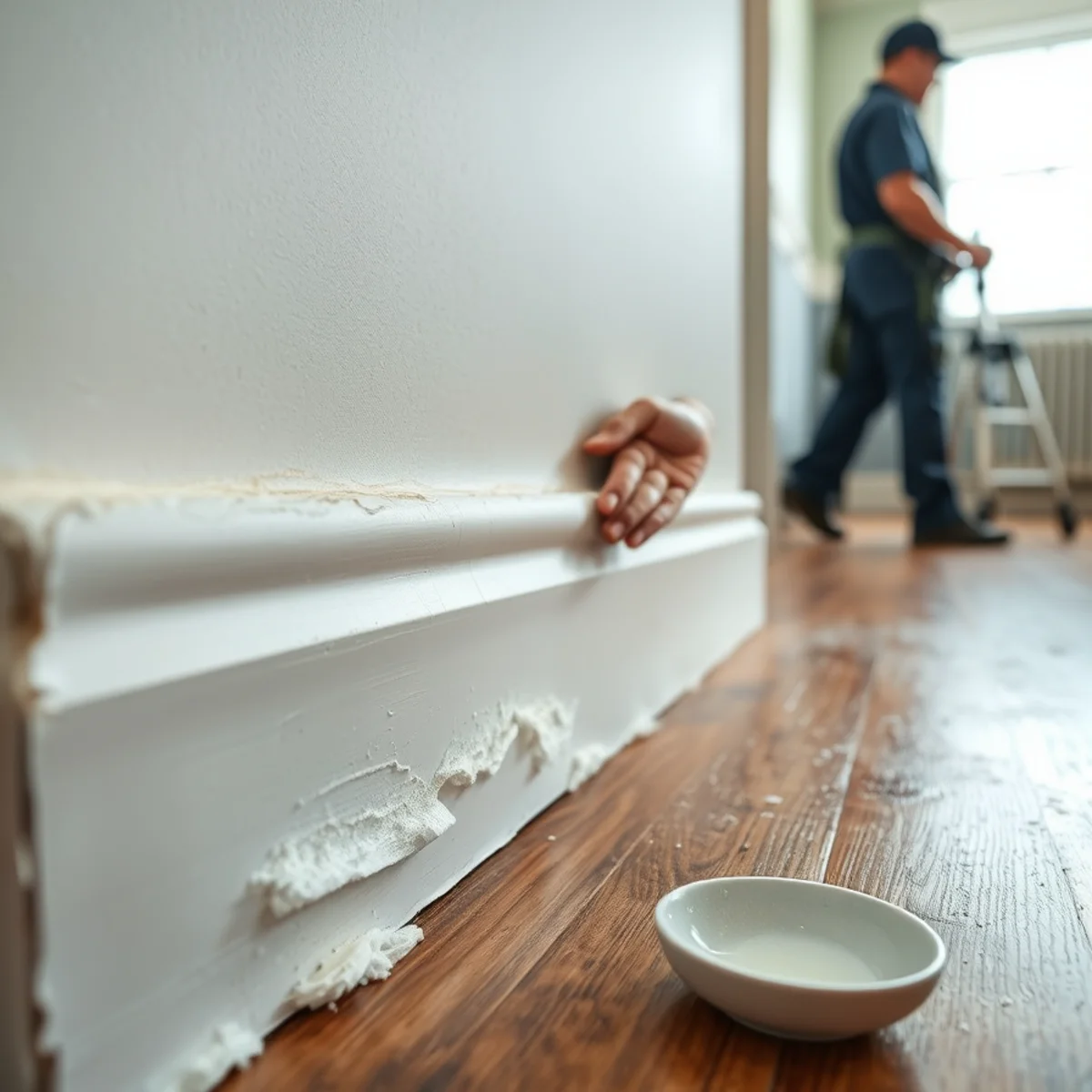
Paint bubbling at the base of a wall from a hidden leak

A line of greener grass revealing an underground water leak
Frequently asked
Toilets first, because it is free — a dye tab in each tank, fifteen minutes, no flushing. Then the meter isolation test: everything off, watch the low-flow indicator, then close the house main and watch again. That tells you within ten minutes whether the leak is inside or outside the building.
In a slab-on-grade home, treat it as one until proven otherwise. The alternative explanations — a heating duct beneath the slab, or sun through a window — are usually obvious. In Fullerton's 1950s to 1970s tract housing it is the classic hot-water slab leak signature.
It is a fixed-scope diagnostic and it is almost always far cheaper than the demolition it avoids. Cost varies with property size, whether the plumbing is under a slab or accessible, and whether the suspect line is supply or drain. Ask for the price before booking — any honest company will give you one.
The bottom line
Do the meter test and the toilet dye test this weekend. Ten minutes, no cost, and it either reassures you or tells you something useful.
If the indicator is moving with everything off, get it located before it finds a wall.