
Problem Solving6 min read
Why Your House Still Smells Musty After the Water "Dried"
That smell is microbial growth producing gas. It is not an odour problem — it is a moisture problem that has not been found yet.
Read the guide24/7 emergency line — crews dispatched within 60 minutes
1500 S Raymond Ave, Fullerton, CA 92831
24/7 Emergency Service
Full basements are rare in Fullerton. Vented crawl spaces and sub-areas are everywhere, particularly under the pre-1960 houses downtown, in Lemon Park and across North Fullerton, and they flood far more often than anybody realises.
That is the real problem with this space: nobody goes in it. Water can sit under a house for months. The first sign is usually a smell in the hallway, a cold floor, or mold appearing on the underside of the subfloor and working its way up.
Whatever is in that space is in your air. Stack effect pulls air from the crawl space up through the floor assembly into the living space, which is why a wet sub-area becomes an indoor air quality problem rather than staying a structural one.
Crews dispatched within 60 minutes — on-site in 60–90 minutes
+1 (201) 277-9344You will usually smell or feel it before you see it:
The space nobody inspects, done properly — which means the vapour barrier and the drainage question, not just the pump:
Four routes cover almost everything we find.
Storm runoff and grade is the most common. Where landscaping, hardscape or a neighbour's regrading has directed water toward the foundation, heavy November through March rain pushes it straight through the crawl space vents. Homes below a slope — Rolling Hills, the streets under Bastanchury, and properties on the Coyote Hills edge — are the ones we see repeatedly.
Plumbing failure is second. A supply line, drain line or water heater in or above the sub-area drains directly into it, and because nothing is visible upstairs the leak runs for a long time.
Groundwater and hydrostatic pressure affects the low flats, particularly in South Fullerton below Commonwealth and near the Coyote Creek corridor. After a saturating storm the water table rises and pushes moisture up through the soil floor of an unsealed crawl space.
Condensation is the sneaky one, and it does not need a leak at all. Warm humid air entering a vented crawl space on a summer day condenses on cool surfaces — plumbing, ducts, the underside of the subfloor. Over years that is enough to rot a rim joist.
Crawl space drying fails when it is treated like room drying. The two big mistakes are ventilating with outside air and leaving a wet soil floor exposed.
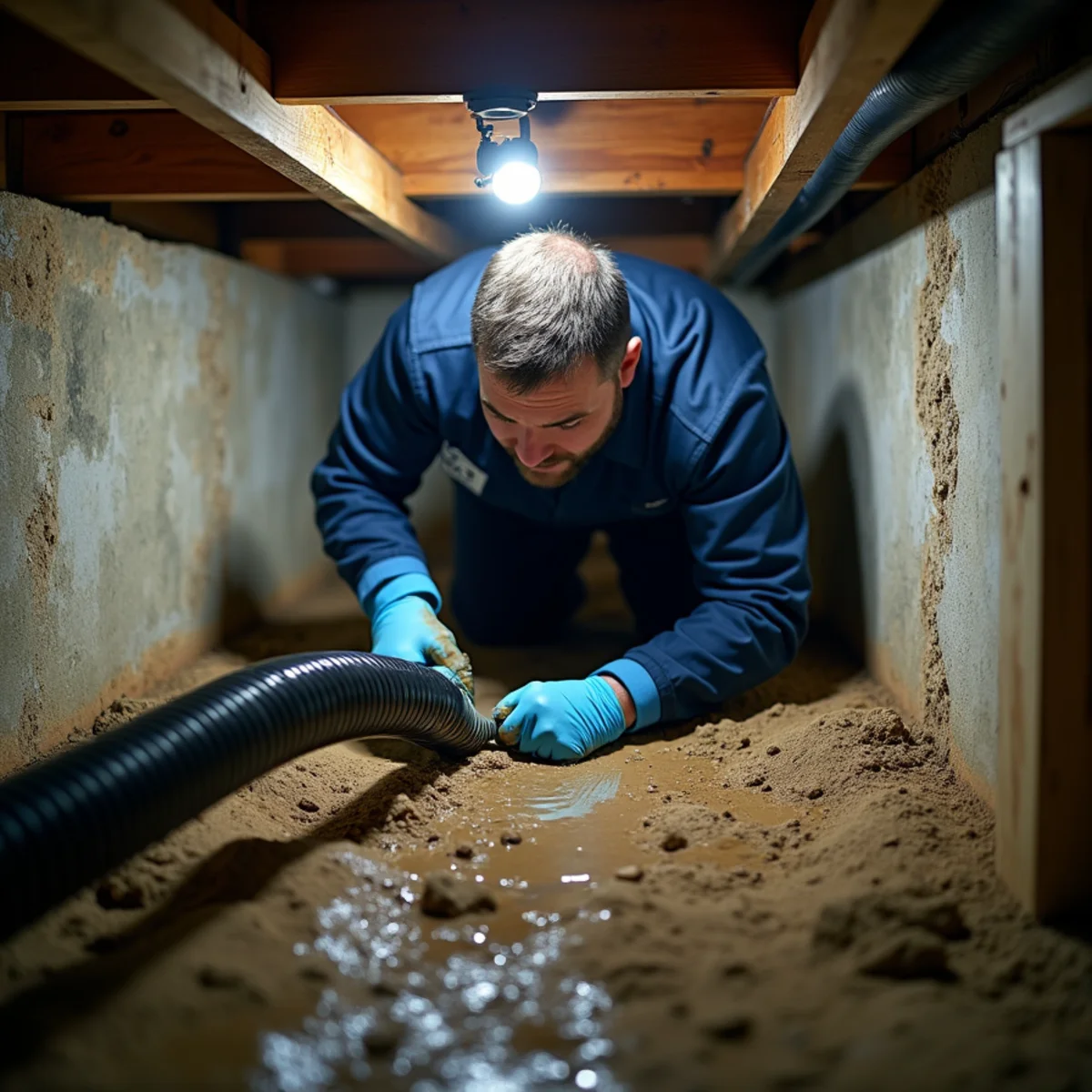
Submersible pumps for standing water, then portable extraction for what the pumps cannot reach. Sludge and debris come out too.
Wet fibreglass insulation between joists is done — it holds water, loses R-value and grows mold on the paper facing. It comes out and gets replaced at the end.
Framing, joists and the underside of the subfloor are cleaned, HEPA vacuumed where there is growth, and treated with an appropriate antimicrobial.
We seal the vents and dry as a closed system with dedicated dehumidification. Leaving vents open during a wet spell means pulling humid air back in as fast as you remove it.
A sealed polyethylene barrier over the soil floor, lapped and secured. Without it, ground moisture keeps evaporating into the space forever and you will be back here.
Grading, downspout extensions, a French drain, a sump, or a plumbing repair. Drying a crawl space without fixing the entry point is a service you pay for twice.
While we are under there, we look at things you should know about.
Rim joists and mudsills rot from the top down where they sit on a damp foundation. Post bases and pier blocks corrode or settle. Subfloor delaminates — plywood separates into layers and loses strength, which is what causes that springy feel underfoot.
Older Fullerton homes with post-and-pier foundations are the ones to watch. Sustained moisture at a post base can compromise support without anything showing upstairs until a floor develops a dip.
If we find structural damage we document it with photographs and refer you to a licensed structural contractor. We will not quote structural repairs we are not licensed to perform, and you should be wary of anyone who does.
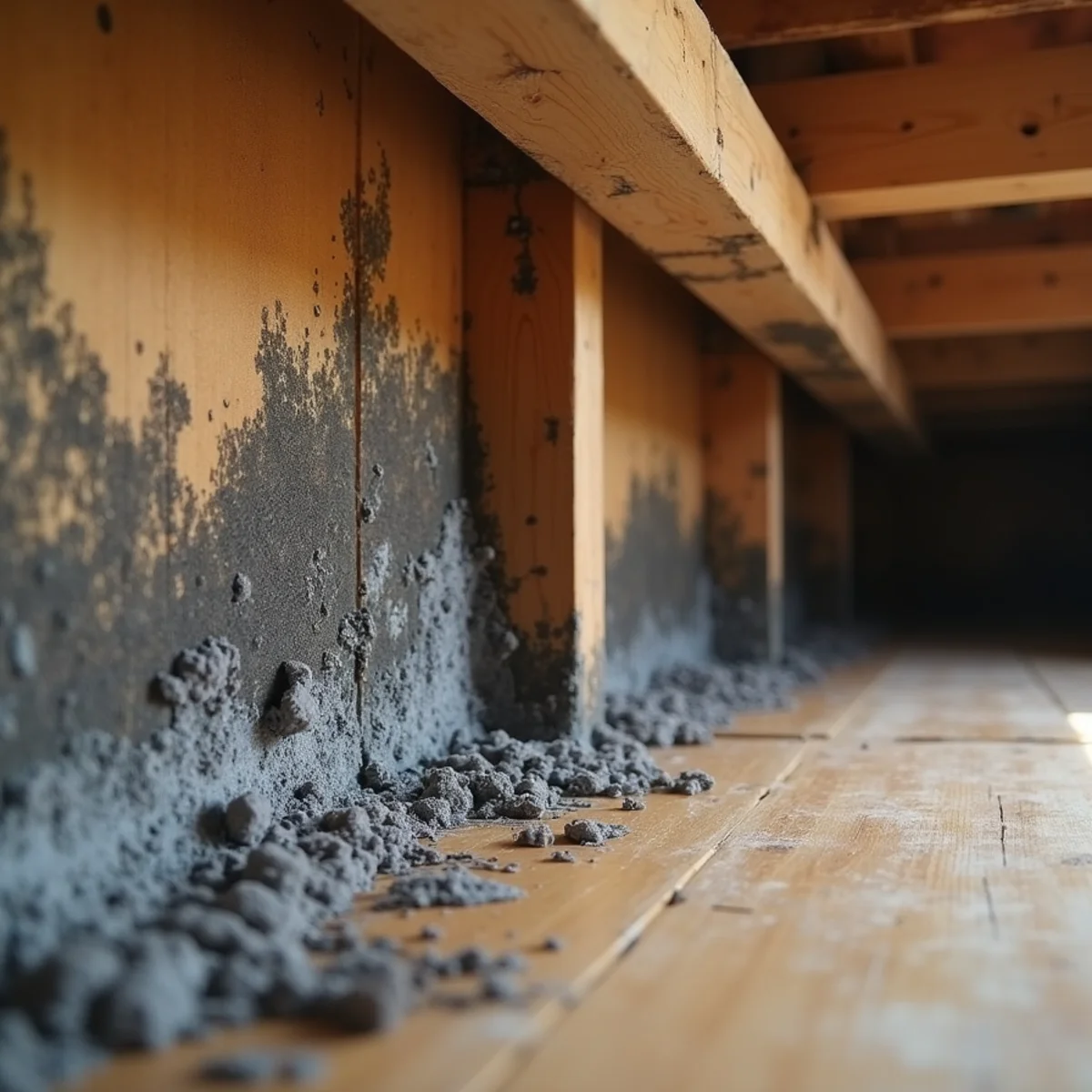
Mold growth on the underside of a subfloor in a Fullerton crawl space
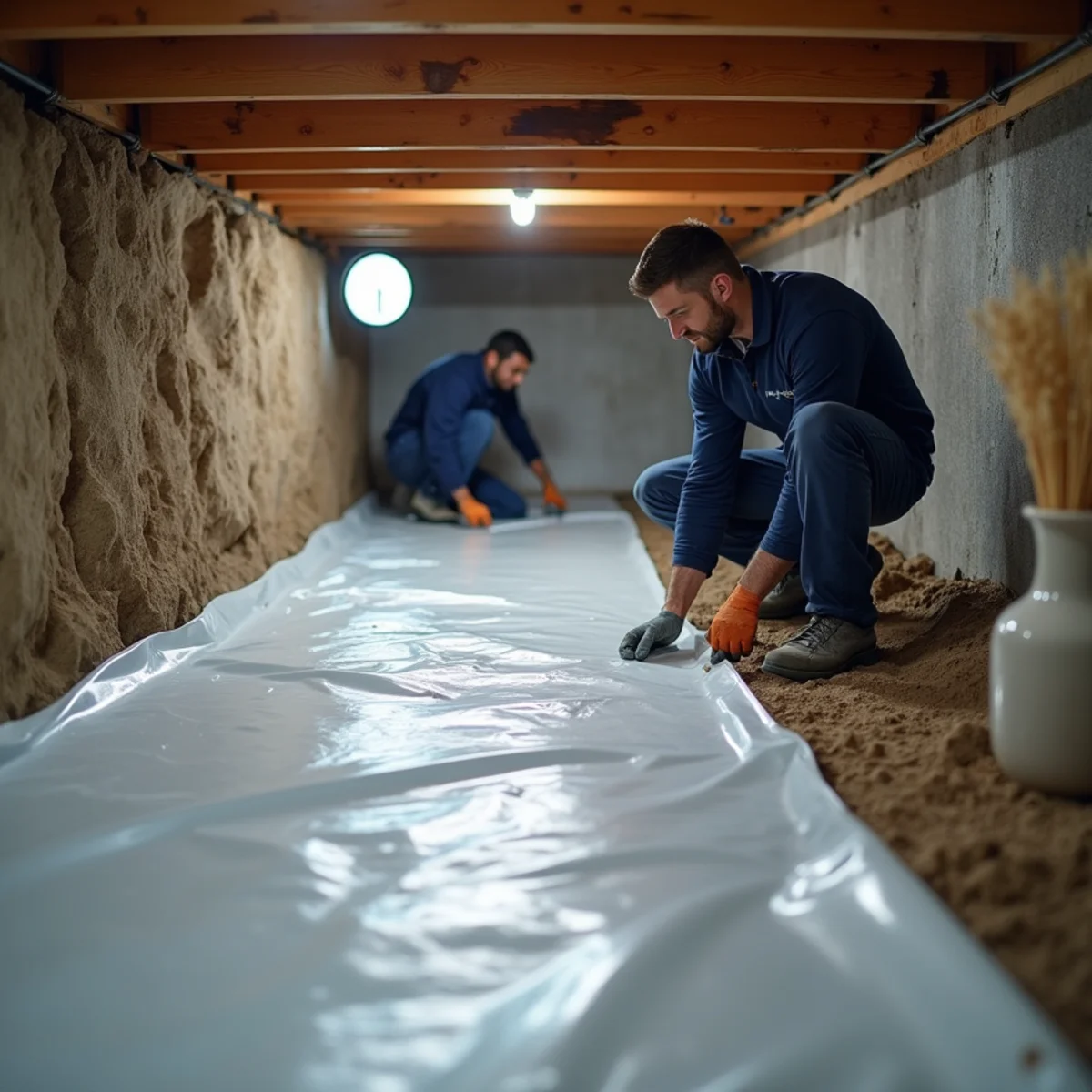
New vapour barrier sealing the soil floor of a Fullerton crawl space
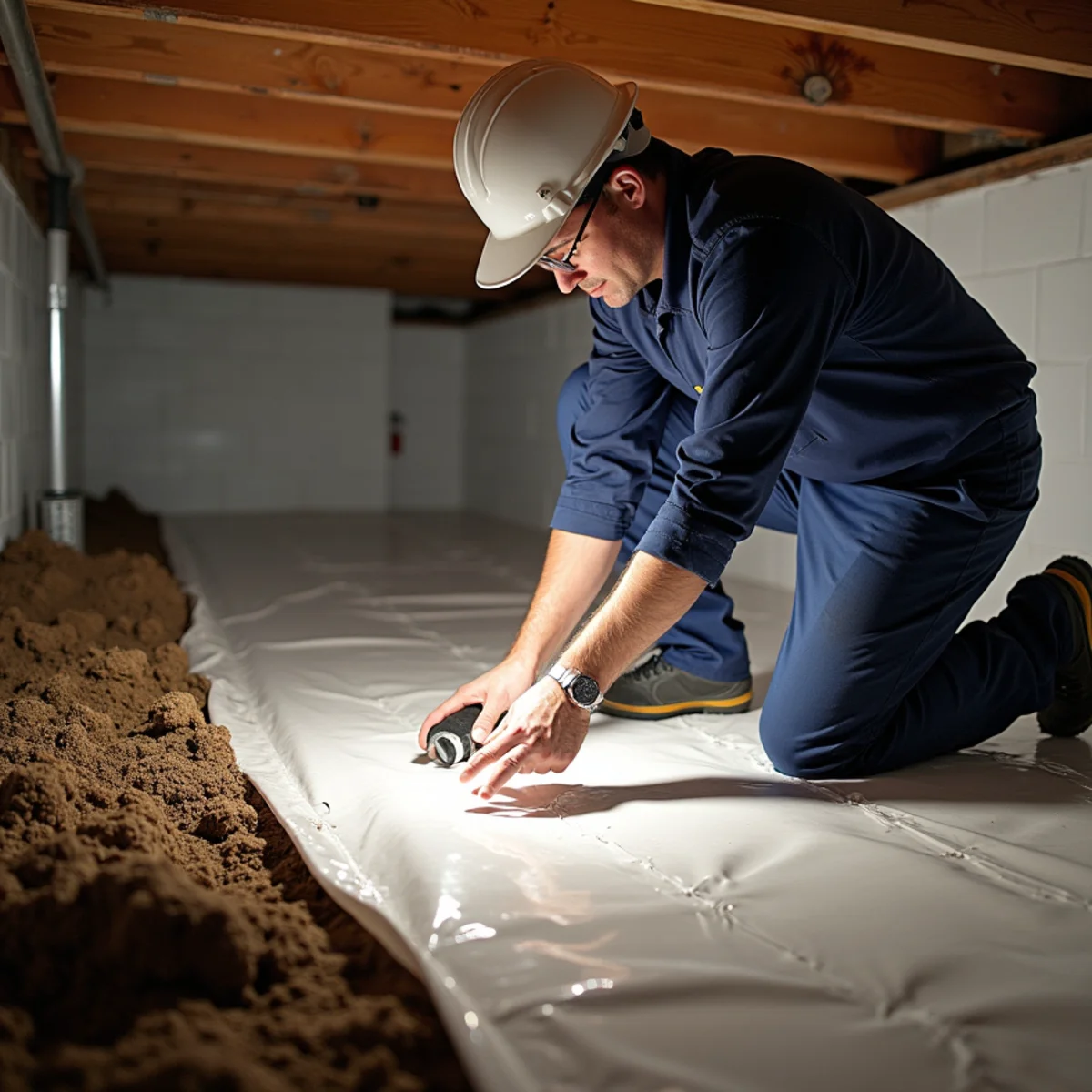
Vapor barrier being replaced in a dried crawl space
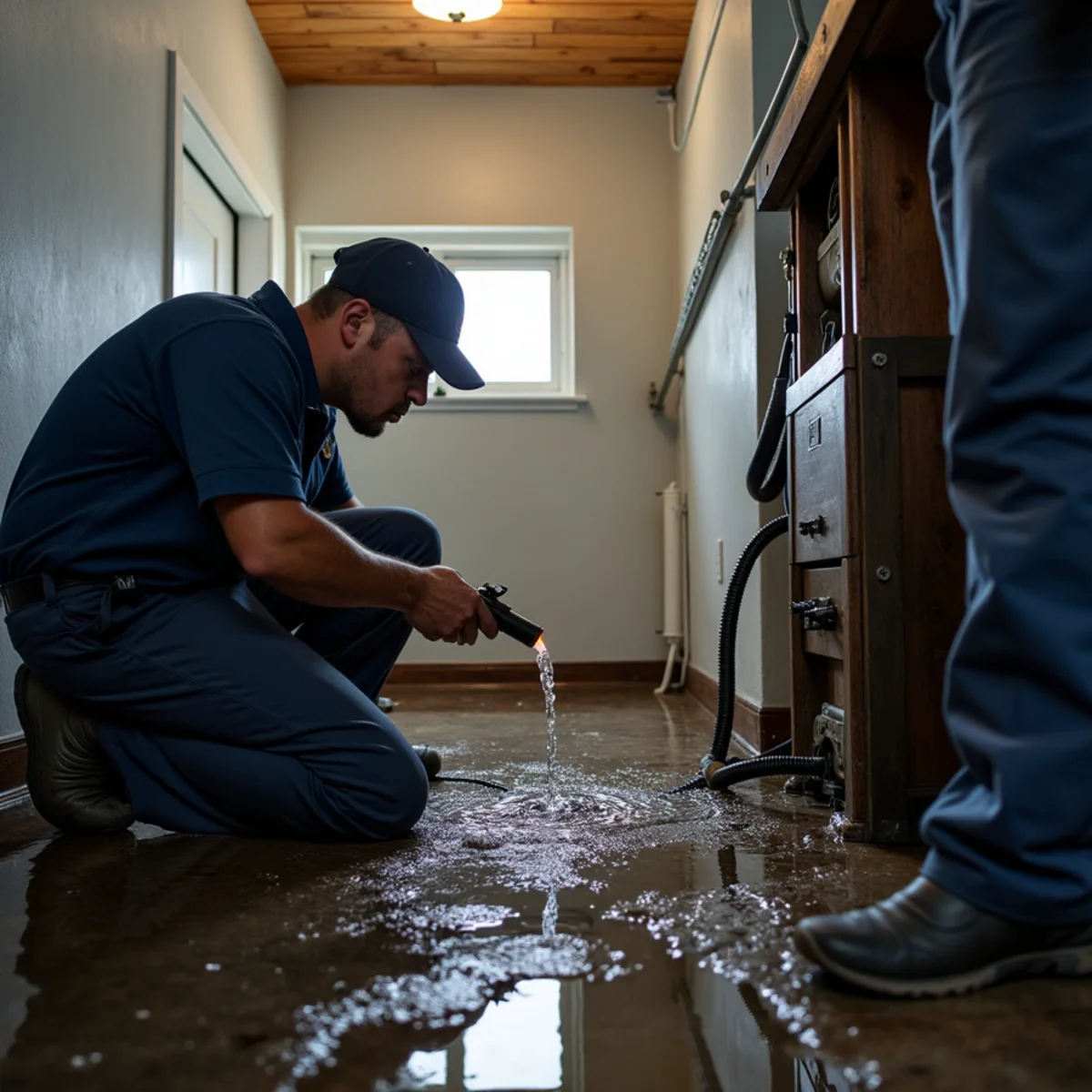
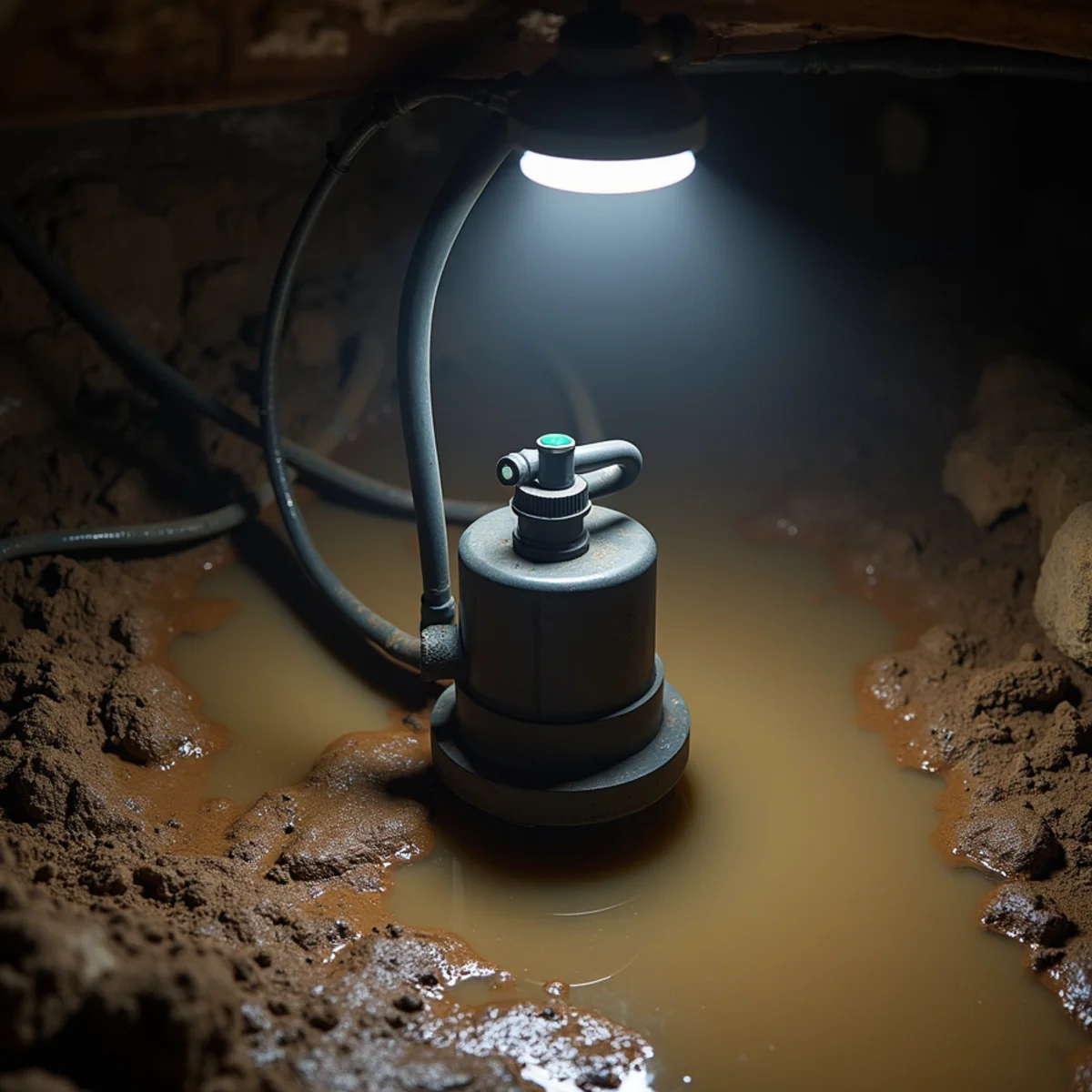
Testing a sump pump after crawl space cleanup
Whatever is under your house is in your air. Stack effect pulls crawl space air up through the floor assembly into the living space.
Grading, downspout discharge, a silted area drain or a plumbing failure. Drying a crawl space without correcting the entry point is a service you pay for twice.
Sealing the vents and running a closed system is the difference between drying the space and fighting the weather for a week.
On a bare soil floor it is the single highest-value improvement available to a raised-foundation home in this climate, and we will say so.
If we find rot at a mudsill or a compromised post base, we document and refer. We do not quote structural repairs we are not licensed to perform.
Access drives this job more than anything else. A tight 18-inch clearance costs more to work in than a walk-in sub-area:
Full basements are uncommon here — most of the city is slab-on-grade or raised foundation with a vented crawl space. The older pre-1960 housing downtown, in Lemon Park and across parts of North Fullerton typically has a crawl space or sub-area, and a few larger and hillside homes have partial basements or below-grade rooms.
In a dry Fullerton summer a small amount of water may eventually evaporate — into your house, through the floor assembly. What will not fix itself is the wet insulation, the mold on the subfloor, or whatever let the water in. Left alone, this reliably becomes an air quality problem and sometimes a structural one.
Yes, because of stack effect. Air moves upward through a house, and a meaningful share of the air you breathe on the ground floor came up from the crawl space first. Mold spores, moisture and odours come with it. A damp sub-area is one of the most common causes of a musty house with no visible mold anywhere.
It is heavy polyethylene sheeting laid over the soil floor and sealed at the seams and perimeter, and it stops ground moisture evaporating into the crawl space. If your sub-area has bare soil, yes — it is the cheapest meaningful improvement you can make to a raised-foundation home in this climate.
Five to seven days as a contained system once standing water is out, longer if the soil floor was saturated. The musty smell in the living space usually eases within the first two or three days as the HEPA units and dehumidification take hold — if it does not, that is a sign there is a second wet area we have not reached yet, and we keep looking.
Crews dispatch within 60 minutes across Fullerton and north Orange County.
Related
Storm water and overflow floods are contaminated by definition. We extract, remove what cannot be saved, disinfect and dry.
Flood Cleanup in FullertonContainment, HEPA filtration, source removal and independent clearance testing — plus fixing the moisture that caused it.
Mold Remediation in FullertonBalanced air movers and dehumidifiers, daily moisture logs, and a documented dry standard — so nothing is left wet behind the wall.
Structural Drying in FullertonFurther Reading
That smell is microbial growth producing gas. It is not an odour problem — it is a moisture problem that has not been found yet.
Read the guideOn expansive clay, where your roof water goes is a foundation question, not a landscaping one. Here is the checklist.
Read the guideCrews dispatched within 60 minutes — on-site in 60–90 minutes. We extract, dry to a documented standard, and hand your adjuster a file they cannot argue with.