
Problem Solving6 min read
How Long Does Structural Drying Take? A Room-by-Room Timeline
Three to five days is the honest answer for most residential losses — but the range is wide, and here is what moves it.
Read the guide24/7 emergency line — crews dispatched within 60 minutes
1500 S Raymond Ave, Fullerton, CA 92831
Fullerton, CA
Drying is where water damage jobs are won or lost, and it is the phase homeowners most often try to shortcut with box fans and a rented dehumidifier from the hardware store.
The problem is not effort. It is physics. Evaporation off a wet surface only continues while the surrounding air can accept more moisture. Fans alone raise humidity in a closed room until evaporation stalls, and now you have moved water into the air and into every other material in that room.
Proper drying is a balanced system: airflow to drive evaporation, dehumidification to remove the vapour, and measurement to prove it worked.
Crews dispatched within 60 minutes — on-site in 60–90 minutes
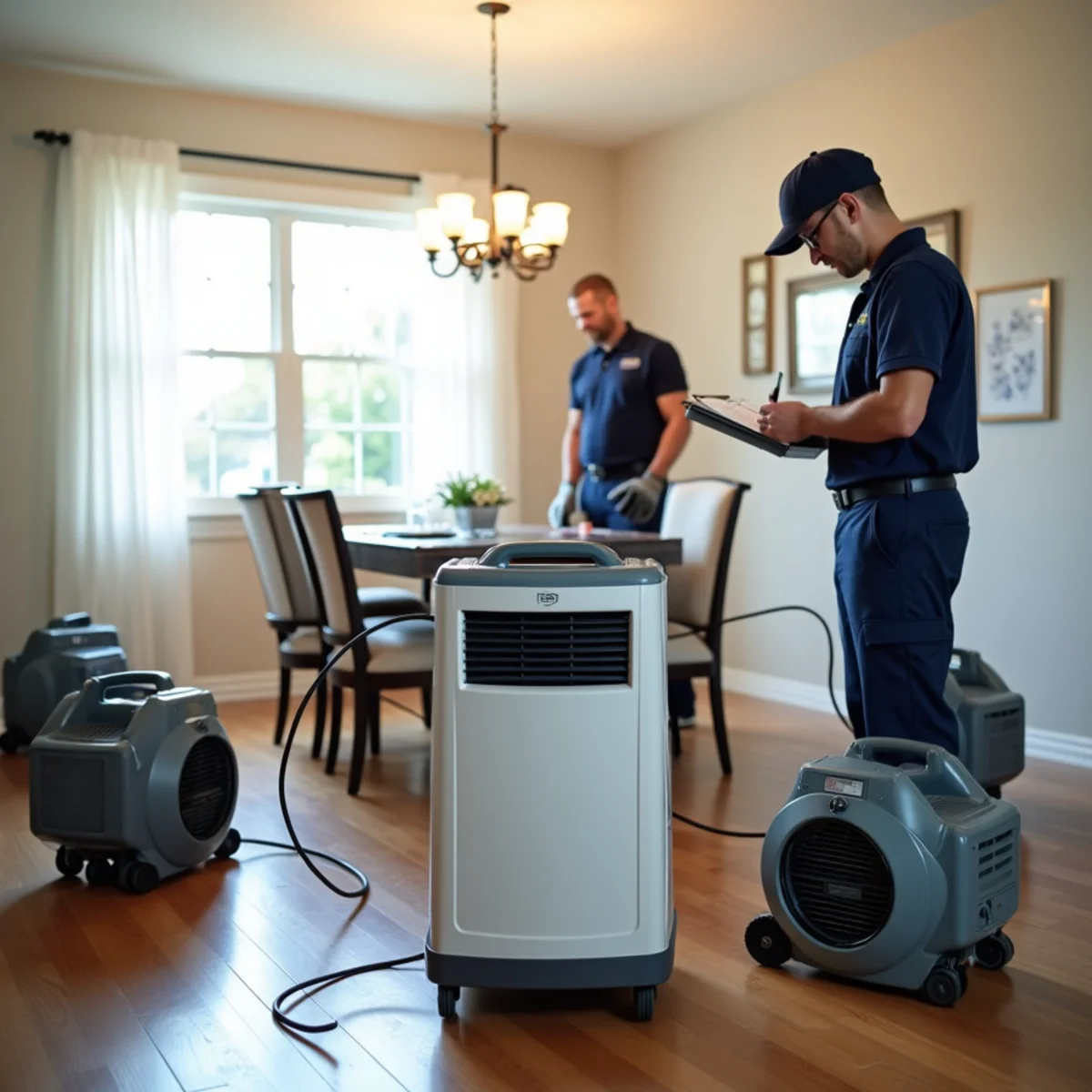
+1 (201) 277-9344We are called to a lot of jobs that someone else already 'dried'. This is what that looks like:
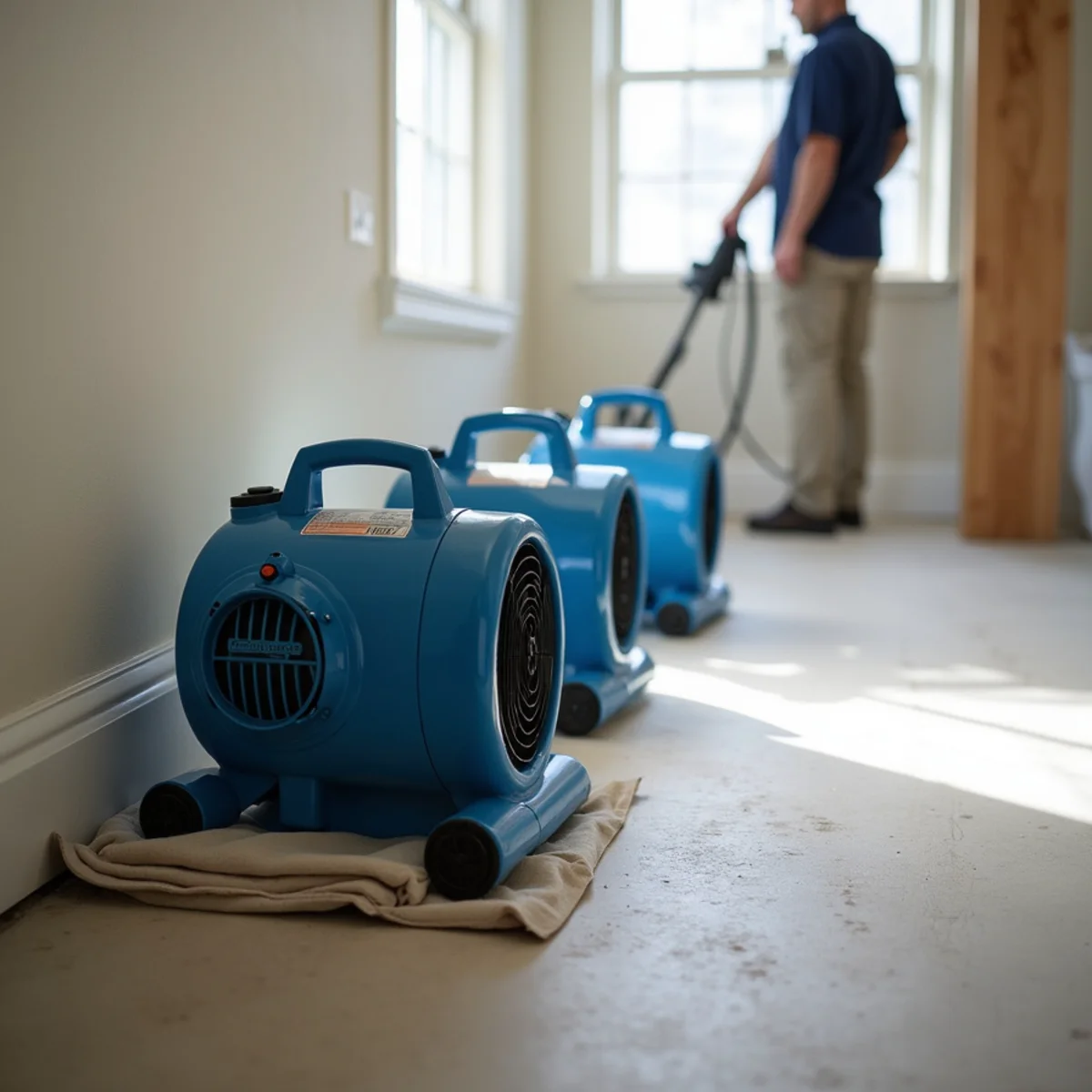
Drying is not fans in a room. This is the equipment and the discipline that goes into it:
Three variables control drying: airflow, humidity and temperature. Get the balance wrong and you either dry nothing or you push moisture somewhere new.
Air movers are aimed at a low angle along wet surfaces to break the saturated boundary layer of air sitting against the material. That is what makes evaporation continue. Point them straight at a wall and you get noise and not much else.
Dehumidifiers then pull that vapour back out of the air. We size them to the affected cubic volume and the class of loss, not to the room. Low-grain refrigerant units handle most residential work in Fullerton's climate; desiccant units come out when we need to drive materials like hardwood, plaster or dense wood framing below what a refrigerant unit can reach.
Temperature matters more than people expect. Warm air holds far more moisture than cool air, so we manage the building temperature to keep evaporation moving rather than opening windows and hoping.
Most of the water in a residential loss is not in the room. It is in the wall cavity, the bottom plate, the insulation and the subfloor.
Where we can avoid demolition we do, using targeted systems that push dry air directly into the assembly.
A material is not dry when it feels dry. It is dry when its moisture content matches an unaffected reference area of the same material in the same building.
So on day one we take readings from a dry part of your house — a closet on the other side, the same species of framing in an unaffected room — and that becomes the target. Then every day we record equipment placement, temperature, relative humidity, and moisture content at the same marked points.
Two things come out of that log. First, we know when to pull equipment, which stops you paying for drying days you do not need. Second, you get a defensible record for your insurer showing the property reached a dry standard. If a mold question comes up later, that log is the answer.
Fullerton's Mediterranean climate helps and hurts. Dry summer air makes evaporation easy — often we can dry with less dehumidification than a humid climate would need.
Winter storms are the other story. During a November through March rain event, outdoor humidity is high and the marine layer keeps it there overnight. Opening windows during a storm makes drying worse, not better. We run closed-system drying in those conditions and manage the building envelope rather than relying on outside air.
Hillside homes above Bastanchury and in Rolling Hills have their own quirk: temperature swings between a sunny afternoon and a 40-degree night change the dew point inside the structure and can cause condensation on cold surfaces mid-dry. That is one reason we monitor daily instead of setting equipment and disappearing.
The sequence is the same on every job, and each step exists because skipping it is what causes a callback.
Readings taken from an unaffected area of the same building and the same materials. That number becomes the target for the whole job.
Thermal imaging then pin and pinless meters, working outward until we get consecutive dry readings. Marked points are pencilled on so every later reading is taken in the same place.
Wet insulation comes out, and drywall gets a flood cut only where the cavity is saturated. Anything a meter says can be dried in place, we dry in place.
Air movers angled low along wet surfaces to break the boundary layer, dehumidifiers sized to affected volume, and building temperature managed to keep evaporation moving.
Readings logged every day. A plateau usually means trapped water behind an impermeable layer, and the equipment gets reconfigured rather than left running.
Equipment comes out when every marked point meets the dry standard, and the final readings go into the file with the drying log.
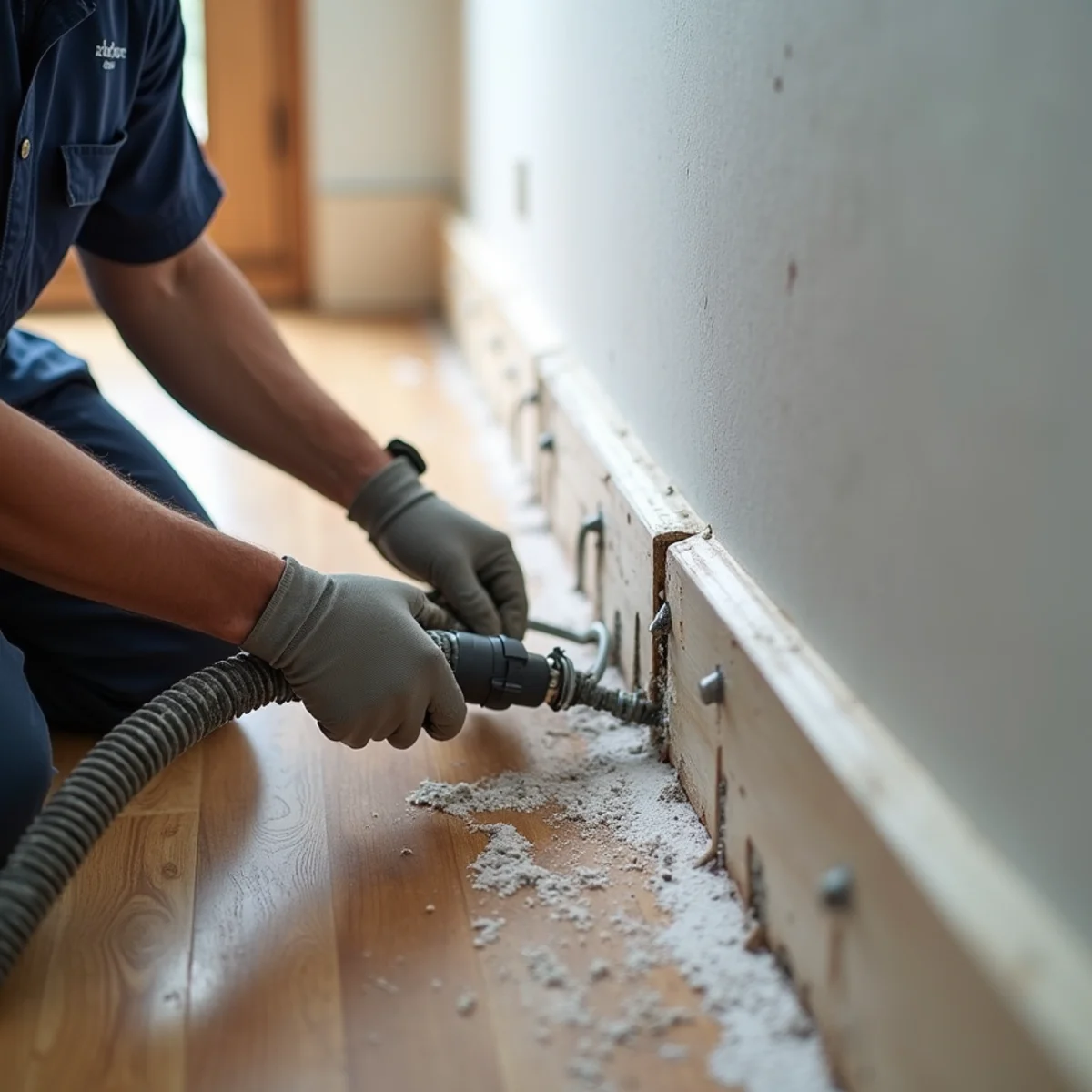
Wall cavity injection drying without removing drywall in a Fullerton home
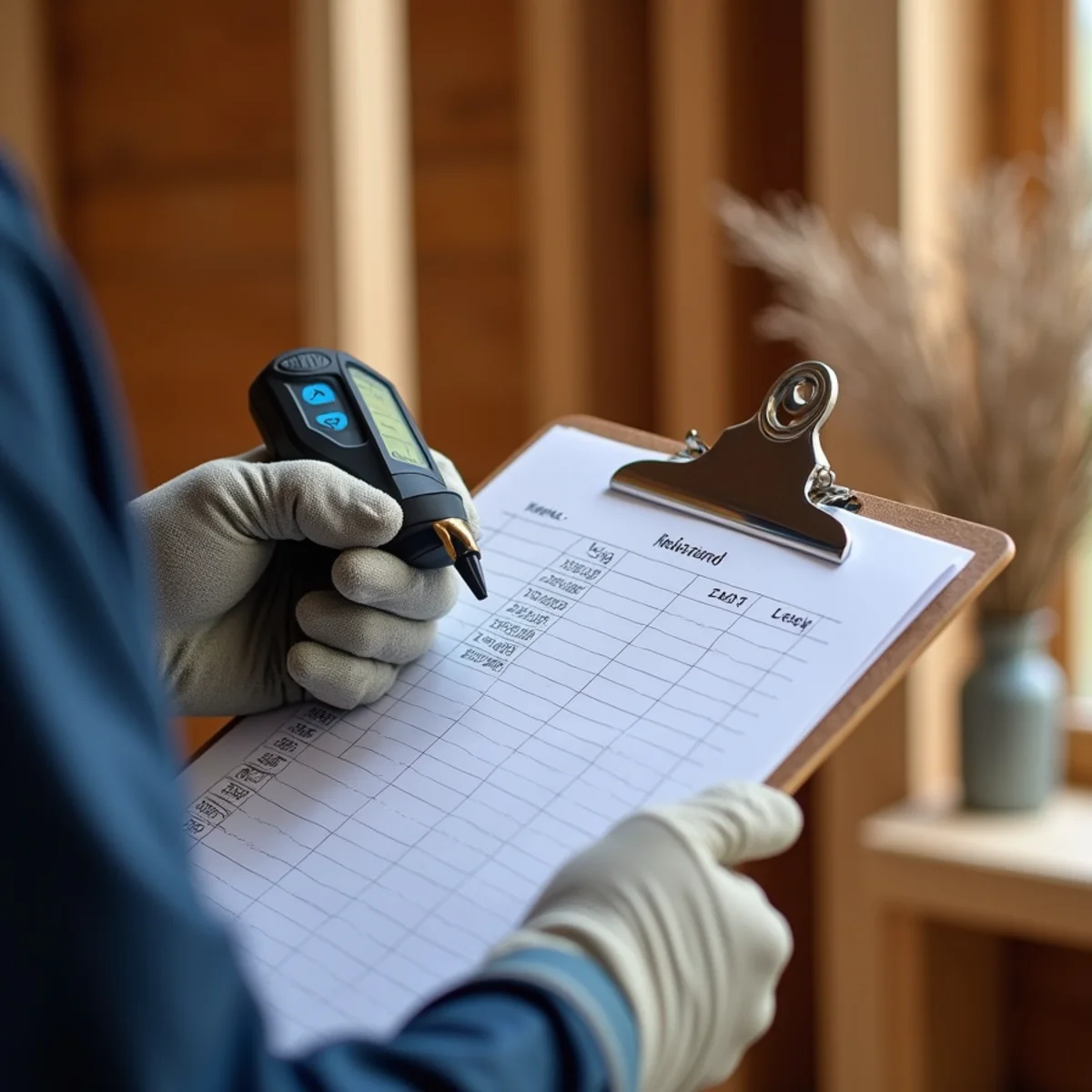
Daily moisture readings recorded against a dry standard in Fullerton
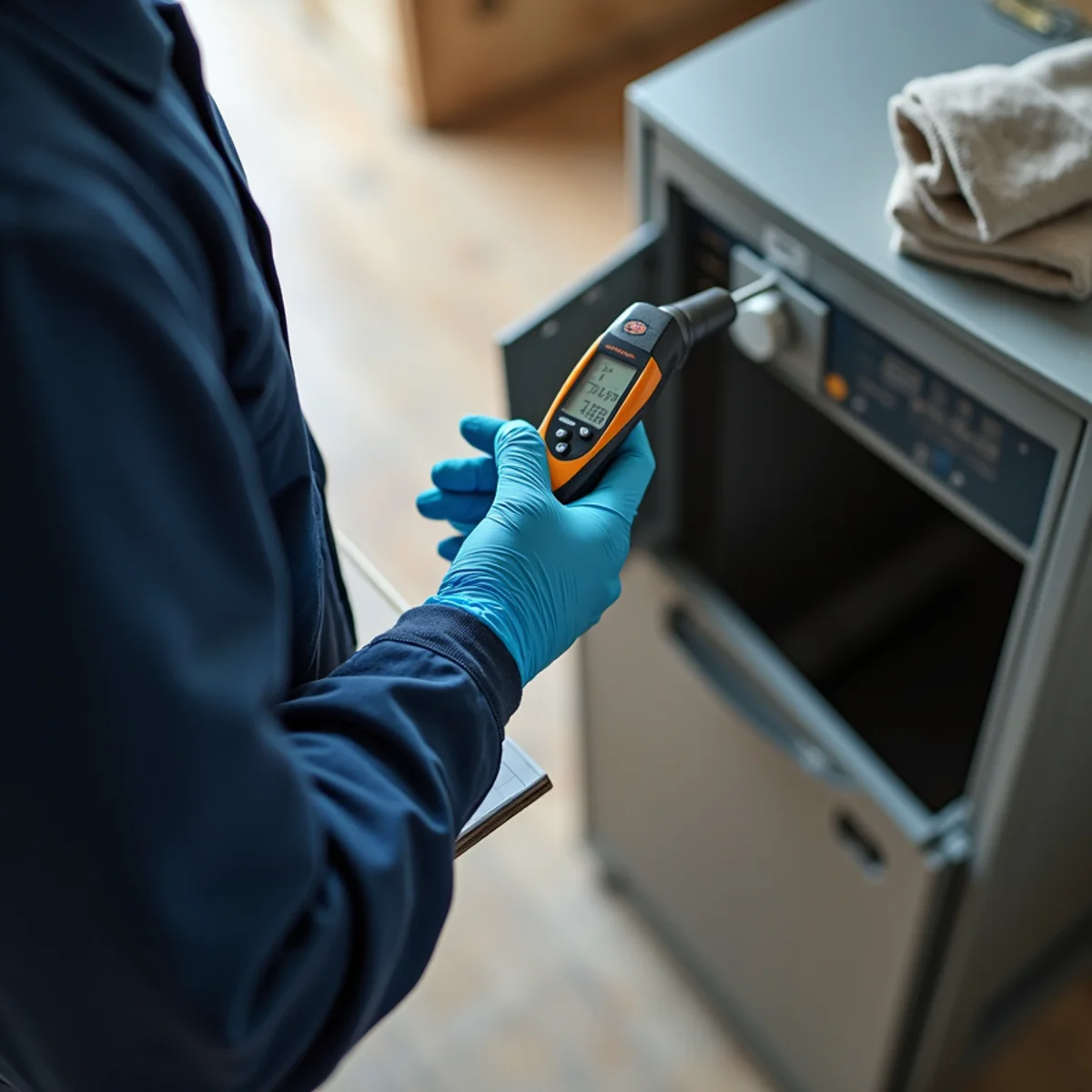
Checking grain depression between intake and exhaust air
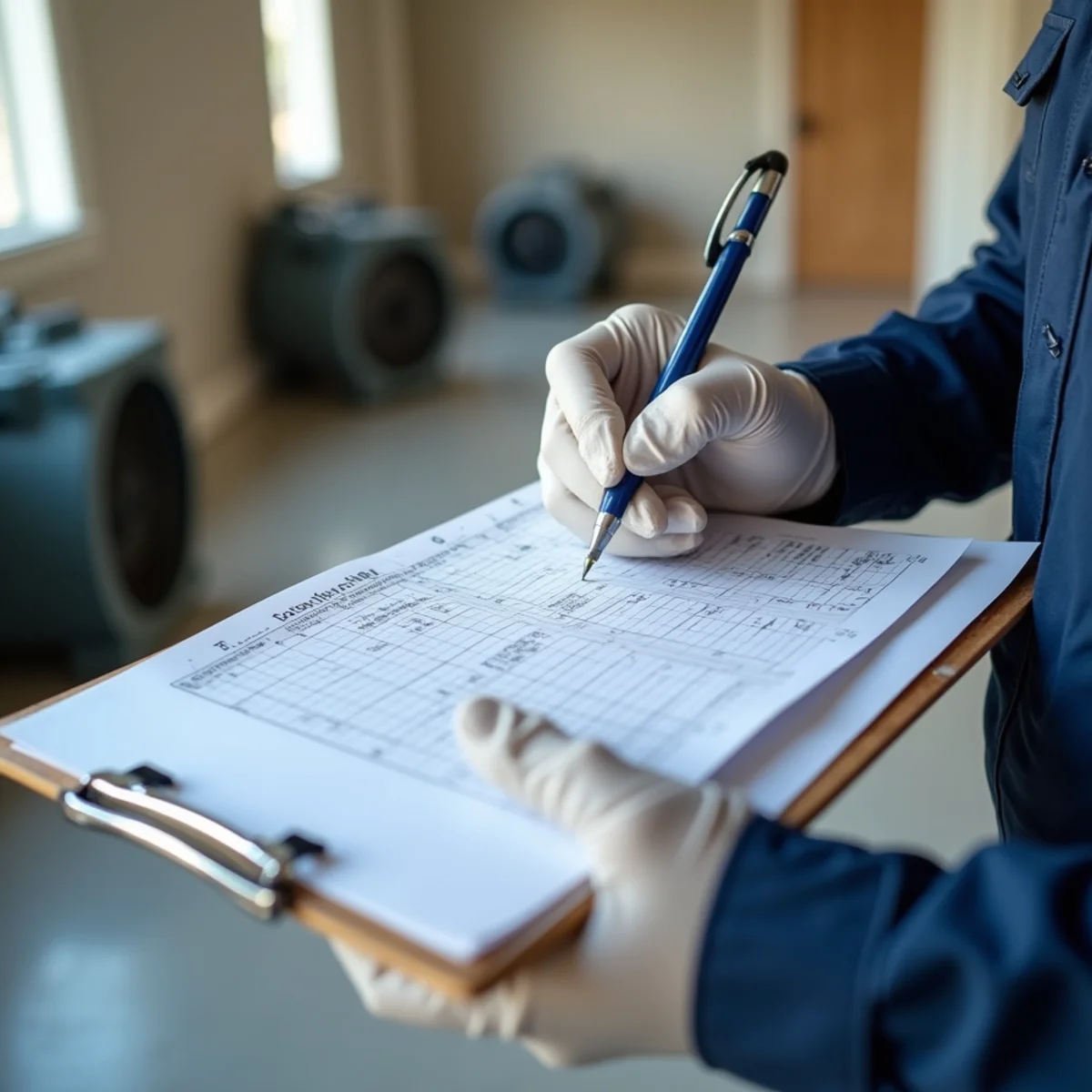
Daily drying log recorded at each marked monitoring point
Most of the jobs we are called to re-do were dried by someone who stopped at the surface. What separates a documented dry from a confident guess:
Materials are dry when they match an unaffected reference in the same building — not when three days have passed or a surface feels dry to the hand.
Equipment placement, temperature, humidity and moisture content, recorded every day. If a mold question comes up in six weeks, that log is the answer.
Injection drying and cavity readings, because the water in a residential loss is mostly in the wall, the bottom plate and the subfloor rather than in the room.
Dehumidification calculated from affected cubic volume and class of loss. Under-sizing stalls the job; over-sizing just bills you for units you do not need.
Drying is billed largely on equipment units per day plus monitoring visits. What changes the number:
Most residential losses in Fullerton dry in three to five days. Hardwood, plaster and saturated framing can take a week or more. We do not guess — we measure daily and pull equipment when materials reach the dry standard set from an unaffected part of your home.
For a small spill on a hard surface, sure. For anything that got into carpet pad, drywall or subfloor, no. Consumer dehumidifiers remove a fraction of the moisture per day of a commercial low-grain unit, and without meters you have no way to know whether the wall cavity is dry or just the surface.
Air movers run around 60 to 70 decibels and it is genuinely unpleasant. Please do not switch them off overnight — drying is cumulative, and eight hours of stalled evaporation typically adds a full day to the job and gives mold a window. If placement is making a bedroom unusable, call us and we will reconfigure.
Only when outdoor air is drier than indoor air, which in Fullerton means a warm dry afternoon — not a winter storm and not an evening with the marine layer in. We run a closed drying system in most conditions because it is more predictable than the weather.
By comparison. We take moisture readings from unaffected areas of the same building and the same materials, and that becomes the target. When affected materials read at or below that number at every marked point, drying is complete and documented.
Crews dispatch within 60 minutes across Fullerton and north Orange County.
Related
Truck-mounted and portable extractors pull free water out of carpet, pad, tile and subfloor before it wicks into the structure.
Water Extraction in FullertonContainment, HEPA filtration, source removal and independent clearance testing — plus fixing the moisture that caused it.
Mold Remediation in FullertonThe full job, start to finish: emergency extraction, structural drying, mold prevention, repairs — and the documentation your adjuster needs.
Water Damage Restoration in FullertonFurther Reading
Three to five days is the honest answer for most residential losses — but the range is wide, and here is what moves it.
Read the guideThat smell is microbial growth producing gas. It is not an odour problem — it is a moisture problem that has not been found yet.
Read the guideCrews dispatched within 60 minutes — on-site in 60–90 minutes. We extract, dry to a documented standard, and hand your adjuster a file they cannot argue with.