
Emergency Guides6 min read
Burst Pipe? Your First-Hour Action Plan to Stop the Damage
The first sixty minutes decide whether this is a cleanup or a reconstruction. Here is the order of operations, and the three things not to do.
Read the guide24/7 emergency line — crews dispatched within 60 minutes
1500 S Raymond Ave, Fullerton, CA 92831
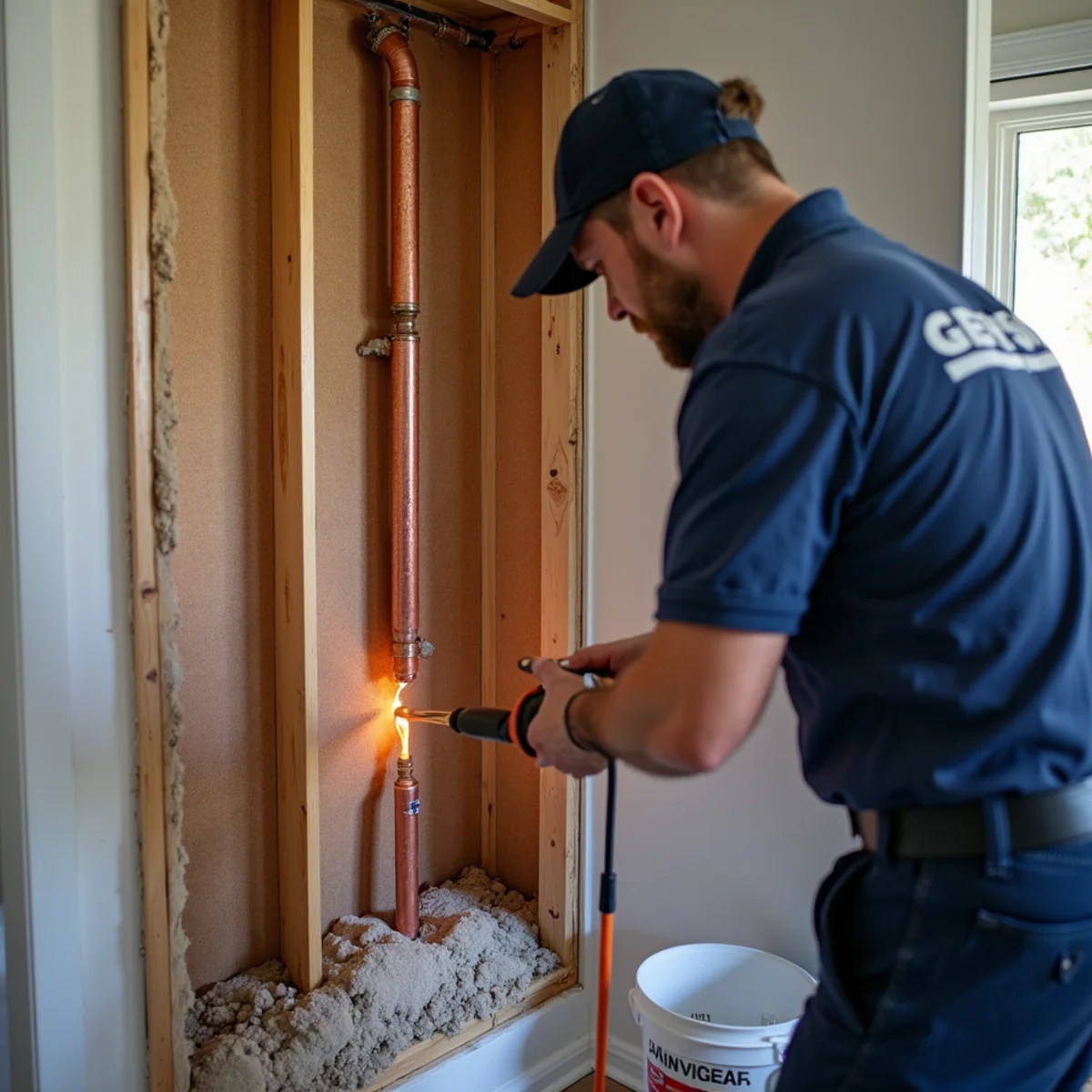
24/7 Emergency Service
A burst supply line under pressure is the fastest way to flood a house. There is no reservoir to empty — it runs at full pressure until someone closes a valve.
That single fact drives everything about how we handle these. Get the water off, get the bulk water out, then find every place it travelled, because a burst line in a wall pushes water sideways along the bottom plate into rooms that look completely dry.
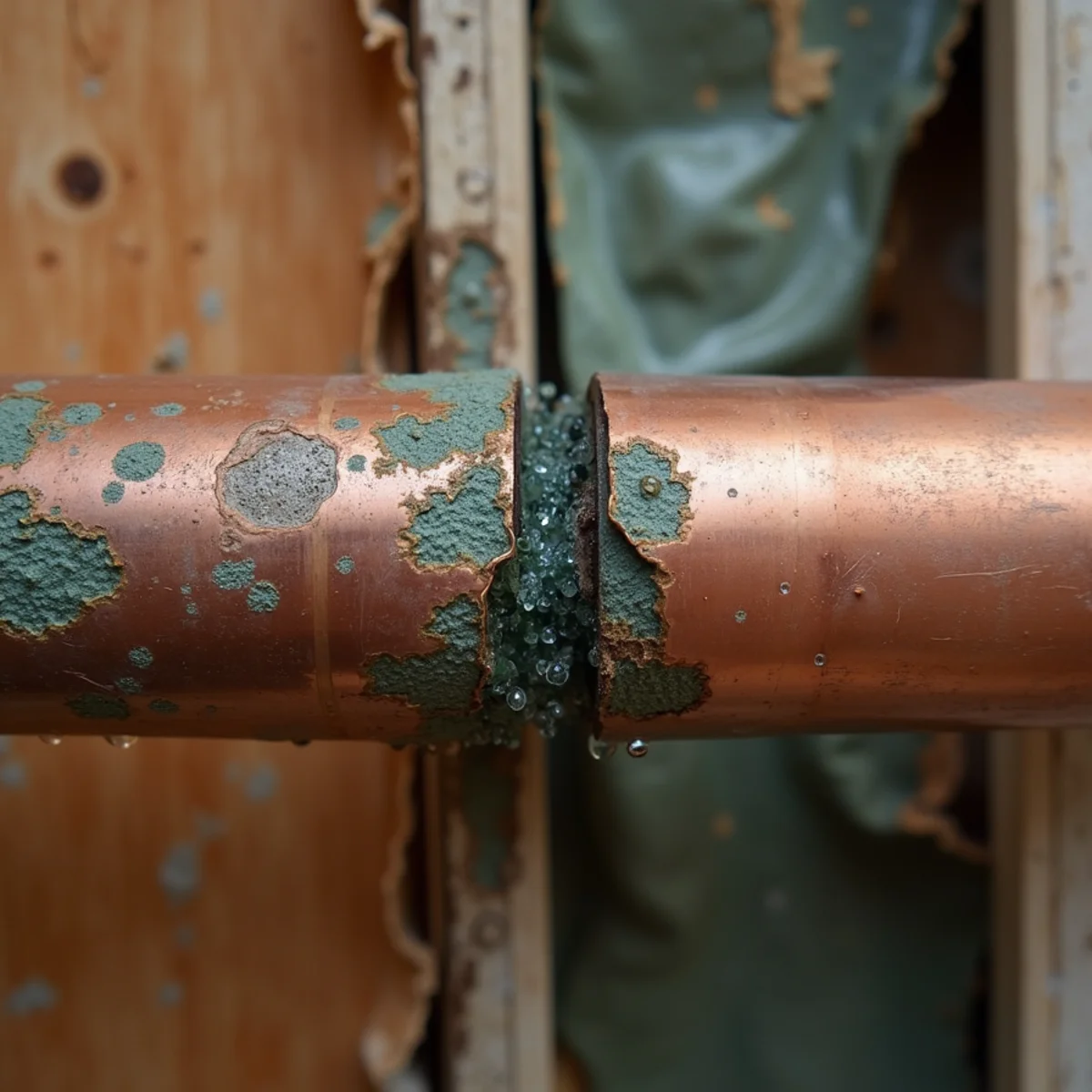
In Fullerton, most of the bursts we see are one of three failures: corroded galvanized in a pre-1950 house, pinholed 1960s copper eaten from the inside by hard water, or a failed flexible connector at a toilet, sink or washing machine.
Crews dispatched within 60 minutes — on-site in 60–90 minutes
+1 (201) 277-9344Sometimes it is obvious. Often it is not, because the pipe is inside a wall:
The plumbing repair is usually the smallest part. This is everything around it:
Everything else waits. In most Fullerton homes the main shut-off is in one of three places.
For the 1950s through 1970s tracts across Sunny Hills, Valencia, West Fullerton and Commonwealth, look at the front of the house on the exterior wall nearest the street, or in the garage near where the supply enters. There is also a street-side valve in the meter box at the kerb, which usually needs a meter key.
For the older downtown and Lemon Park houses, the shut-off is often in a basement-level utility area, a crawl-space access, or on an exterior wall that has been painted over enough times that the handle no longer turns easily. Do not force a corroded gate valve — snapping the stem turns a leak into a flood you cannot stop.
If you cannot get the water off, call and say so first. That changes what the crew brings and how fast they drive.
This is not a frozen-pipe city, and the failure pattern reflects that.
Galvanized steel, common in the 1920s to 1940s housing downtown, in Lemon Park and around the Fullerton Heritage streets, corrodes from the inside. Deposits build until flow restricts, pressure and turbulence rise at the restriction, and the wall thins until it splits. The warning signs — rusty water first thing in the morning, dropping pressure, visible corrosion at threaded joints — usually arrive years before the failure and are usually ignored.
Copper is the bigger volume problem now. Orange County's hard water at roughly 14 to 25 grains per gallon scales the inside of copper lines, and pitting corrosion develops under the deposits. That produces pinholes rather than dramatic ruptures — a weep behind a wall that runs for weeks. The 1960s and 1970s tracts across Parks, Gilbert, Brookhurst and Magnolia are exactly the vintage where this is now routine.
Then there are flexible connectors. Rubber washing-machine hoses and plastic-nut supply lines have a service life measured in years, not decades, and they fail without warning at full pressure. Braided stainless connectors and a quarter-turn shut-off behind the machine are a cheap fix for a very expensive failure mode.
Freezing does happen occasionally in the foothills. Bastanchury sits at the high point of the city and has recorded lows in the high twenties. Exposed exterior hose bibs and uninsulated garage runs are the vulnerable points on those rare nights.
A burst line is a clean-water Category 1 loss at the moment it happens, which is good news — it means more material is salvageable if we get there quickly. It does not stay Category 1 forever, though. Water sitting more than about 48 hours, or water that has run through building materials and picked up contamination, moves to Category 2.
We extract, then open only what has to be opened. A pressurised line inside a wall saturates insulation and the bottom plate, and wet insulation never dries in place — that comes out. Where the cavity can be dried through injection ports behind the baseline, we do that instead of removing the wall.
We coordinate the plumbing repair with a licensed plumber, dry the structure to a documented standard, and put the wall, texture, paint and flooring back. One file, one point of contact, no gap between a mitigation crew and a rebuild contractor.
From the moment the water is off, this is the order the job runs in.
Main valve or fixture angle stop closed, and any circuit that water has reached switched off at the panel before crews go in.
The split pipe, the water line on the walls, and the extent room by room — captured before anything is moved, because it cannot be recreated afterwards.
Bulk water out first, working from the dry edge inward, with weighted passes on any carpet that might be salvageable.
Meter the wall, pull wet insulation, and flood cut above the wicking line. Where the cavity can be dried through injection ports, the wall stays up.
Your plumber or one of ours makes the repair and pressure tests it while our drying equipment is already running.
Daily readings until every marked point matches an unaffected reference, then drywall, texture, paint and flooring.
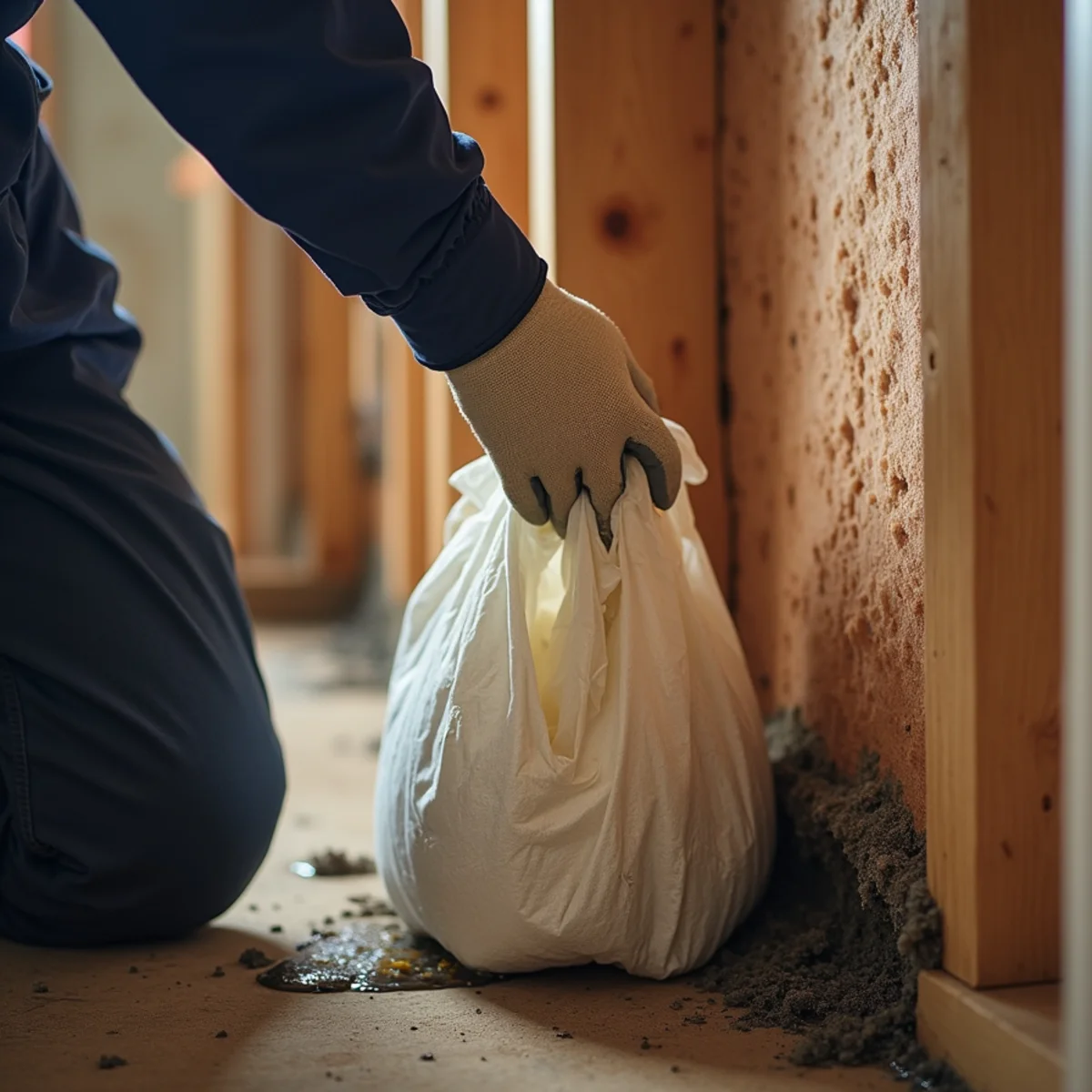
Removing saturated insulation from a wall cavity after a burst pipe in Fullerton
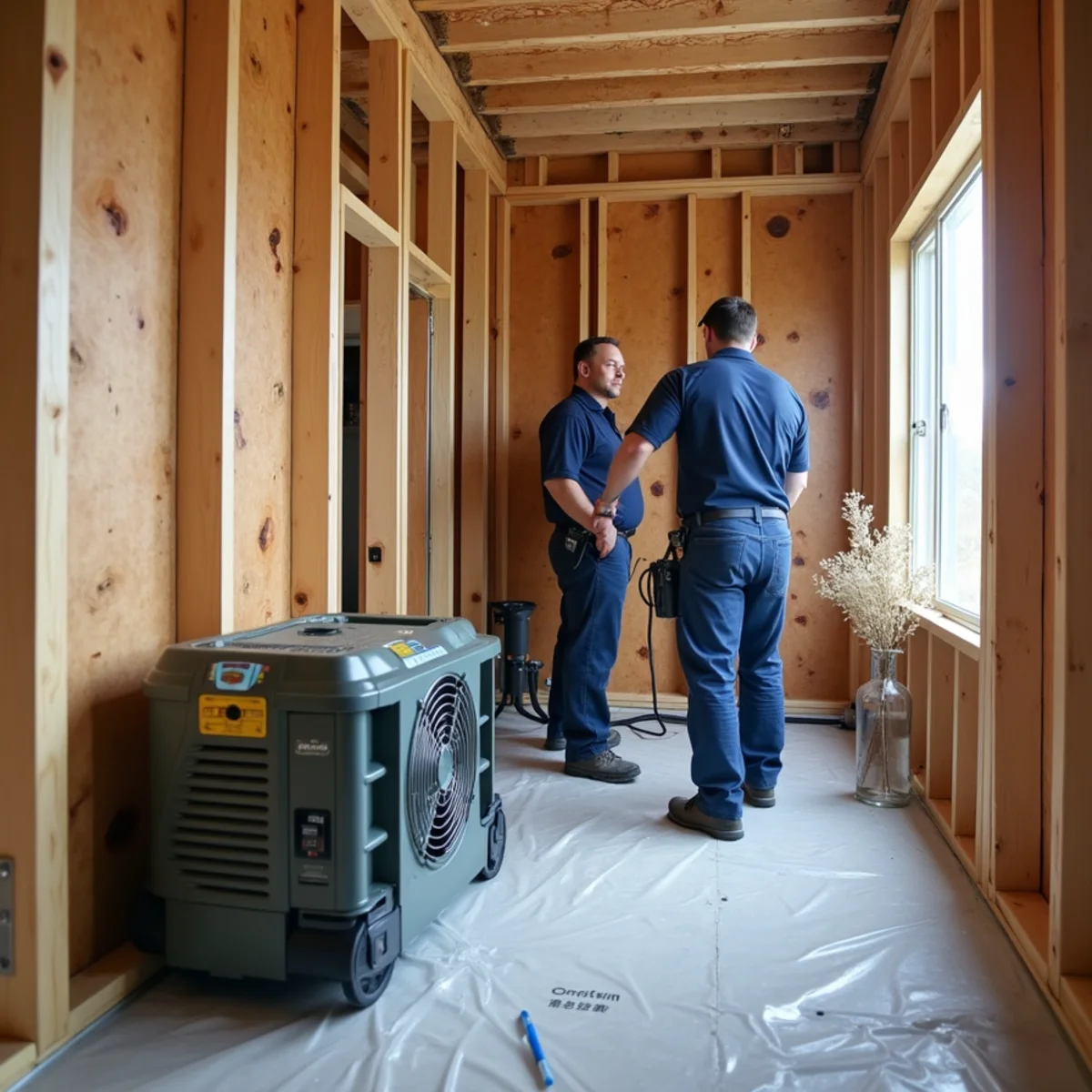
Drying an opened wall cavity after burst pipe cleanup in Fullerton, CA
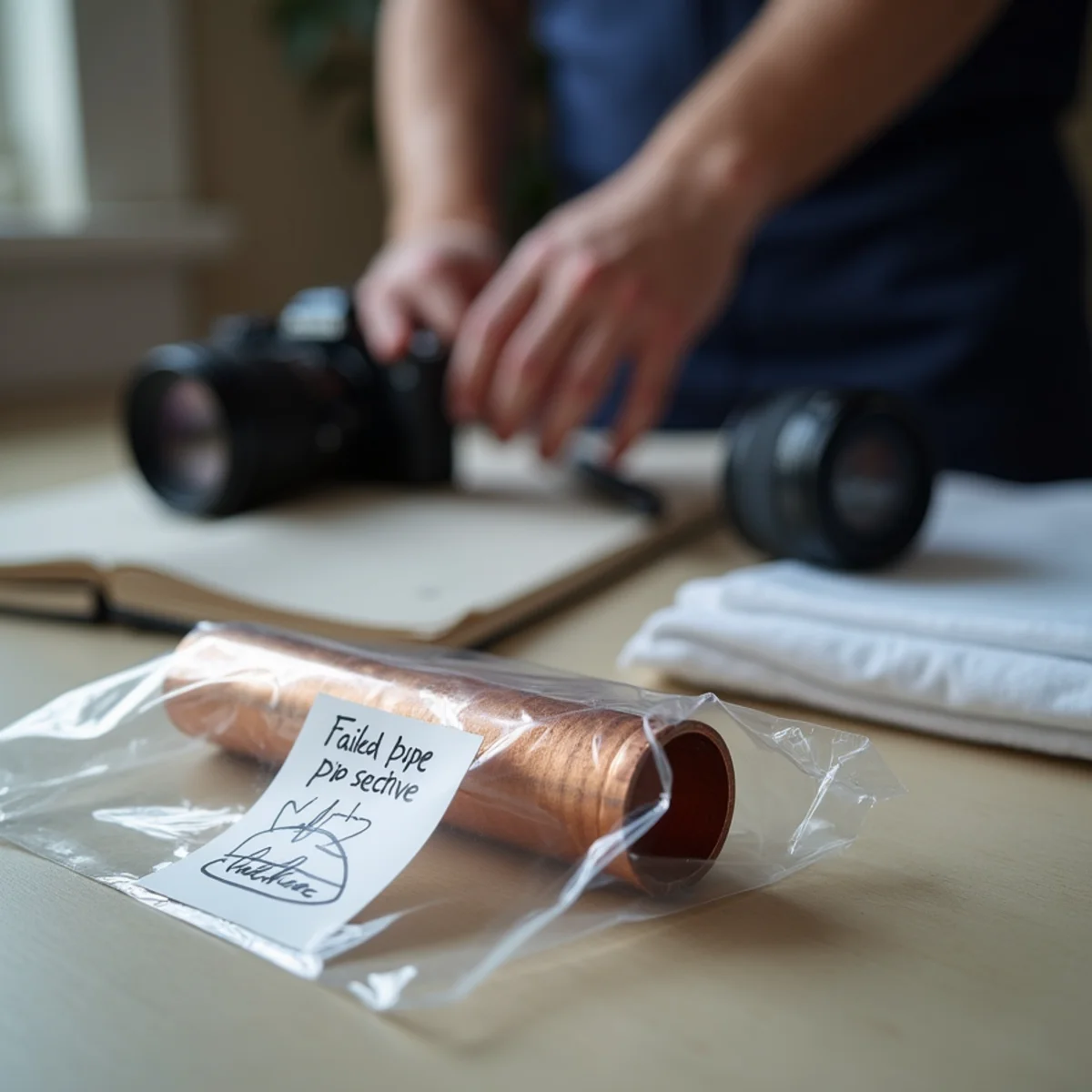
Failed pipe section bagged and labelled as claim evidence
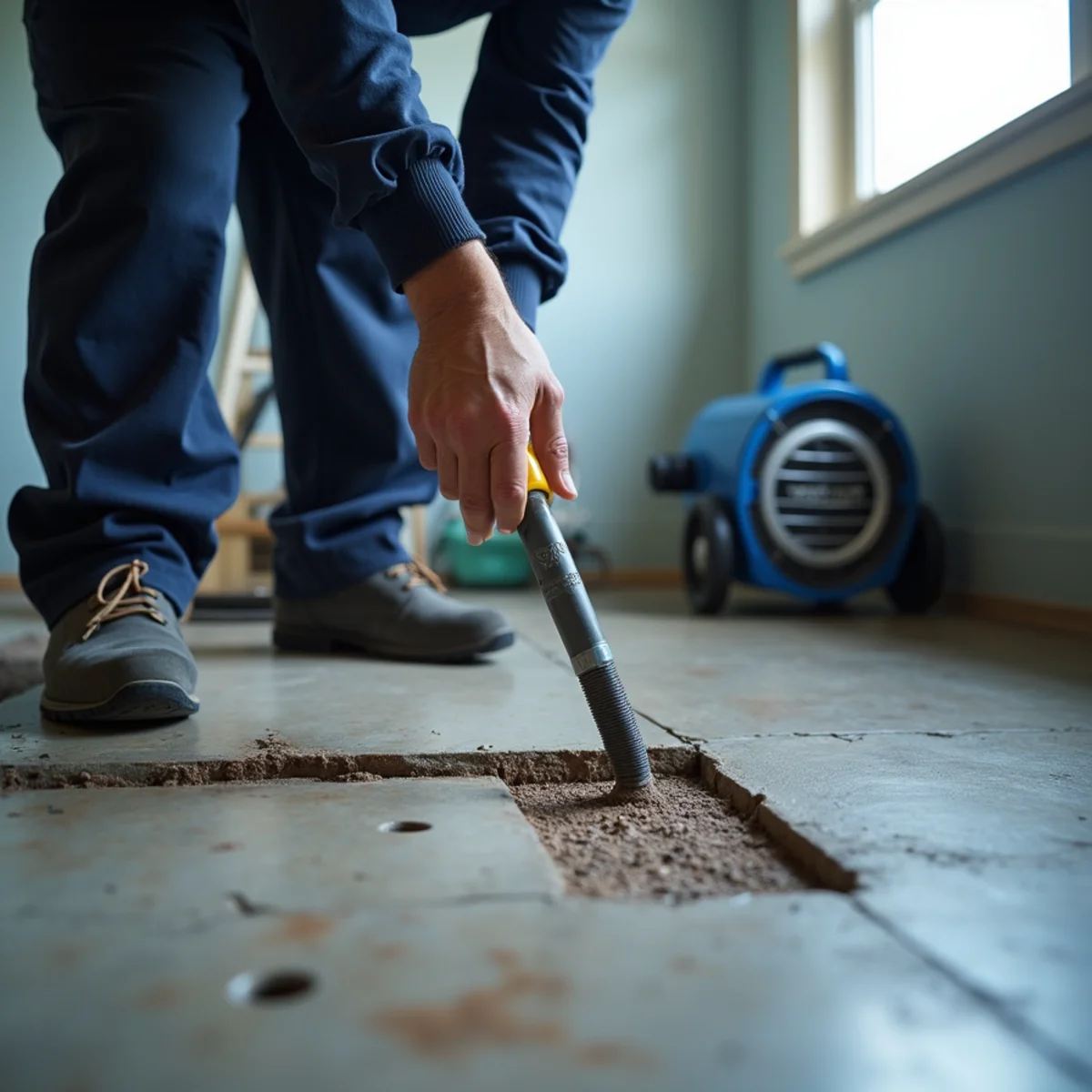
Air injected into a wall cavity to dry it without full removal
Burst lines here are rarely random. They follow the city's plumbing history, and knowing that changes what we check:
Galvanized corroding from the inside downtown, hard-water pinholes in 1960s copper across Parks and Gilbert, or a perished flexible connector. Each has a different spread pattern.
One pinhole in fifty-year-old copper is usually the first of several. We tell you what we saw inside the wall — we do not sell repipes, so there is nothing in it for us either way.
Dispatched within 60 minutes with extraction and drying gear loaded, because a supply line at household pressure does not pause while someone writes a quote.
We photograph the failure and keep the physical evidence. A carrier that can call the leak long-running will, and the file is what stops that.
The plumbing repair is usually the smallest line on the invoice. What actually drives the number:
Generally yes. A sudden and accidental pipe failure is the textbook covered peril under a standard California homeowners policy — the resulting water damage, drying and repairs are covered. The pipe itself is often excluded, and if the carrier can show the leak was slow and long-running, they may deny it as gradual damage. Reporting promptly is what protects you.
Only after the repair has been pressure tested. And if the failure was a pinhole in old copper, ask the plumber directly whether they saw pitting elsewhere on the run. One pinhole in a hard-water city like ours is frequently the first of several.
Not necessarily, but it is worth asking. A single failed flexible connector means replace the connectors. A pinhole in original 1960s copper, in a house with hard water and no whole-house treatment, usually means the rest of that run is at the same stage of corrosion. We will give you a straight assessment rather than an upsell — repiping is a plumbing decision, not ours.
Yes, and we prefer it if you have one you trust. We handle mitigation, drying and reconstruction; they handle the pipe. If you do not have a plumber, we will bring in a licensed one we work with regularly and you are billed by them directly — no markup through us.
The plumbing repair is usually the same day. Drying runs three to five days on a typical residential loss, longer where a slab or hardwood is involved. Reconstruction depends on what came out — a flood cut with new base, texture and paint is about a week once the carrier approves the scope, and a floor or cabinet replacement is several.
Crews dispatch within 60 minutes across Fullerton and north Orange County.
Related
A real person answers at 3 a.m. Crews dispatch within 60 minutes, on-site in 60–90, with extraction gear on the first truck.
Emergency Water Removal in FullertonFullerton's most common hidden loss. Detection, plumber coordination, slab drying and full restoration on one file.
Slab Leak Damage in FullertonTruck-mounted and portable extractors pull free water out of carpet, pad, tile and subfloor before it wicks into the structure.
Water Extraction in FullertonFurther Reading
The first sixty minutes decide whether this is a cleanup or a reconstruction. Here is the order of operations, and the three things not to do.
Read the guideThe pipe under your street is on the same ageing curve as the pipe under your house. Here is what that means practically, and who pays when it fails.
Read the guideCrews dispatched within 60 minutes — on-site in 60–90 minutes. We extract, dry to a documented standard, and hand your adjuster a file they cannot argue with.