Why Shop-Vaccing a Flooded Carpet Isn't Enough (What Professional Extraction Pulls Out)
The carpet feels better and the pad underneath is still loaded. That difference decides whether your flooring is dried or replaced.
Read the guide24/7 emergency line — crews dispatched within 60 minutes
1500 S Raymond Ave, Fullerton, CA 92831

Fullerton, CA
Extraction is the highest-leverage hour of any water loss. Every gallon we pull out mechanically is a gallon that does not have to be evaporated, captured by a dehumidifier and carried out as vapour over the following four days.
That is the whole economics of a water job. Aggressive early extraction shortens drying by days, cuts the equipment count, and keeps materials that would otherwise have to be cut out and replaced.
We bring extraction equipment on the first truck, not on a second trip after an estimate.
Crews dispatched within 60 minutes — on-site in 60–90 minutes
+1 (201) 277-9344If any of these describe your situation, a mop and a rented shop vac will not get there:

Extraction is billed as one line on most estimates. Here is everything that actually happens inside it:
A five-gallon wet vac moves roughly 60 to 90 cubic feet of air per minute at low lift. A truck-mounted extractor moves several hundred at far higher vacuum, and it does not stop to be emptied.
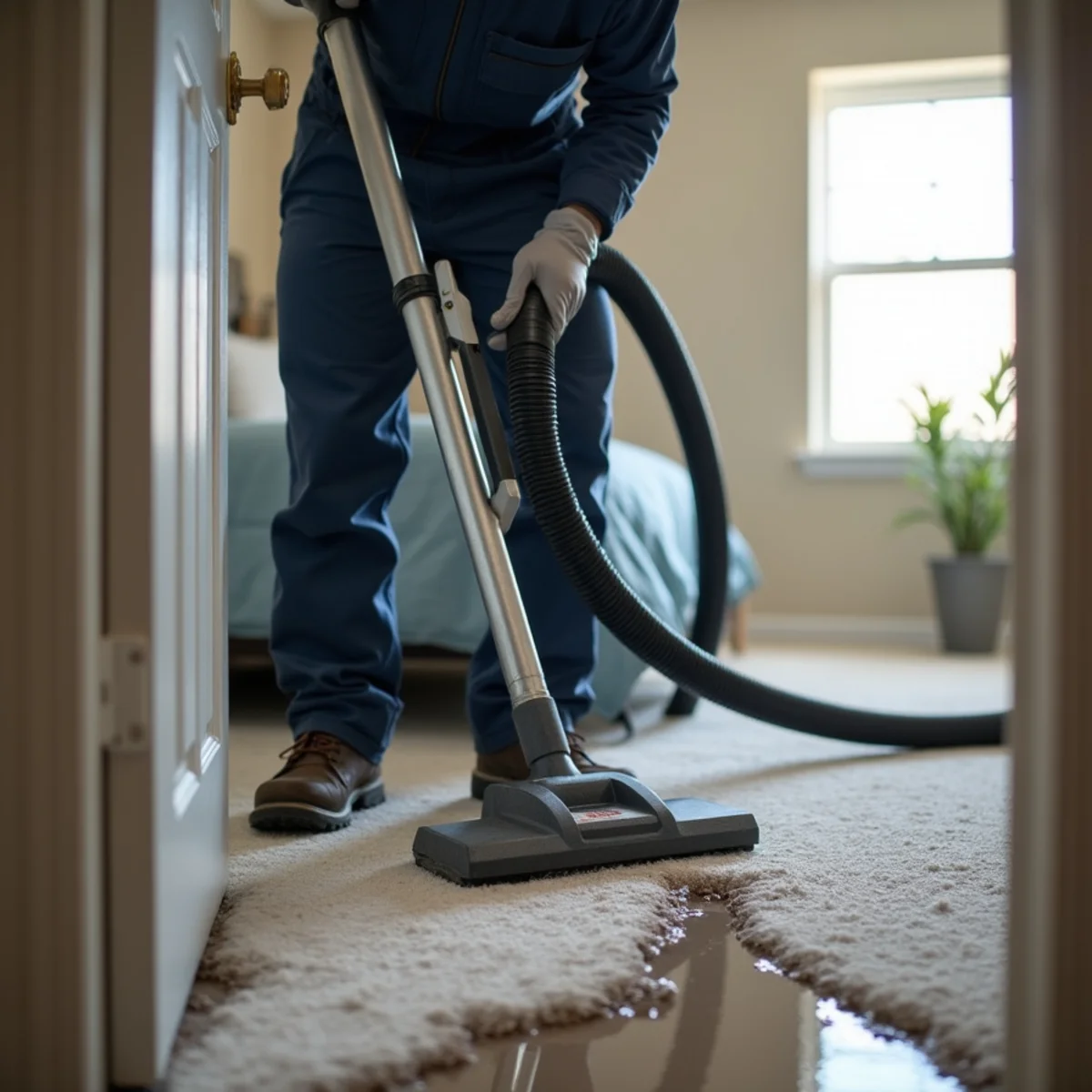
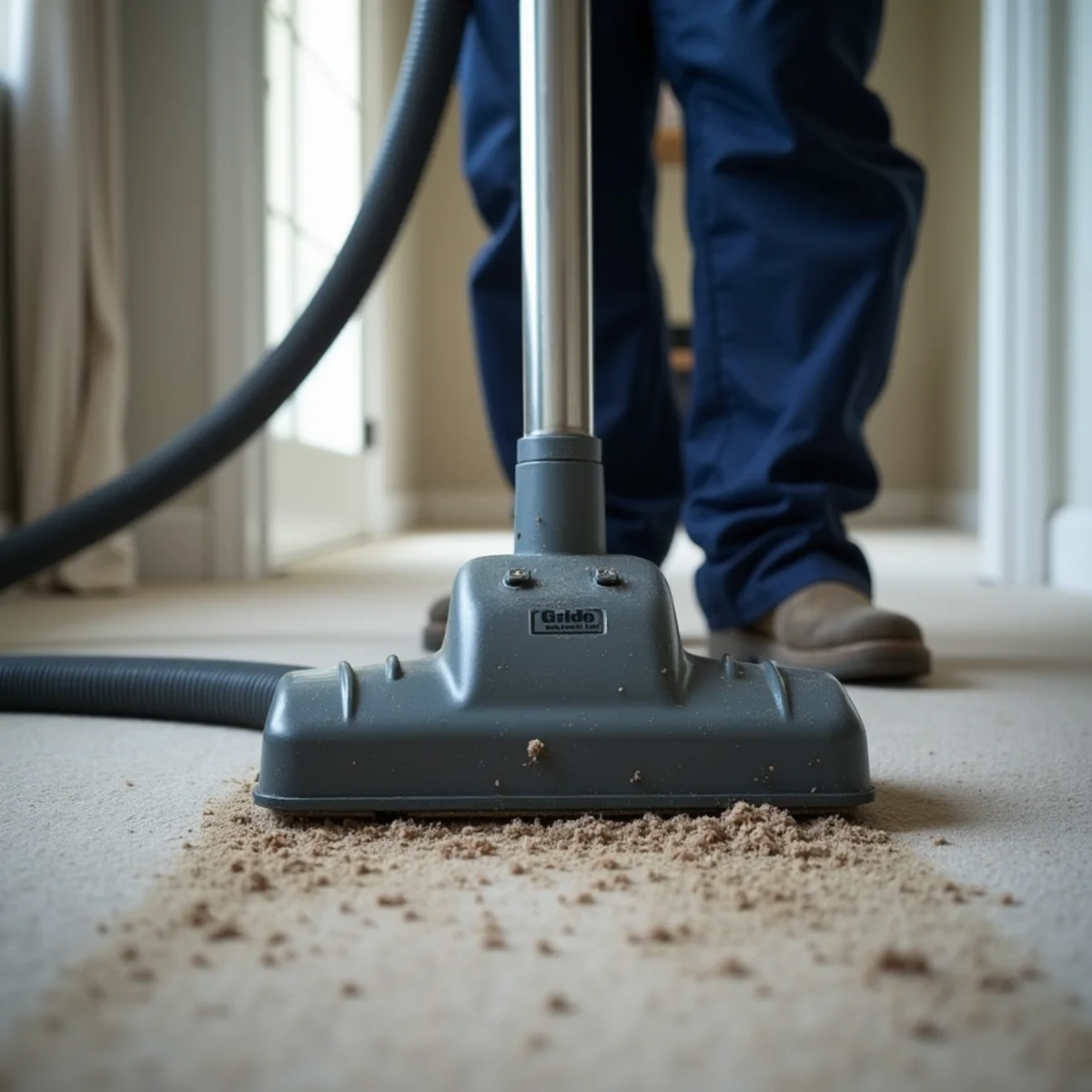
The bigger problem is not volume, it is depth. Carpet pad acts like a sponge sitting under a filter. Surface suction skims the carpet face and leaves the pad loaded. The carpet feels better, the homeowner stops, and three days later the room smells and the tack strip is black.
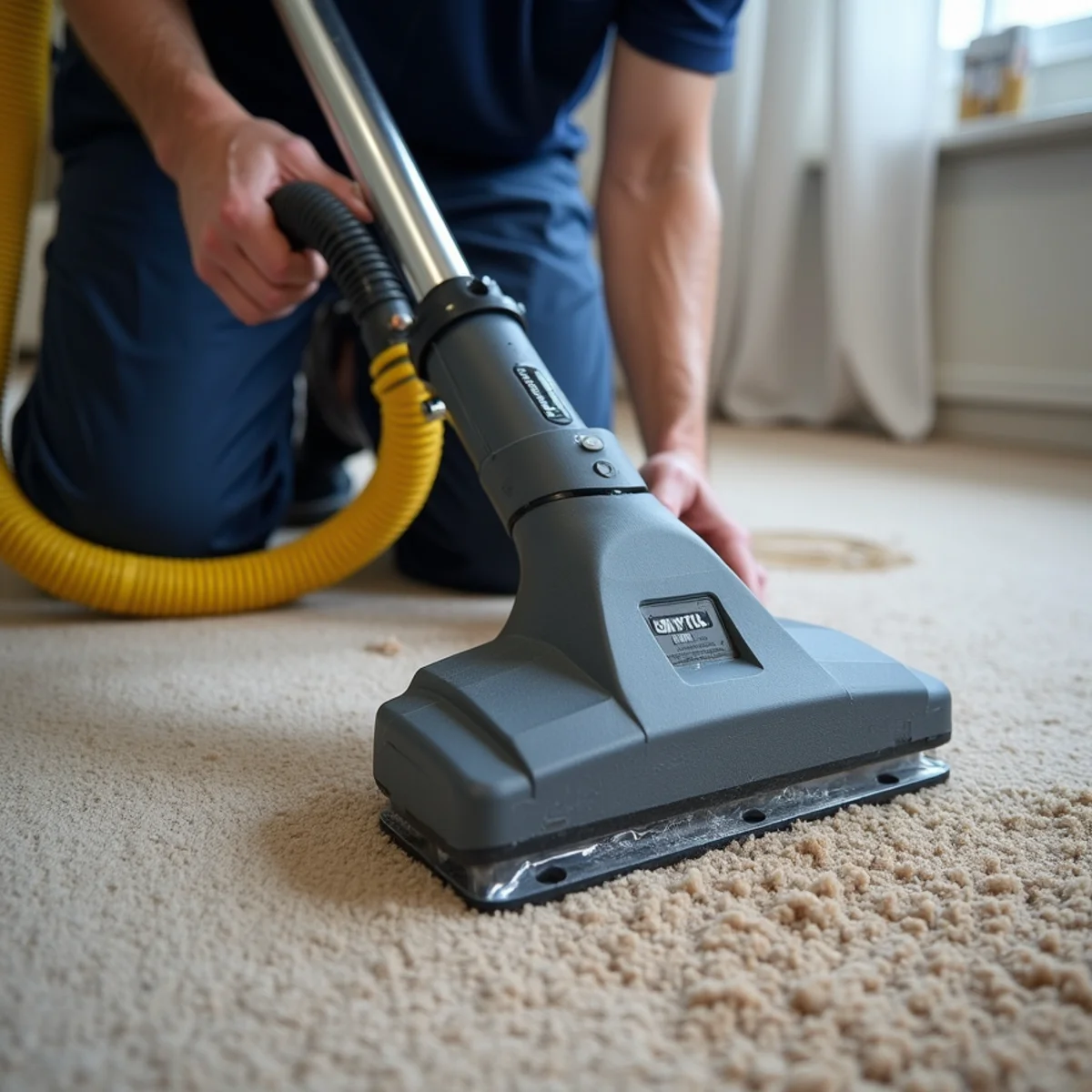
Weighted extraction heads solve that. The tool's own mass compresses the carpet and pad against the subfloor while vacuum pulls, so water is squeezed out rather than skated over. That single difference decides whether your carpet and pad are salvageable or land in a dumpster.

Different assemblies release water differently, and treating them the same is how materials get lost.
Extraction is not the finish line. It is the point where drying becomes possible.
As soon as bulk water is gone we take moisture readings in materials that still look fine — the bottom plate, the back of the drywall, the subfloor two rooms away — because that is where the water went while you were finding our number. Those readings set the drying plan and the equipment count.
If the reading in an unaffected part of your house is 8 percent in wood and the affected area reads 24 percent, we now have a target and a way to prove we hit it.
Every extraction runs the same sequence, whether it is one bedroom or a warehouse floor.
Power isolated where water has reached outlets or appliances, and standing water assessed for category before anyone puts a hose in it.
Thermal imaging and meters establish the real wet boundary, which is nearly always larger than the visible one. That boundary is what we extract to.
Truck-mounted or portable extraction on the open areas, working from the dry edge inward so we are not pushing water into clean material.
Overlapping compressed passes until the pad releases. This is the step that decides whether the pad is saved or skipped.
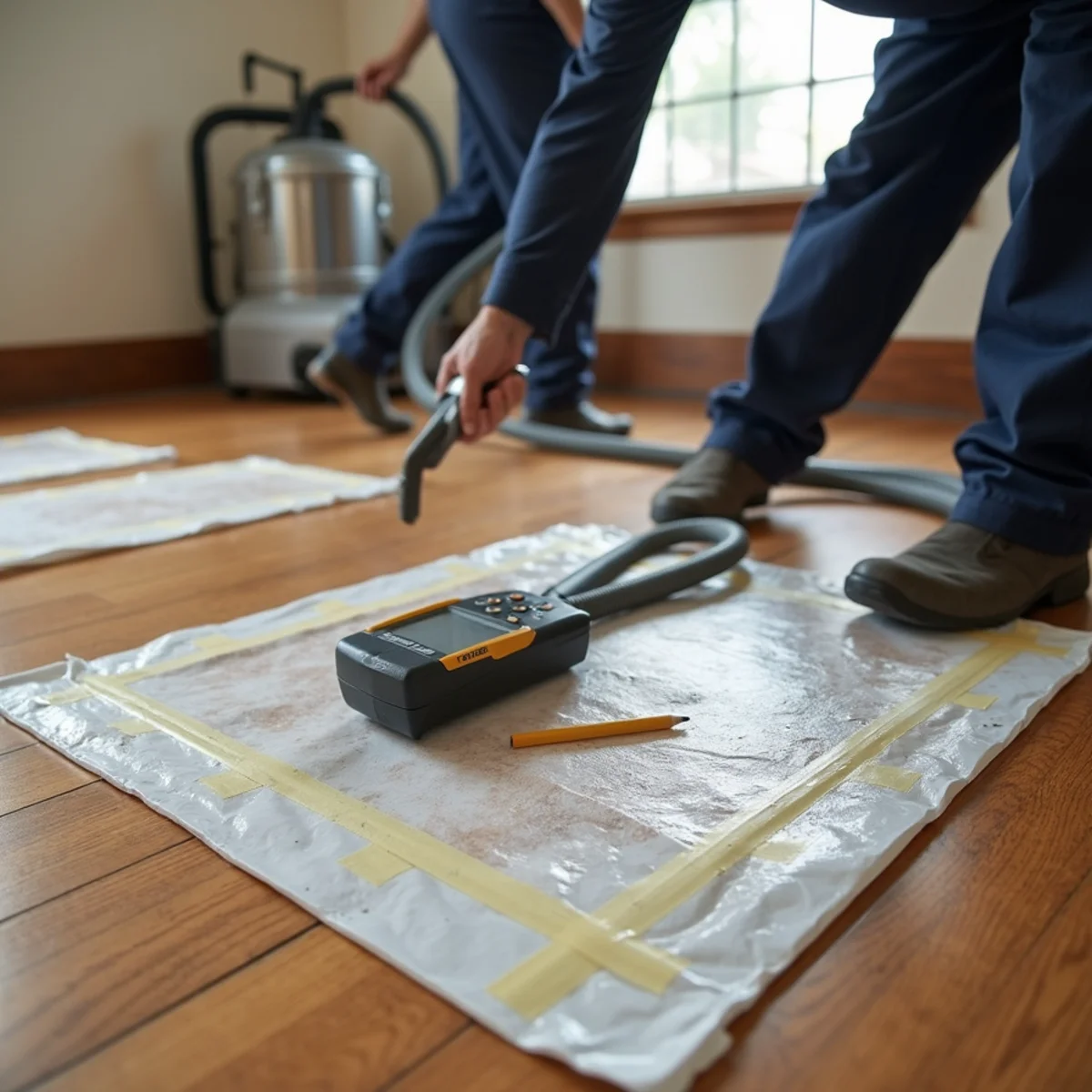
Lifting a section of vinyl or laminate at the low point, and using floor panels on hardwood, so water under an impermeable layer has somewhere to go.
Fresh moisture readings at marked points, then air movers and dehumidifiers placed to the affected volume before the crew leaves.

Floor drying panels pulling moisture from hardwood in a Fullerton home

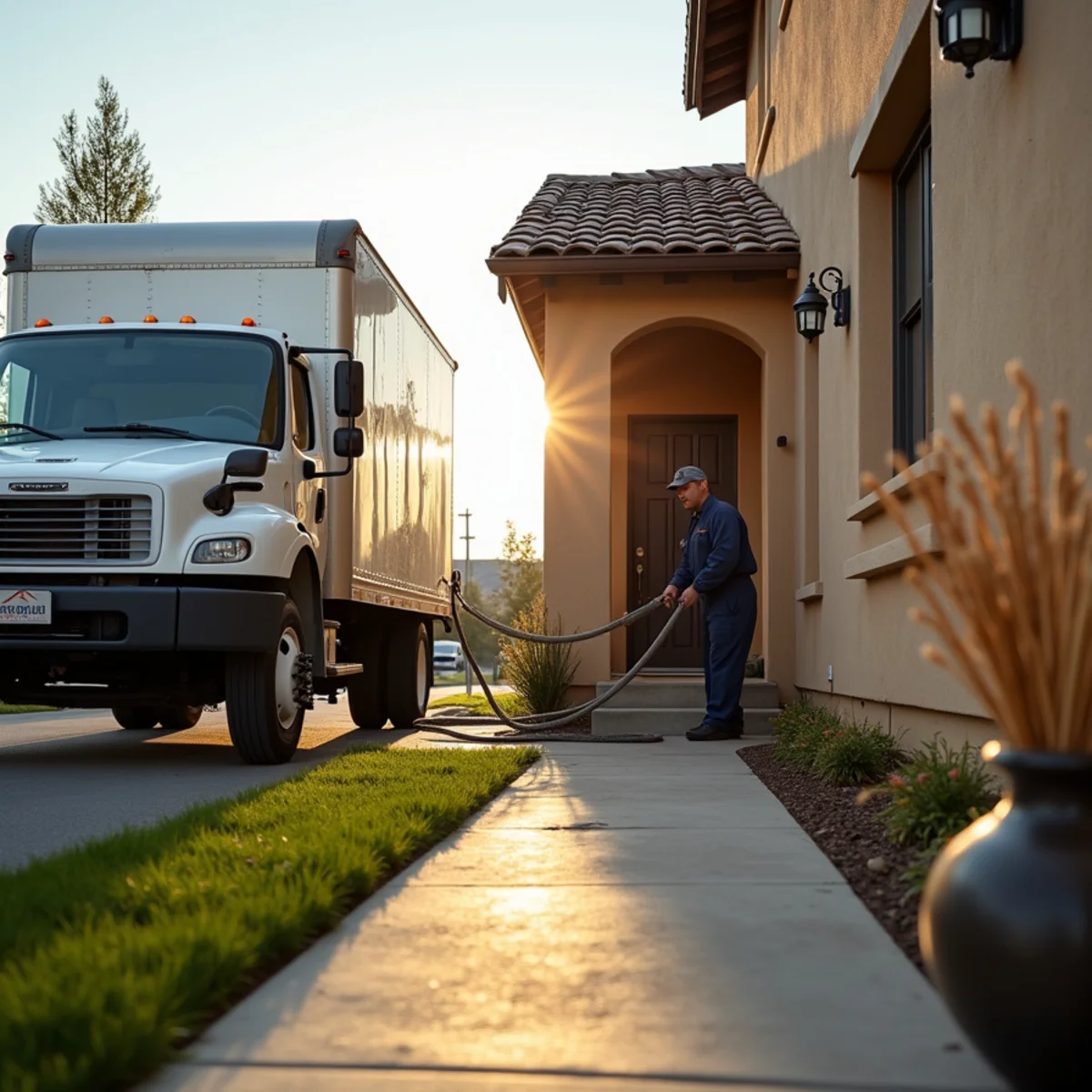
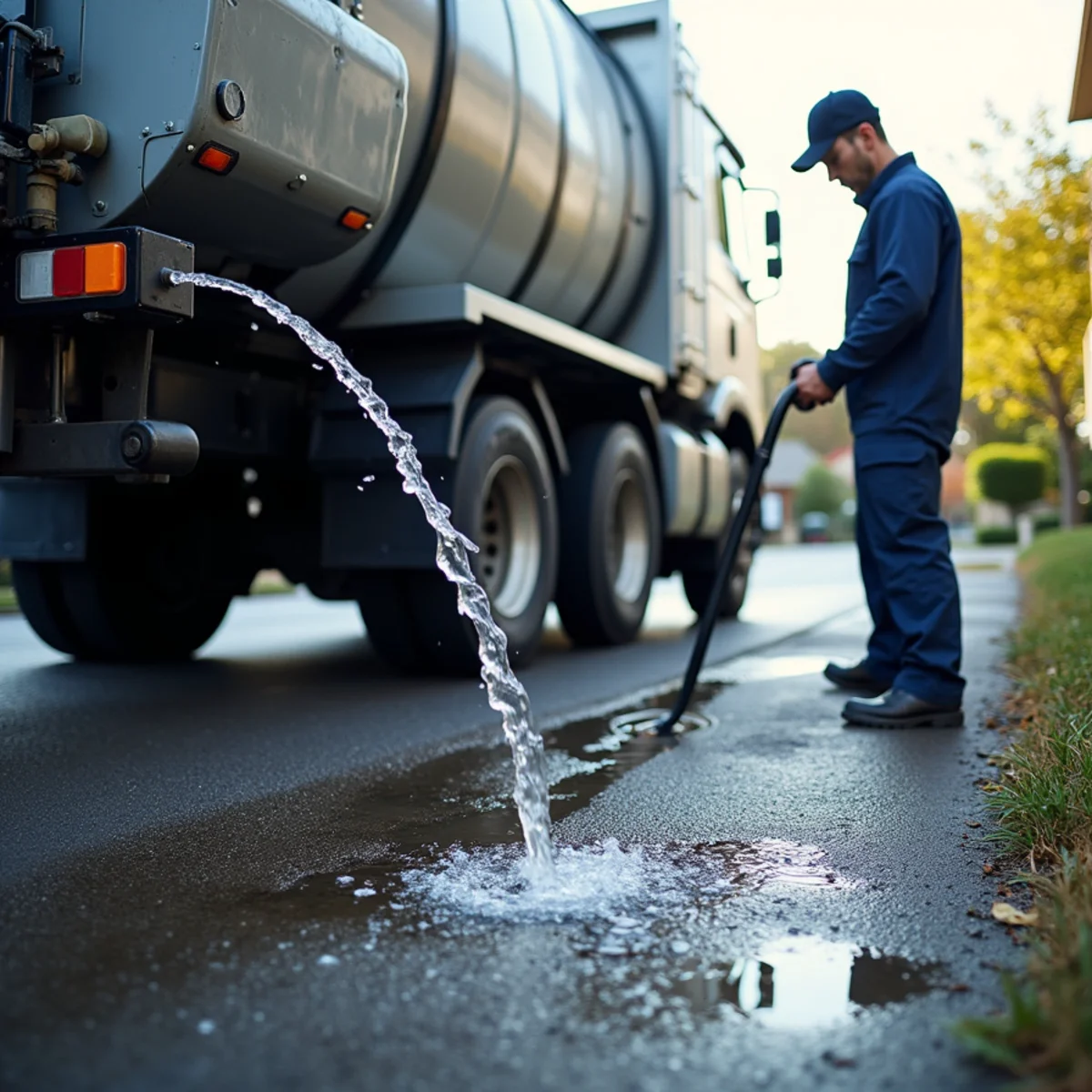
Truck-mounted extractor hose run into a Fullerton, CA property

Weighted extraction head pressing water from carpet pad

Recovery tank discharge during continuous truck-mounted extraction
Extraction is the highest-leverage hour of any water loss. These are the things that decide whether your flooring survives it:
We arrive with extraction and drying gear already loaded, dispatched within 60 minutes. We do not come to look and return later with a quote.
Weighted heads and a slower, overlapping pass take longer than ripping carpet out — and they are why your carpet and pad often stay when a Category 1 loss is caught early.
Readings in the bottom plate, the back of the drywall and the subfloor two rooms away, because that is where the water went while you were finding our number.
Trucks stage on S Raymond Ave. Most Fullerton addresses are 10 to 15 minutes, and we quote the real number for yours on the phone.
Extraction is usually billed by affected area and water category, and it is a small share of the total loss compared with drying and repairs. What moves it:
For a typical residential loss of one to three rooms, bulk extraction runs one to three hours. Larger commercial losses or standing water over an inch deep take longer. Drying equipment goes in the same visit — you are not waiting for a second appointment.
Often, yes, if the water was clean and we get there quickly. Clean supply water extracted within roughly 24 to 48 hours usually means the carpet and often the pad stay. Grey water typically costs the pad. Sewage or floodwater means both are removed — that is an IICRC health standard, not an upsell.
Yes. Hardwood needs specialised floor-drying panels that pull water up through the seams under vacuum. Timing matters more here than anywhere else: boards that have cupped can often be dried flat, but once they have dried in a cupped shape and been sanded, the damage is permanent.
Very often. Grout is porous and thinset holds water, so a tile floor can feel dry while the mortar bed and slab below are saturated. We check with a pinless meter and thermal imaging rather than by touch.
Extraction itself is one to three hours on a typical residential loss. Drying is the longer half — three to five days for most Fullerton homes, and five to seven or more for concrete slabs, hardwood and the lath-and-plaster in older downtown houses. We measure daily against a dry standard from an unaffected part of your own building rather than working to a fixed number of days.
Crews dispatch within 60 minutes across Fullerton and north Orange County.
Related
Balanced air movers and dehumidifiers, daily moisture logs, and a documented dry standard — so nothing is left wet behind the wall.
Structural Drying in FullertonA real person answers at 3 a.m. Crews dispatch within 60 minutes, on-site in 60–90, with extraction gear on the first truck.
Emergency Water Removal in FullertonThe full job, start to finish: emergency extraction, structural drying, mold prevention, repairs — and the documentation your adjuster needs.
Water Damage Restoration in FullertonFurther Reading
The carpet feels better and the pad underneath is still loaded. That difference decides whether your flooring is dried or replaced.
Read the guideSometimes it dries in place and sometimes it has to go. Four factors decide, and the insulation behind it usually decides for you.
Read the guideCrews dispatched within 60 minutes — on-site in 60–90 minutes. We extract, dry to a documented standard, and hand your adjuster a file they cannot argue with.