24/7 emergency line — crews dispatched within 60 minutes

Slab leak detection and concrete floor drying in a Fullerton, CA slab-on-grade home

Fullerton, CA

Slab Leak Water Damage Restoration in Fullerton, CA

If your house was built in Fullerton between about 1950 and 1975, it is sitting on a concrete slab with copper water lines cast into or running beneath it. That construction was the standard for two decades across Sunny Hills, Valencia, Commonwealth, West Fullerton, Brookhurst, Magnolia and Gilbert, and those lines are now sixty to seventy years old.

  • On-site in 60–90 minutes
  • IICRC-aligned · licensed & insured
  • Staged on 1500 S Raymond Ave

Slab leaks are the single most common hidden water loss we handle in this city. They also do the most damage per gallon, because the water has nowhere to go but sideways — under the flooring, into the bottom plate of every wall it reaches, and up into the drywall.

The good news is that a slab leak found early is a small repair and a short drying job. Found late, it is flooring, cabinets, drywall and mold.

Crews dispatched within 60 minutes — on-site in 60–90 minutes

+1 (201) 277-9344

How To Recognise A Slab Leak

The tells are subtle, which is exactly why these run for months:

  • A warm spot on the floor — the single most reliable sign, and it means the hot-water line has failed
  • The sound of running water when every fixture and appliance is off
  • A water bill that climbed with no change in usage
  • Water pressure that dropped gradually over weeks
  • Damp carpet, buckling wood or lifting tile with no leak above it
  • Cracks appearing in flooring, drywall or the slab itself
  • A musty smell at floor level, or along the bottom of a wall
  • Damp soil or unexplained green grass along one side of the foundation
Warm spot on a slab floor indicating a hot water slab leak in Fullerton

What Slab Leak Restoration Includes

Detection, the plumbing coordination, and everything the water touched under and around your floor:

Non-invasive location
Meter isolation, hot-cold separation, thermal imaging and acoustic correlation, narrowing the failure to inches before any concrete is cut.
Single cored access point
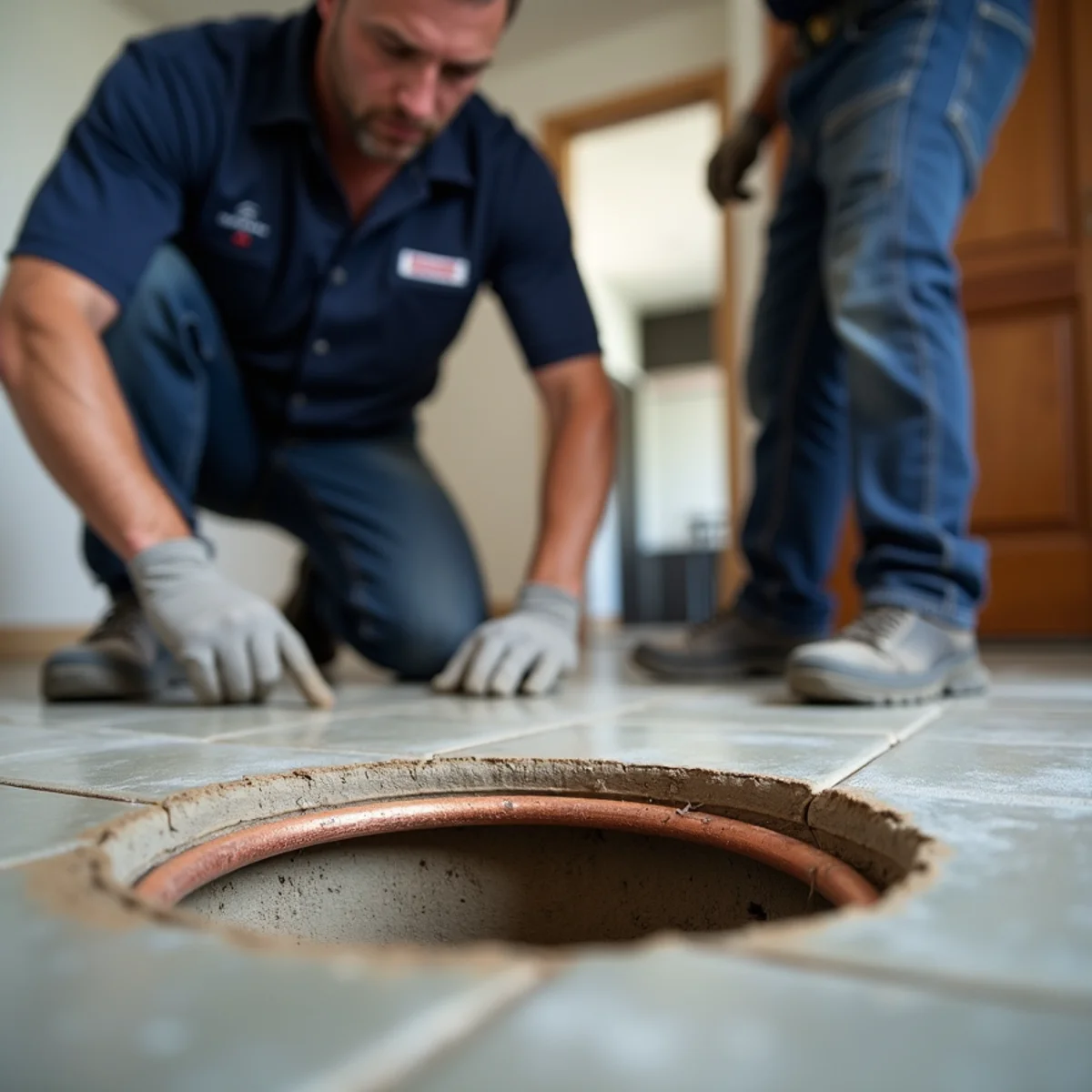
The confirmed location opened once, typically a foot or two square, rather than an exploratory trench across a room.
Plumber coordination
Yours or a licensed plumber we work with. Spot repair, overhead reroute or repipe is their call with you — we do not sell it.
Slab drying with mat systems
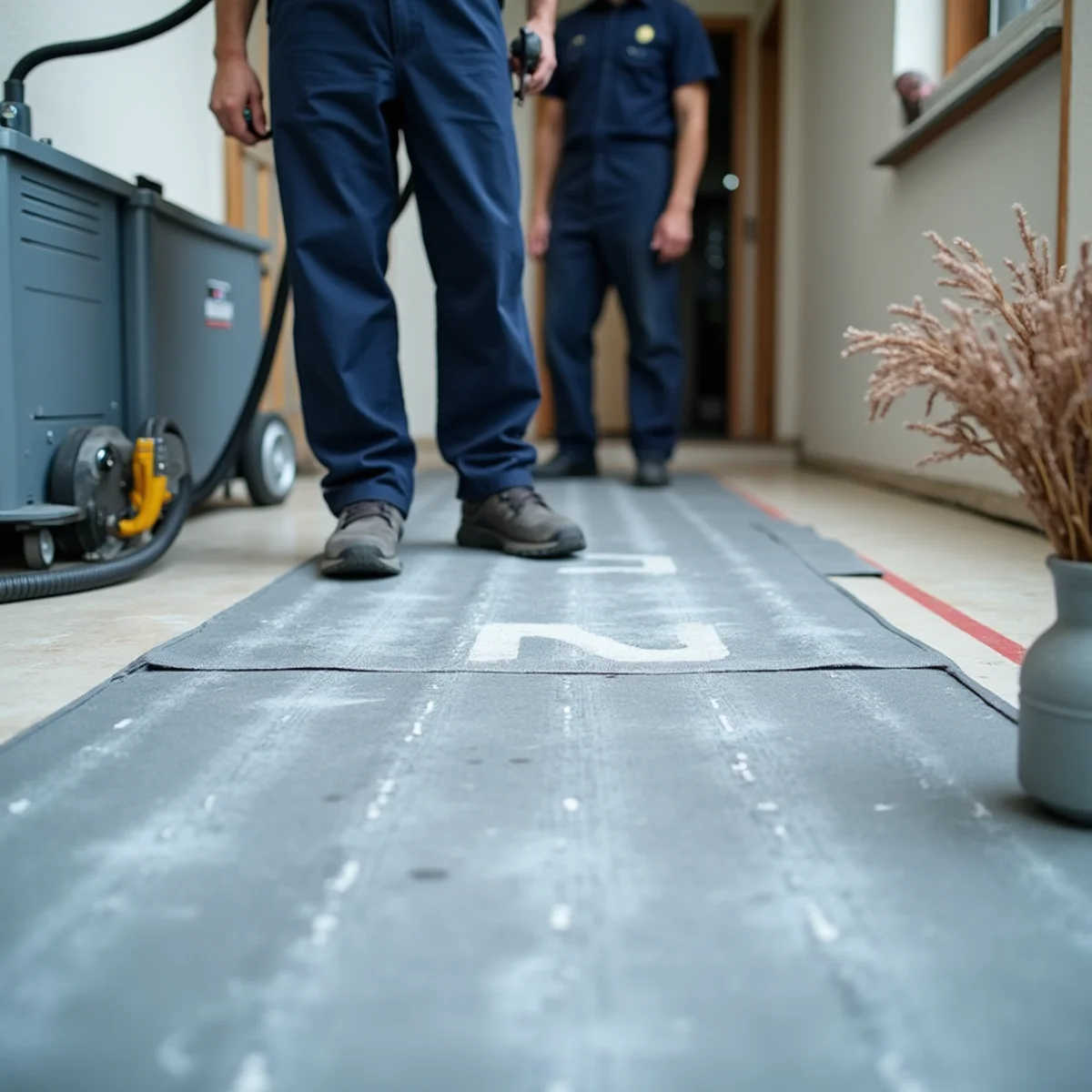
Concrete holds water in its top layer and dries slowly. Dedicated mats and dehumidification, metered against a dry reference rather than left to guesswork.
Flooring lift, dry and reset
Carpet and pad often survive; vinyl, laminate and engineered wood usually have to come up so the slab can breathe. We tell you which before we start.
Wall base and cabinet drying
Bottom plates wick upward, so drywall gets a flood cut where the cavity is wet and cabinet toe-kick voids are dried by injection.
Documentation for a contested claim
Photos, moisture map and drying logs — critical because carriers commonly test whether slab leak damage was gradual.

Why Fullerton Has A Slab Leak Problem

Three factors stack here, and each one alone would be enough.

The first is expansive clay soil. Much of Fullerton sits on soils that swell when wet and shrink when dry, and the annual cycle between a wet January and a bone-dry September moves those soils measurably. The slab moves with them. Copper cast into or running under that slab abrades against concrete and aggregate at every movement cycle until the wall wears through.

The second is hard water. Orange County water runs roughly 14 to 25 grains per gallon. Mineral scale deposits inside copper, flow turbulence increases around the deposits, and pitting corrosion eats through from the inside out. This is why so many failures are pinholes rather than ruptures — and why they run undetected for so long.

The third is simply age. Copper under a slab has a practical service life that most Fullerton tract homes have now reached or passed. When we find one leak in a 1962 house, there are frequently more developing on the same run.

Hot-water lines fail first and more often. Heat accelerates corrosion, hot lines expand and contract more with every use, and that thermal cycling adds mechanical stress the cold line does not see. That is also why the warm-spot symptom is so diagnostic.

Finding It Without Destroying Your Floor

Nobody should be jackhammering a floor to search. Detection narrows the location to inches before any concrete is opened.

  1. Confirm the leak exists

    Meter isolation with the house shut down, then isolating the hot line from the cold to determine which system is losing water.

  2. Thermal imaging

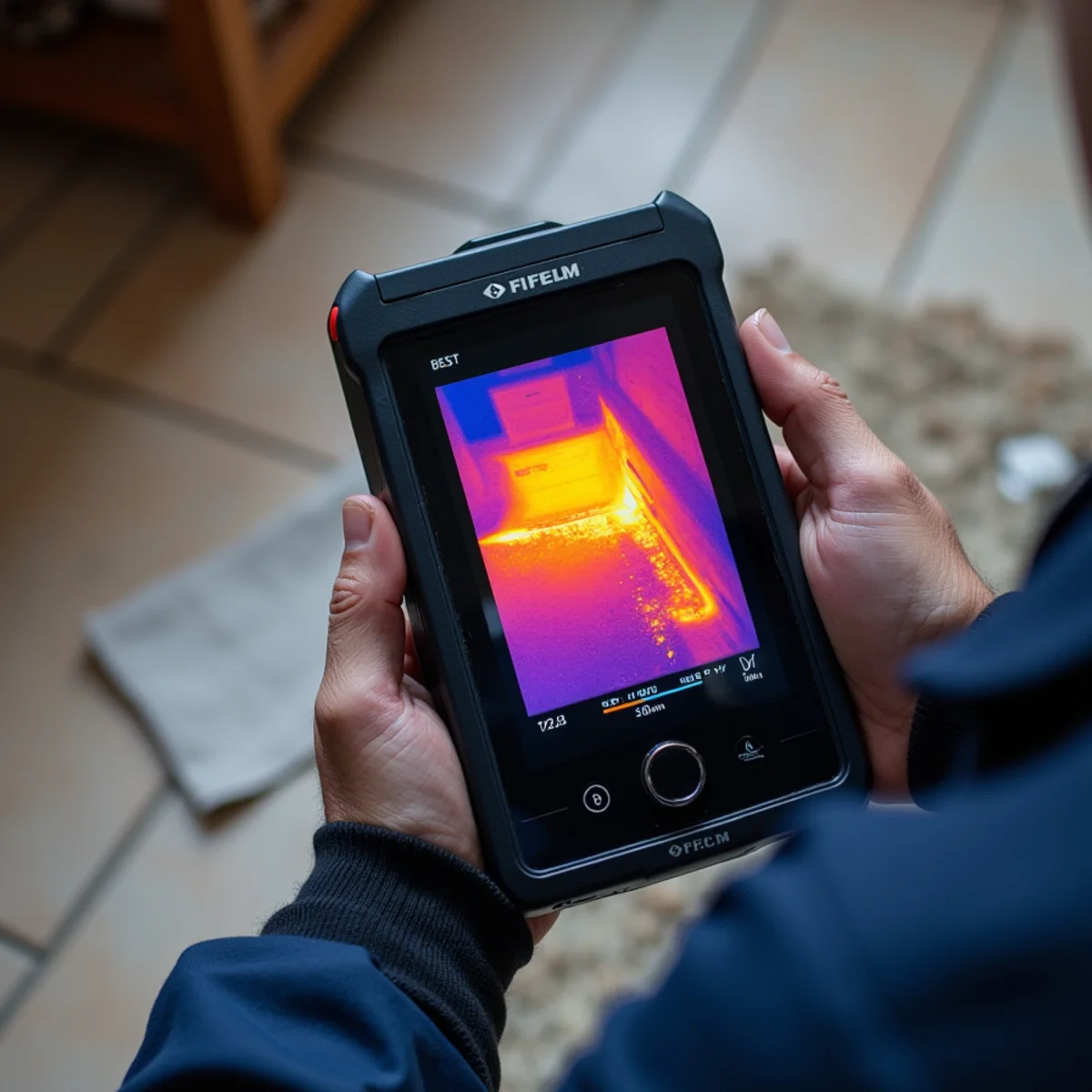
    A hot-water slab leak shows clearly as a warm plume spreading through the slab. Cold-water leaks show as an evaporative cool signature.

  3. Acoustic correlation

    Pressurised water escaping through a pinhole makes a distinct sound that travels through concrete. Ground microphones and correlators pinpoint the source, usually to within a few inches.

  4. Pressure testing

    Isolating and testing individual branches confirms the line and rules out fixtures and irrigation.

  5. Mark and open one small access

    The confirmed point is cored — a small opening, not a trench across the room.

Repair Options — And The Honest Comparison

We are a restoration company, so we do not sell you the plumbing repair, which means we can be straight about the options. There are three, and the right one depends on the house.

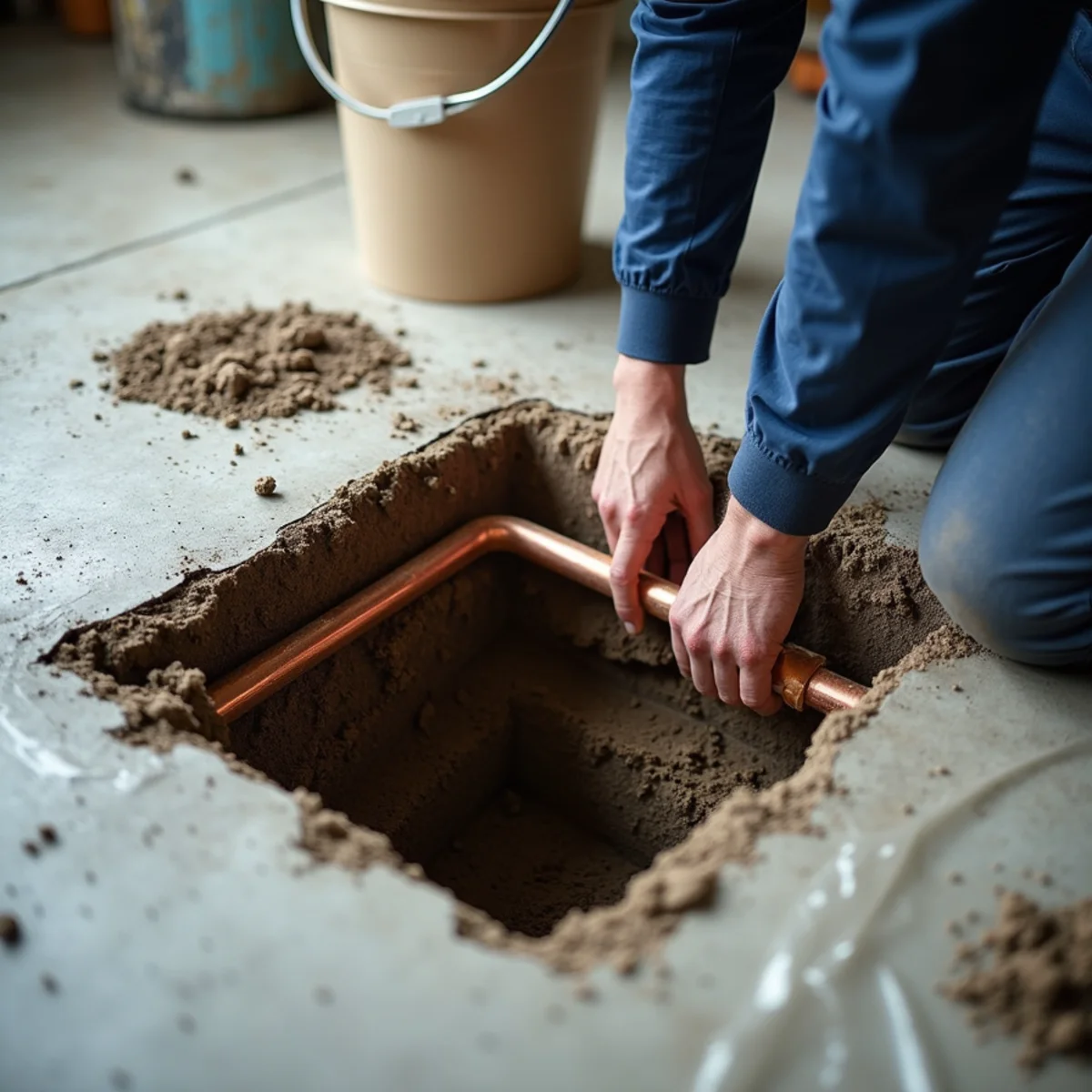
A spot repair opens the slab at the failure and replaces that section. It is the cheapest and fastest option and it makes sense on a first failure in a relatively young system. On a sixty-year-old run that has already pinholed once, you may well be doing it again next year.

A reroute abandons the failed line in the slab and runs a new line overhead through the attic and down inside walls. No further slab work, no more leaks on that run, and it is usually the best value on a single failed line in an older home. The trade-off is patching where the new line drops through walls.

A whole-house repipe replaces all supply lines, typically overhead in PEX or copper. It is the most expensive and most disruptive option, and on a 1960s Fullerton tract home with multiple failures it is often the only one that actually ends the problem. It also adds real value at resale, and buyers in this market ask.

Your plumber makes that call with you. What we do is everything the water touched.

Restoring The Damage

Slab leaks are unusual because the water starts underneath and works upward, so the damage sequence is inverted from a normal loss.

Concrete is porous and holds water. Drying a slab is slow and needs dedicated airflow and dehumidification — you cannot rush it, and covering it back up early guarantees a mold call in a few months. We meter the slab, not just the surface.

Flooring over the wet slab usually determines the scope. Carpet and pad often survive if we get there fast. Vinyl plank and sheet vinyl trap moisture underneath and normally have to come up so the slab can breathe. Engineered wood over a wet slab is typically a loss. Tile can sometimes stay if the mortar bed dries, which we verify with meters rather than assumption.

Then the walls: bottom plates wick water upward, drywall gets a flood cut where the cavity is wet, and the base cabinets in a kitchen or bathroom above the leak often need their toe-kicks opened and dried. Reconstruction puts all of it back.

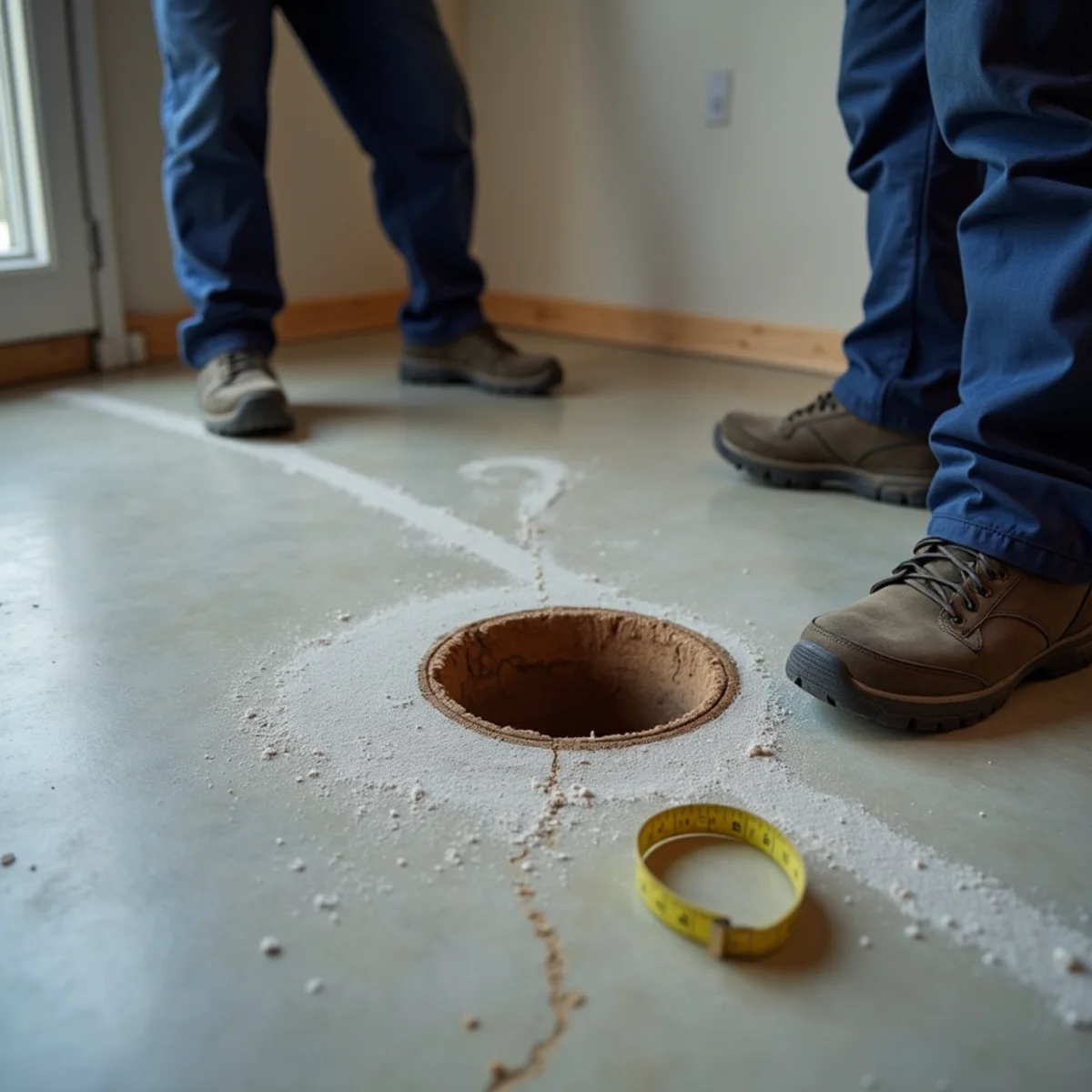
  • Cored slab access opened to repair a leaking pipe in a Fullerton home

    Cored slab access opened to repair a leaking pipe in a Fullerton home

  • Drying a concrete slab after a slab leak in a Fullerton, CA home

    Drying a concrete slab after a slab leak in a Fullerton, CA home

  • Thermal camera showing a hot water slab leak plume

    Thermal camera showing a hot water slab leak plume

  • Comparing a spot repair opening with a reroute line

    Comparing a spot repair opening with a reroute line

Why Slab Leaks Are the Job We Do Most in Fullerton

Three conditions stack in this city's post-war tracts, and we scope slab leaks around them rather than around a generic playbook:

  • We know the failure mechanism here

    Hard water at 14 to 25 grains per gallon pitting copper from inside, expansive clay abrading it from outside, and hot lines going first. That is why the warm-spot symptom is where we start.

  • Detection priced separately

    A fixed detection fee means the technician is paid to be precise rather than to open your floor. Ask any company whether their detection is bundled — it tells you a lot.

  • We tell you if it will happen again

    One pinhole in sixty-year-old copper is frequently the first of several. We report what the exposed pipe looked like so you can decide between a spot repair and a reroute with real information.

  • Slab drying done to a reading

    Concrete is the slowest material we deal with. Covering it back up early is what turns a slab leak into a mold call in three months.

What Drives Slab Leak Restoration Cost

Detection and plumbing repair are separate from restoration. On the restoration side, the variables are:

How long the leak ran
The dominant factor. Weeks of undetected leaking means several rooms, not one.
Flooring type over the slab
Carpet often survives; vinyl and engineered wood usually do not.
Slab drying time
Concrete releases moisture slowly and needs dedicated equipment for days.
Wall and cabinet involvement
Wicking into bottom plates, drywall and cabinet toe-kicks.
Mold presence
Long-running slab leaks very often mean remediation is already in scope.
Repair method chosen
Spot repair, reroute or repipe — a plumbing cost, but it changes the patching scope we restore.

Slab Leak Damage in Fullerton — Common Questions

Usually in part. Most California policies cover the resulting water damage and, importantly, the cost of tearing out and replacing the concrete to reach the pipe — that access coverage is written into many policies. The failed pipe itself is commonly excluded, as is damage the carrier can characterise as long-term and gradual. Reporting quickly, with documentation of when it was found, is what protects the claim.

Where we provide slab leak damage

Crews dispatch within 60 minutes across Fullerton and north Orange County.

Fullerton neighbourhoods

Nearby cities

All 60 service areas

Further Reading

Guides on this topic

Written for Fullerton property owners, with the local risk factors that actually apply here.

Need slab leak damage in Fullerton right now?

Crews dispatched within 60 minutes — on-site in 60–90 minutes. We extract, dry to a documented standard, and hand your adjuster a file they cannot argue with.

  • 60-minute dispatch, anywhere in Fullerton
  • IICRC-aligned · licensed & insured
  • Direct insurance documentation
Call 24/7Free Estimate