
Local Fullerton Risks
Why Fullerton's 1950s–70s Slab-on-Grade Tracts Are Slab-Leak Hotspots
Post-war construction, expansive clay and hard water. Any one is survivable. All three together is why we work slab leaks in this city every week.
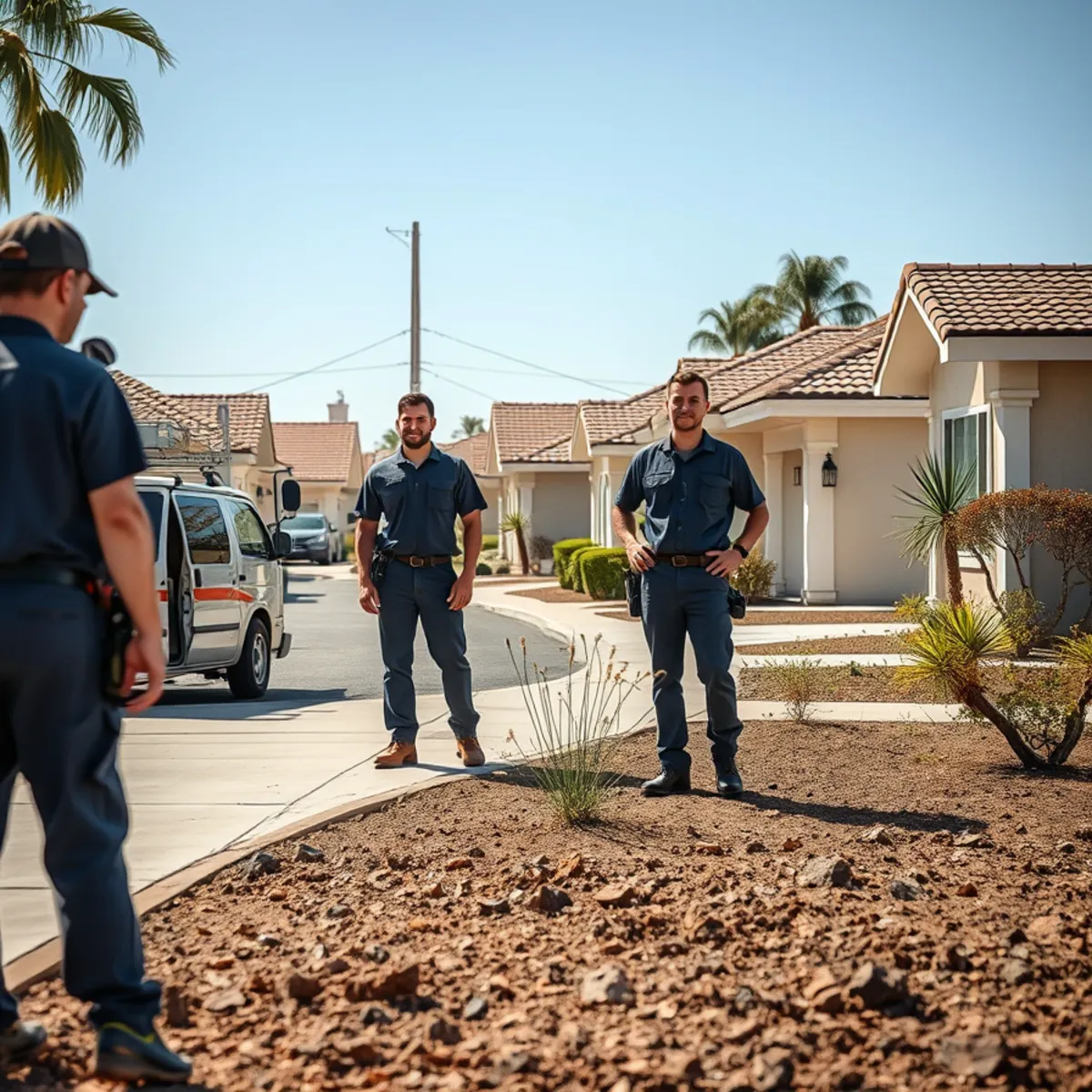
The short answer
Three conditions stack in Fullerton's 1950s–70s tracts: slab-on-grade construction with copper cast into or under the slab, expansive clay that swells and shrinks each season and abrades the pipe, and hard water at 14–25 grains per gallon that pits it from the inside. Sunny Hills, Valencia, Commonwealth and West Fullerton are the hotspots.
Slab leaks are the steadiest single category of work we do in Fullerton, and that is not an accident of the market. It is the predictable consequence of how and where this city was built.
Three conditions stack here. Individually each is manageable. Together they produce a housing stock that fails on a schedule.
Dealing with this right now?
Crews dispatched within 60 minutes — on-site in 60–90 minutes, anywhere in Fullerton. Call and we will talk you through the first two minutes while a crew is dispatched.
- 60-minute dispatch, anywhere in Fullerton
- IICRC-aligned · licensed & insured
- Direct insurance documentation
Condition 1: How Post-War Fullerton Was Built
Between roughly 1950 and 1975, Fullerton expanded the way most of Orange County did — fast, in tracts, and slab-on-grade.
Slab-on-grade means the concrete floor slab is poured directly onto prepared ground and the copper water supply lines are cast into it or run beneath it. It was cheaper and faster than a raised foundation, and in a mild climate with no frost line it made complete sense.
The consequence is that the pipes are inaccessible. There is no crawl space to inspect, no exposed run to check, and no early visual warning. A pipe under a slab fails silently and the first evidence is a symptom, not a sight.
Sunny Hills, Valencia, Commonwealth, West Fullerton, Brookhurst, Magnolia, Gilbert and Parks are all substantially this construction.
Condition 2: Expansive Clay Soil
Much of Fullerton sits on soils with significant clay content, and clay does something that sand and gravel do not: it changes volume with moisture.
Saturate it in a January storm and it swells. Dry it out through a rainless September and it shrinks back. That cycle happens every year, and the slab poured on top moves with it.
The movement is small in absolute terms and it does not usually damage a well-built slab. What it does do is abrade. Copper cast into or running beneath moving concrete rubs against concrete and aggregate at every expansion and contraction cycle, and over sixty years of annual cycling, that mechanical wear thins the pipe wall.
On sloping ground the movement is uneven, which is worse — that is why the hillside neighbourhoods and cities around us, La Habra and Placentia Hills particularly, see slab issues alongside their leaks.
Condition 3: Orange County Hard Water
The county's water supply runs roughly 14 to 25 grains per gallon, which is decidedly hard.
Inside a copper pipe, that hardness deposits mineral scale on the wall. Flow becomes turbulent around the deposits, and turbulence plus dissolved oxygen creates localised corrosion cells underneath them. The pipe is eaten through from the inside at discrete points.
That produces pinholes rather than ruptures. A fine spray or a weep, not a burst — which is precisely why slab leaks run for weeks or months undetected. Nothing dramatic happens; the water simply goes into the ground under your floor.
Hot lines fail first and most often. Heat accelerates the chemistry, and hot lines expand and contract with every use, adding thermal stress the cold line never experiences. That is the reason the warm-spot symptom is so diagnostic.
Why Now, Specifically
Copper under a slab has a practical service life, and Fullerton's post-war housing has reached it.
A house built in 1962 has pipe that has carried hard water for over sixty years while sitting in soil that moved every season. That is not a defect — it is a material at the end of its design life doing what materials do.
This is also why failures cluster. A street built in eighteen months has pipe installed within eighteen months of itself, in the same soil, carrying the same water. It reaches the same point of corrosion at broadly the same time. It is genuinely common for us to work several slab leaks on one street within a season, and homeowners often mention that a neighbour had the same thing recently.
That clustering is useful information rather than a reason to worry. It means the early warning signs deserve to be taken seriously in these neighbourhoods specifically.
The Four Signs, And Why Early Matters So Much
A warm or hot patch on the floor. The most reliable single indicator, and it means the hot line.
A water bill that increased with no change in usage.
The sound of running water with every fixture and appliance off.
Water pressure that has declined gradually over weeks.
The difference between acting on those and waiting is stark. Reported at the warm-spot stage, a slab leak is detection, a plumbing repair, a few days of slab drying and minimal reconstruction. Reported when the carpet is wet in three rooms, it is flooring, drywall flood cuts, cabinet toe-kicks and frequently mold remediation.
Same pipe, same failure. The only variable is elapsed time, and it routinely changes the total by a multiple.
What To Do If You Own One Of These Houses
Not pre-emptive repiping. That is a big spend on a system that may have years left.
Do the free meter test occasionally — everything off, watch the low-flow indicator, then close the house main and watch again. Ten minutes, and it tells you whether water is leaving the system.
Consider whole-house water softening or conditioning. It does not reverse damage already done, but it slows the deposition that drives pitting and it noticeably extends water heater life, which matters in this water.
And if a leak does happen, ask your plumber what the exposed pipe looked like. Visible pitting along the section means the system is at end of life rather than unlucky — and that changes whether a spot repair or an overhead reroute is the sensible decision.
The Four Early Signs, in the Order They Usually Appear
A slab leak found at the first sign is a short job. Found at the last, it is flooring, drywall and mold:
- A water bill that climbed with no change in usage — often the earliest signal, and the easiest to dismiss.
- The sound of running water with every fixture and appliance switched off. Stand still in a quiet house and listen.
- A warm or hot patch on the floor. In a Fullerton slab home this is a hot-water slab leak until proven otherwise.
- Water pressure that has declined gradually over weeks rather than suddenly.
- Then the visible stage: damp carpet, buckling wood or lifting tile with no leak above it, and a musty smell at floor level.
- By the time flooring is visibly wet, the water has usually been under the slab for weeks and the scope has multiplied.
Frequently asked
The post-war tract areas: Sunny Hills, Valencia, Commonwealth, West Fullerton, Brookhurst, Magnolia, Gilbert and Parks are all substantially slab-on-grade from the 1950s through the 1970s. That construction era plus expansive clay plus hard water is the combination that produces them.
Generally no. A system with no failures may have years left, and repiping is a significant spend. The better approach is knowing the four early signs, doing the meter test occasionally, and having a straight conversation with your plumber about pipe condition if a failure does occur.
It slows the process rather than reversing it. Softening or conditioning reduces the mineral deposition that drives pitting corrosion, and it extends water heater life noticeably. For pipe already sixty years into the process it is mitigation, not a cure — but for a household staying long term it changes the trajectory.
The bottom line
Construction era, soil, water. Three conditions, all fixed, all stacked in this city's post-war tracts.
You cannot change any of them. You can know the four signs and act on the first one.