
Emergency Guides6 min read
Burst Pipe? Your First-Hour Action Plan to Stop the Damage
The first sixty minutes decide whether this is a cleanup or a reconstruction. Here is the order of operations, and the three things not to do.
Read the guide24/7 emergency line — crews dispatched within 60 minutes
1500 S Raymond Ave, Fullerton, CA 92831
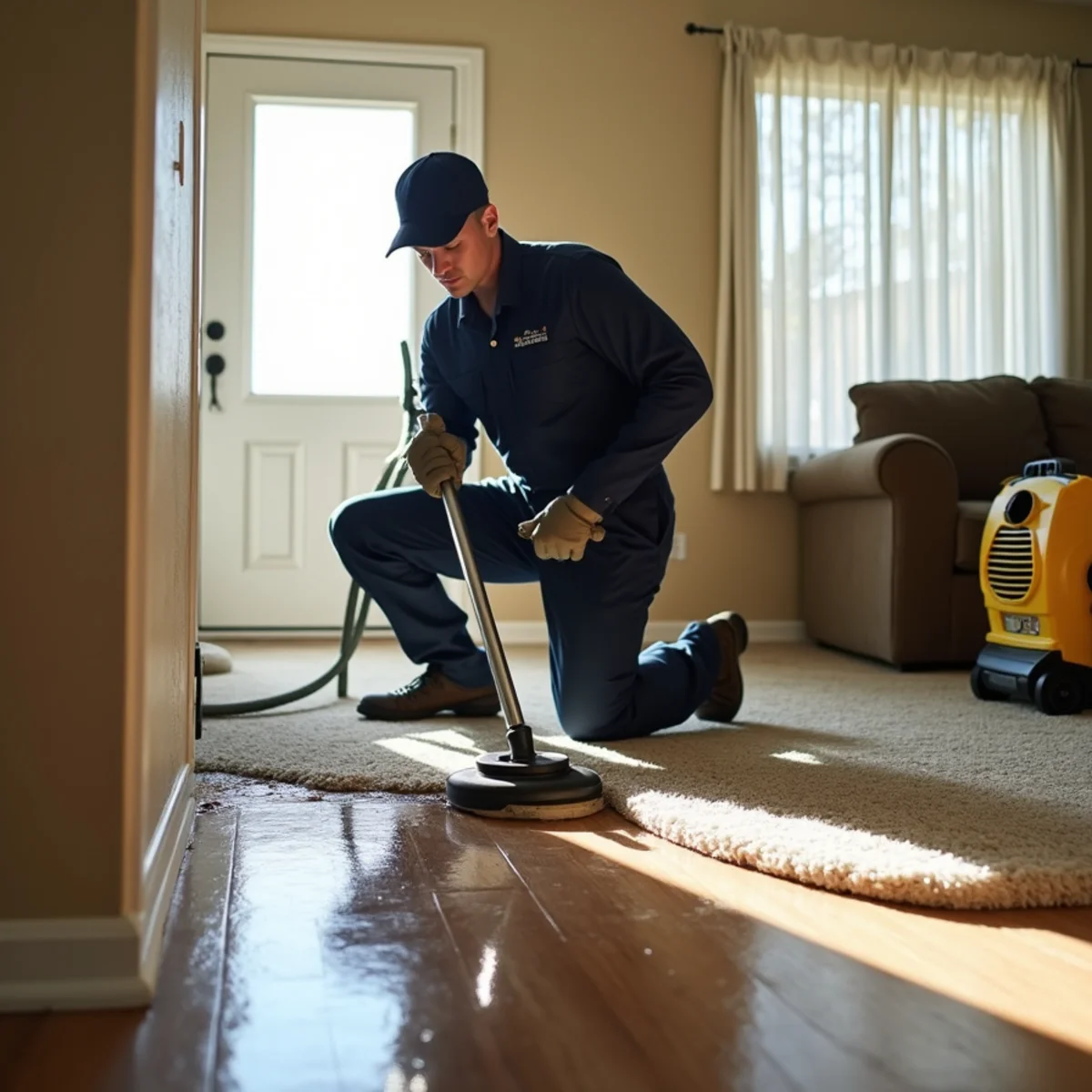
24/7 Emergency Response
If water is spreading through your home right now, call us and then shut the main valve. Crews dispatch within 60 minutes, extraction starts on arrival, and we document every reading your insurance adjuster will ask for.
On-site in 60–90 minutes anywhere in Fullerton, 24 hours a day.
Moisture mapping, documented dry standards and daily drying logs.
Photos before cleanup, moisture maps and adjuster-ready scopes of work.
Trucks stage on 1500 S Raymond Ave — not a hub two counties away.
Before We Arrive
Shut the main valve. In most Fullerton homes it is at the front of the house near the kerbside meter box, in the garage where the supply enters, or on the exterior wall closest to the street. If the source is one fixture — a toilet, a water heater, a washing machine — close its own angle stop instead.
If water has reached outlets, appliances or the panel, switch those breakers off. Only if you can reach the panel without standing in water. If you cannot, leave the house and tell us when you call.
A real person answers, asks where the water came from and how far it has spread, and dispatches a crew. We will talk you through the next two minutes on the phone.
Wide shots of each room, close-ups of the source, and the water line on the walls. Those wall lines prove how high the water stood, and adjusters use them to set the scope. Do this before any cleanup.
Get electronics, documents and photographs somewhere dry. Put foil or wood blocks under furniture legs so finish does not bleed into wet carpet. Do not start pulling up flooring.
What We Do
The full job, start to finish: emergency extraction, structural drying, mold prevention, repairs — and the documentation your adjuster needs.
Water Damage Restoration in FullertonA real person answers at 3 a.m. Crews dispatch within 60 minutes, on-site in 60–90, with extraction gear on the first truck.
Emergency Water Removal in FullertonFrom the shut-off to the finished wall: extraction, drying, plumber coordination and reconstruction on one file.
Burst Pipe Cleanup in FullertonPump-out, sub-area drying and vapour barrier work — the space nobody looks at until the whole house smells.
Basement & Crawl Space in FullertonTruck-mounted and portable extractors pull free water out of carpet, pad, tile and subfloor before it wicks into the structure.
Water Extraction in FullertonBalanced air movers and dehumidifiers, daily moisture logs, and a documented dry standard — so nothing is left wet behind the wall.
Structural Drying in FullertonStorm water and overflow floods are contaminated by definition. We extract, remove what cannot be saved, disinfect and dry.
Flood Cleanup in FullertonCategory 3 black water is a biohazard. Containment, safe removal, disinfection to standard, and odour that actually stays gone.
Sewage Cleanup in FullertonContainment, HEPA filtration, source removal and independent clearance testing — plus fixing the moisture that caused it.
Mold Remediation in FullertonMost losses need two or three of these together. Coverage varies by policy and by cause — we document every loss so your adjuster decides on evidence rather than assumption.
| Service | What it includes | Best for | Typical insurance treatment |
|---|---|---|---|
| Emergency water extraction | Truck-mounted and portable extraction, standing water removal, initial moisture assessment | Active flooding, burst pipes, appliance overflows | Typically covered when sudden and accidental; excluded for gradual leaks and flood |
| Structural drying & dehumidification | Balanced air movers and dehumidifiers, daily moisture logs, documented dry standard | Drying walls, floors and framing once the water is out | Typically covered as part of a covered water claim |
| Mold remediation | Containment, negative air, HEPA filtration, removal of colonised material, clearance testing | Visible growth, musty odours, any loss found after 48 hours | Often capped at a policy sub-limit; excluded when the cause was gradual |
| Sewage cleanup & biohazard containment | PPE, containment barriers, regulated disposal, cleaning then disinfection, odour treatment | Category 3 backups and contaminated water | Needs a water or sewer backup endorsement — not covered as standard |
| Flood & storm cleanup | Pump-out, silt removal, removal of porous materials, sanitising and drying | Storm intrusion, creek-corridor and surface water | Flood is excluded from homeowners policies — needs separate NFIP or private cover |
| Repairs & reconstruction | Drywall, texture matching, paint, flooring, trim and cabinetry | Putting the property back after drying and demolition | Covered for covered perils; depreciation may apply |
Why Fullerton Calls Us
Not a vague promise. Crews leave within 60 minutes and are on-site in 60 to 90 anywhere in Fullerton, because we stage on S Raymond Ave rather than driving in from another county.
Thermal imaging and moisture meters map every affected material before equipment comes off the truck. A dry standard is taken from an unaffected part of your own house — that is the target, and daily logs prove we hit it.
Photos and video before any cleanup, a moisture map, daily drying logs, and a line-item scope written in the estimating format your carrier already works in.
Mitigation, drying, demolition and the full rebuild on one file with one project manager. No gap where a drying company hands you a dry house and a phone book.
Which tracts are slab-on-grade, which streets have clay-tile laterals under sixty-year-old ficus, which hillsides shed water in a storm. That changes what we look for on arrival.
We will not quote a restoration over the phone, because a real estimate needs moisture readings. You get a written scope before work starts, and an honest view of what your policy will and will not cover.
How A Job Runs
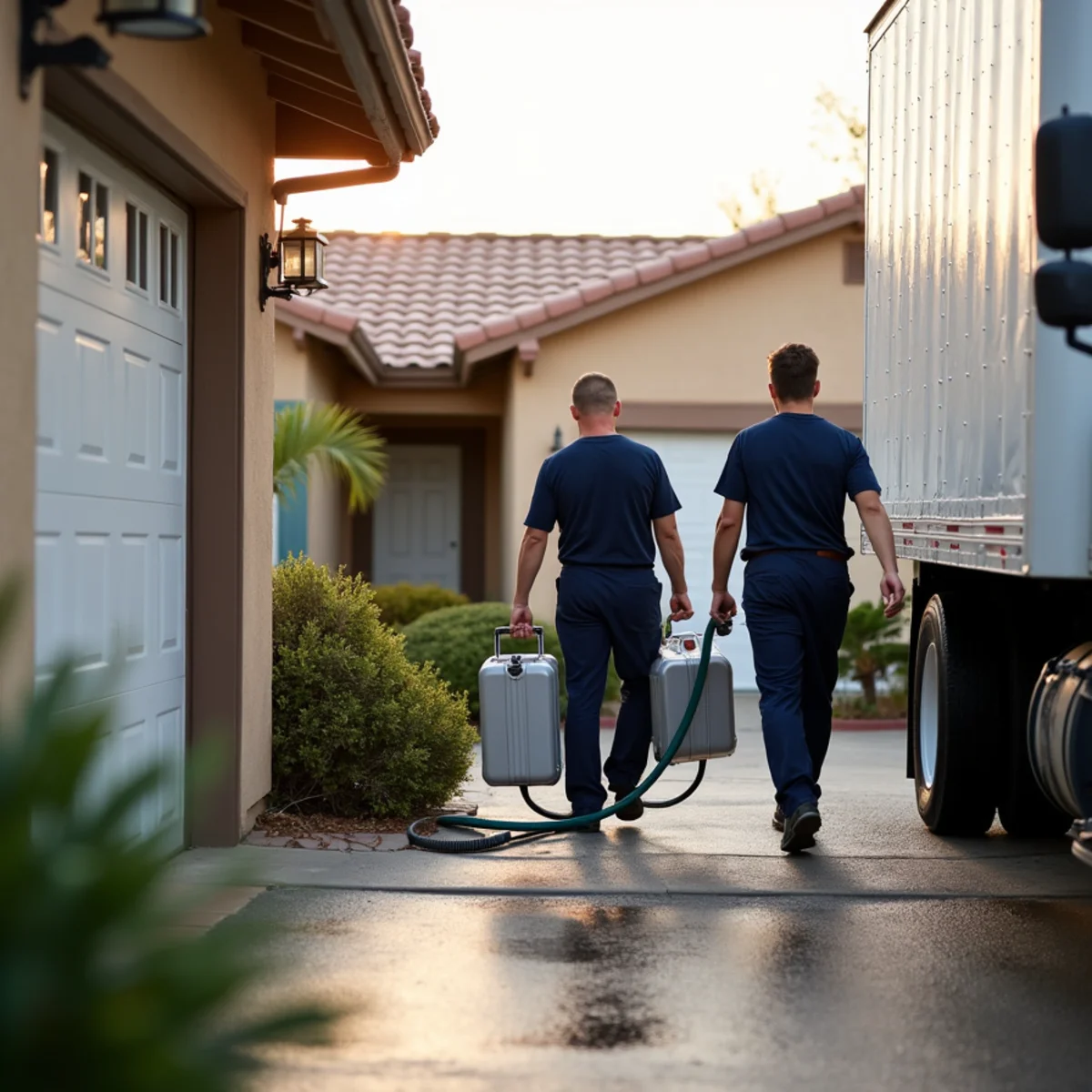
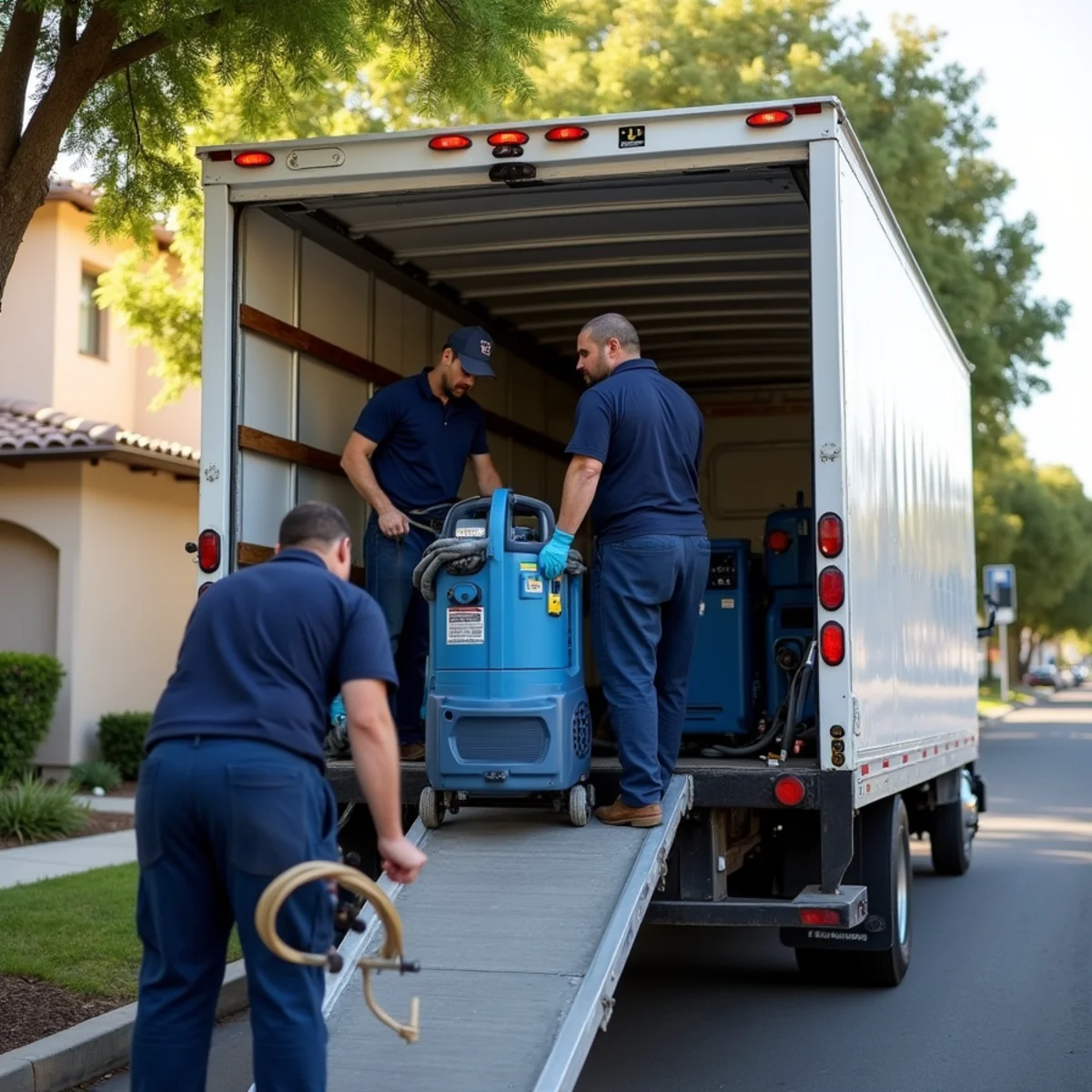
Water damage crew arriving at a Fullerton, CA home and assessing the loss
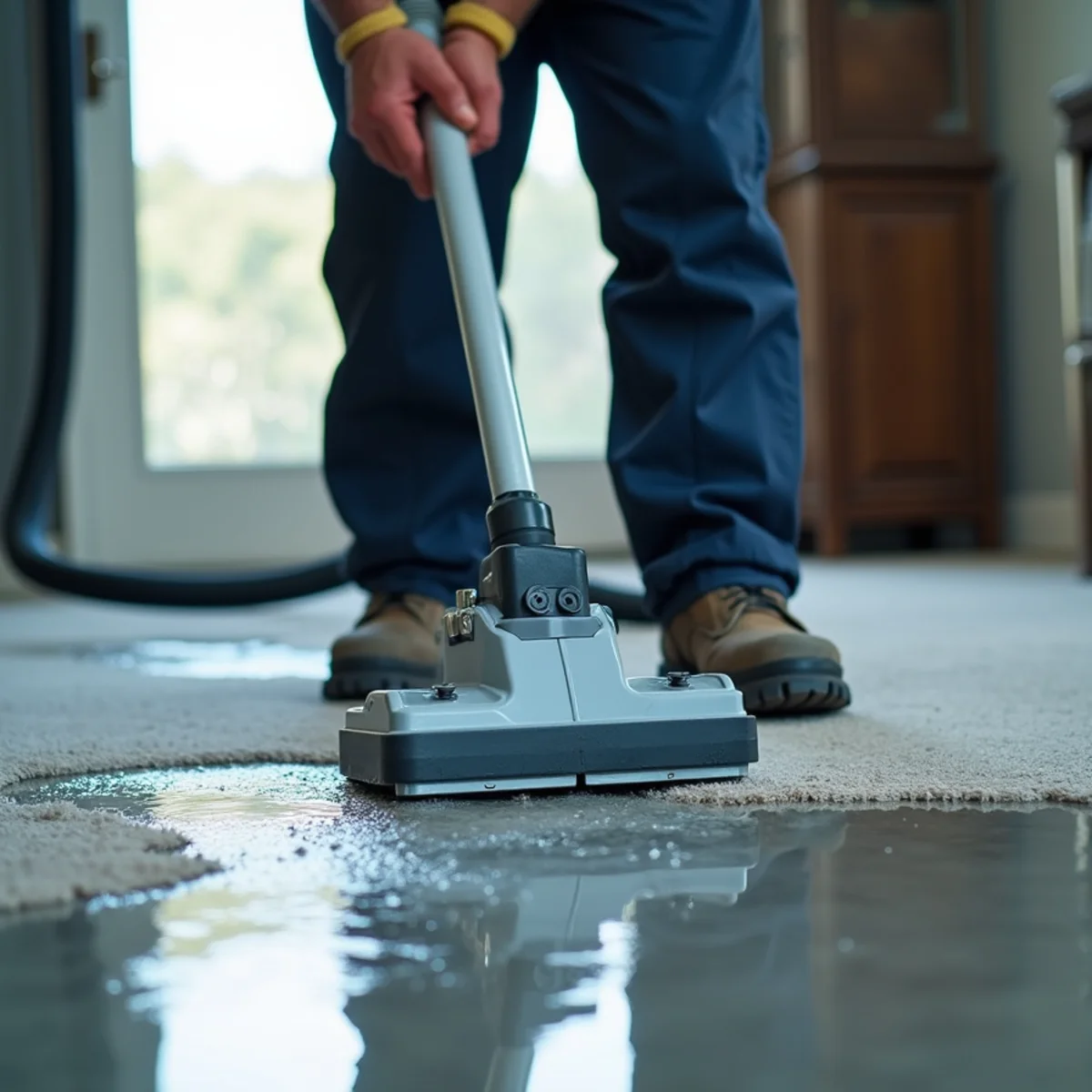
Truck-mounted water extraction removing standing water from a Fullerton home
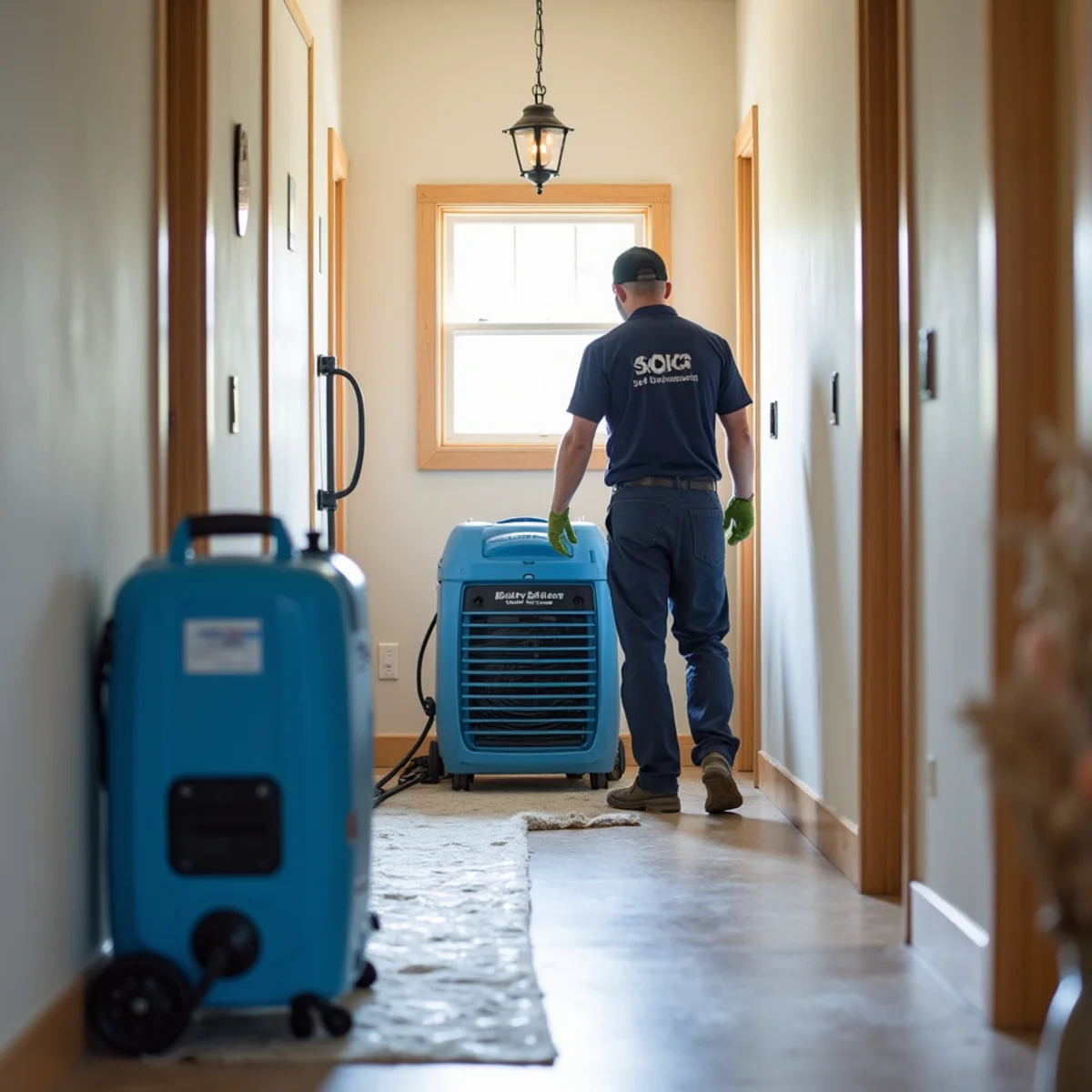
Air movers and a commercial dehumidifier drying a Fullerton, CA hallway
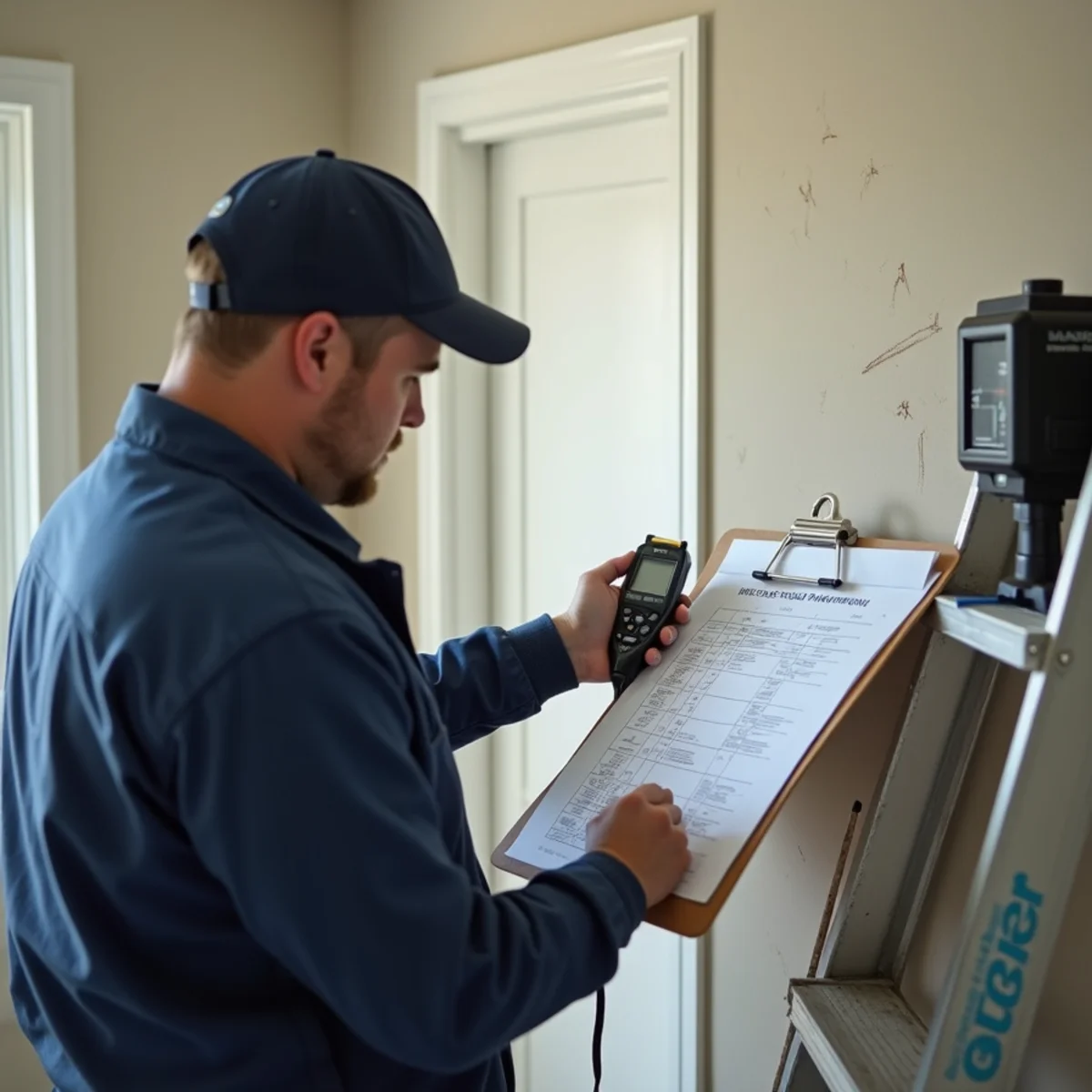
Technician recording moisture readings for a water damage insurance claim in Fullerton
Insurance & Cost
Sudden and accidental damage — a burst supply line, a failed water heater, a dishwasher hose that lets go — is what a standard California homeowners policy is built to cover. Gradual damage from a leak that ran for months is generally excluded as maintenance, and the failed component itself is usually excluded too.
Water that enters from outside is the one that catches people. Storm runoff, rising water and creek overflow are a flood loss, which your homeowners policy excludes and which needs separate NFIP or private cover. That matters most along the Coyote Hills and East Fullerton creek corridor.
Wind is the grey area, and it works in your favour. Rain entering through an opening the wind created is generally a wind loss, not a flood loss. Which one your carrier records is decided by evidence gathered before anything is cleaned up — which is why we photograph the entry point and the direction of flow first.
We will not quote a restoration over the phone, and you should be sceptical of anyone who does — a real estimate needs on-site moisture readings. You get a written scope of work and a moisture map after the inspection, so you know exactly what will be dried, what will be replaced, and what will be billed.
What water damage restoration costs in FullertonThe Institute of Inspection, Cleaning and Restoration Certification sets the industry standards for water damage restoration, structural drying and mold remediation. In practice, working to those standards means classifying the water by category before deciding anything, mapping moisture with meters instead of estimating it, and drying to a documented standard taken from an unaffected part of your own building — not to a schedule.
Ask any restoration company for proof of IICRC certification, California contractor licensing and liability insurance before you let them on site. Then ask to see a moisture map, a daily drying log and a written scope of work. A company that measures will show you all three without hesitating.
Locally Owned & Operated
After enough jobs in one city you stop seeing random accidents and start seeing patterns. Fullerton has four: 1920s–40s houses downtown still running original galvanized supply lines; post-war tracts poured on expansive clay whose copper is now at the end of its life; roughly 14 inches of rain a year arriving in a handful of hard storms; and a municipal system where about half of some 420 miles of water main is over fifty years old.
The fifth pattern is the one people least expect: most water damage in Fullerton homes does not come from the weather at all. It comes from inside the house — water heaters that corrode through in a garage, rubber washing machine hoses that let go at full pressure, dishwashers and refrigerator ice-maker lines, and attic HVAC condensate drains that block and discharge through the ceiling below in the middle of summer.
Knowing that changes what we check on arrival. It is the difference between drying the room you can see and finding the wall cavity two rooms away that is still wet.
Where We Work
Every neighbourhood page is written from the housing era, soil and drainage that actually decide what fails there — with an honest drive time from our S Raymond Ave base.
Proof
We do not publish written-for-us testimonials. Every review that appears here will be a verified customer review, published verbatim and with permission — which is why this space is empty rather than full.
In the meantime, judge us on what is verifiable: a stated 60-minute dispatch window, IICRC-aligned drying documented with daily moisture logs, a written scope of work before any work starts, and a licensed, insured California contractor.
Find us on GoogleGuides
The first sixty minutes decide whether this is a cleanup or a reconstruction. Here is the order of operations, and the three things not to do.
Read the guideA failed tank is not a forty-gallon spill — it keeps refilling until you close one valve. Here is where that valve is and what to do next.
Read the guideStopping the overflow takes ten seconds if you know where to reach. Working out whether it is a clog or a main-line backup takes about a minute — and it changes everything.
Read the guideFind Us
Emergency line
+1 (201) 277-9344Hours
24 hours a day, 7 days a week — including holidays
No phone tree and no national call centre. They take your address and ask about the water source and how far it has spread.
Where your shut-off is likely to be, whether to cut power, and what not to touch. This part is free and it matters more than anything else in the first hour.
The truck leaves with extraction and drying equipment already loaded. We do not come to look and return later.
Photos and video before anything moves, thermal imaging, moisture readings — then the water comes out and drying equipment goes in on the same visit.
Questions
We dispatch a crew within 60 minutes of your call and are typically on-site in 60 to 90 minutes anywhere in Fullerton. We stage from S Raymond Ave, so most of the city is a 10 to 15 minute drive rather than a trip down the freeway from another county. For neighbouring cities we will give you an honest arrival time on the phone rather than a number designed to win the call.
Yes. The line is answered by a person 24 hours a day, every day, including holidays — no phone tree and no national call centre. Overnight calls are a significant share of our work, because that is when unattended failures run longest.
Call us first. Your policy requires you to take reasonable steps to prevent further damage, so starting emergency mitigation is expected and does not prejudice your claim. Call your carrier once the water has stopped and you can talk without standing in it — we will have the documentation ready by then.
Every day. We document to the standards carriers use: photographs before any cleanup, a moisture map with baseline and daily readings, drying logs, and a line-item scope of work written in the estimating format your adjuster already works in. In California you are free to choose your own restoration contractor regardless of who your carrier recommends.
It depends on how much material got wet and how long it stayed wet, and neither is visible from a phone description. We provide free on-site estimates and will not quote a firm price sight-unseen — a legitimate estimate needs moisture readings. Be cautious of any company that gives you a number before inspecting the property.
Three to five days for a typical residential loss. Hardwood, plaster and concrete slabs take longer. We do not guess — we take readings daily against a dry standard established from an unaffected part of your own home, and equipment comes out when the materials reach it.
Very possibly. Mold colonisation on wet cellulose materials typically begins within 24 to 48 hours at normal room temperature, and water wicks up drywall at roughly an inch an hour the whole time. That window is the entire reason we run a 24/7 line.
Both. We hold the file from the first extraction through the final walkthrough — mitigation, drying, demolition and the full rebuild including drywall, texture, paint, flooring, trim and cabinetry. One project manager and no gap where a mitigation company hands you a dry house and a phone book.
Crews dispatched within 60 minutes — on-site in 60–90 minutes, anywhere in Fullerton. A real person answers the line at any hour, and we document everything your insurance adjuster will ask for.