Ceiling Leaking During a Storm? What to Do in the Next 30 Minutes
A stained ceiling can wait until morning. A bulging one cannot — it is holding weight and it fails all at once. Here is how to tell the difference and what to do.
Read the guide24/7 emergency line — crews dispatched within 60 minutes
1500 S Raymond Ave, Fullerton, CA 92831

11–17 minutes from our Fullerton base
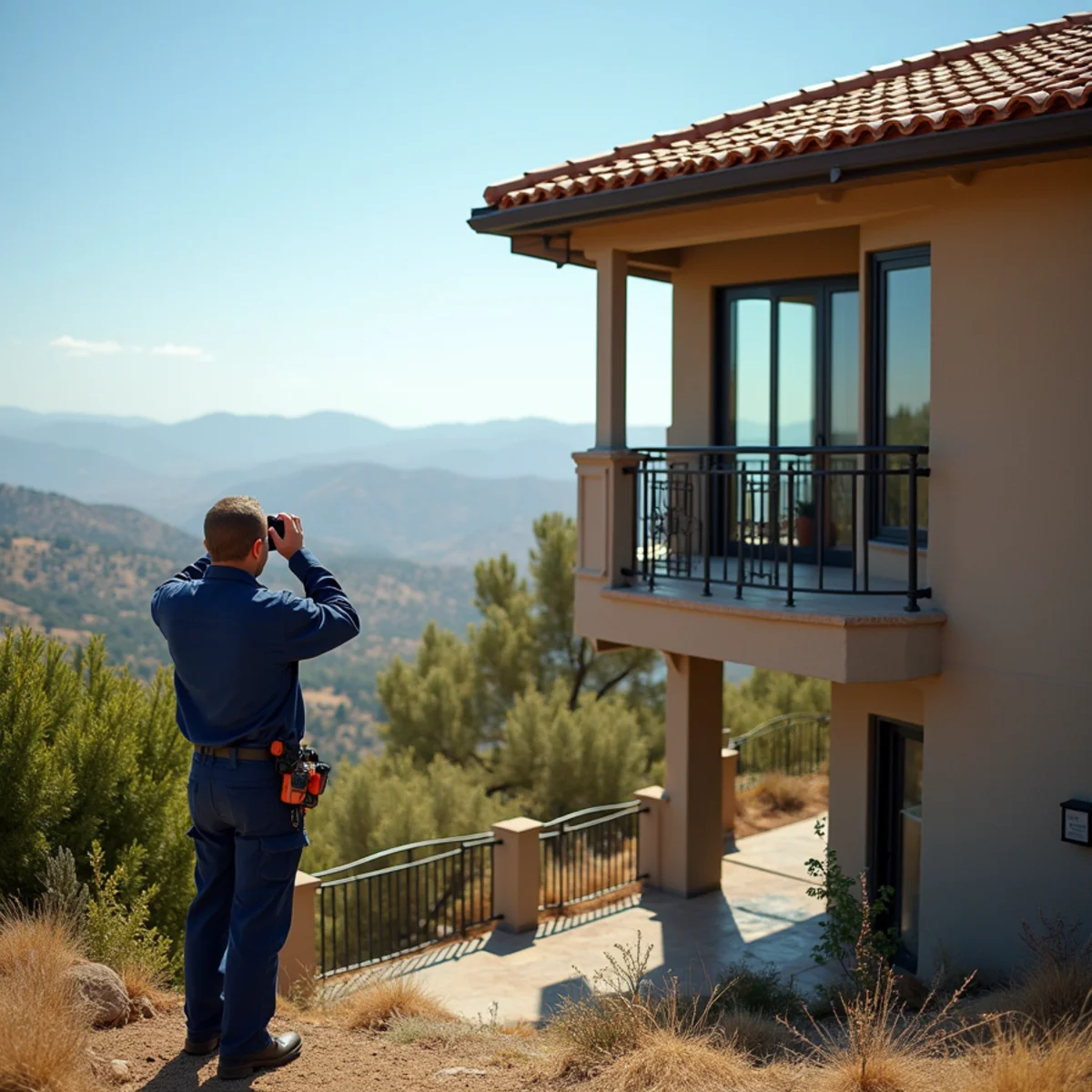
Rolling Hills covers elevated ground in the north of the city, eleven to seventeen minutes from our base.
The houses here are largely 1960s and 1970s view homes, and the combination of that era and that exposure produces a failure mode you do not see much in the flats: wind-driven rain getting in through the building envelope rather than through the roof.
Rolling Hills: 11–17 minutes · dispatch within 60 minutes
+1 (201) 277-9344Most rain falls more or less vertically and a building envelope handles it easily. On exposed elevated ground during a storm with wind behind it, rain arrives at an angle and gets driven against vertical surfaces — walls, windows, doors, siding joints.
That is a completely different test. Water is pushed into gaps that gravity would never carry it into: failed window and door perimeter sealant, cracked stucco, deteriorated weep screeds, siding laps, and the junctions where two wall planes meet.
The 1960s and 1970s vintage is what makes this common here. Original perimeter sealant on windows and doors is well past its life, stucco has had sixty years of thermal cycling to develop hairline cracking, and many of these homes have had window replacements where the flashing detail was not restored properly.
The clay soil is the second factor. Expansive clay on sloping ground moves unevenly through the wet and dry cycle, and that movement cracks stucco and slabs — the cracks that let wind-driven rain in are frequently caused by the soil rather than by age alone.
Inside, the same movement abrades the copper supply lines running through the slab, so these houses get slab leaks on top of everything else.



Wind-driven rain intrusion is one of the harder diagnoses we do, because it only happens under specific conditions. The house is fine in ordinary rain and wet inside during a storm from one particular direction, which makes homeowners doubt themselves.
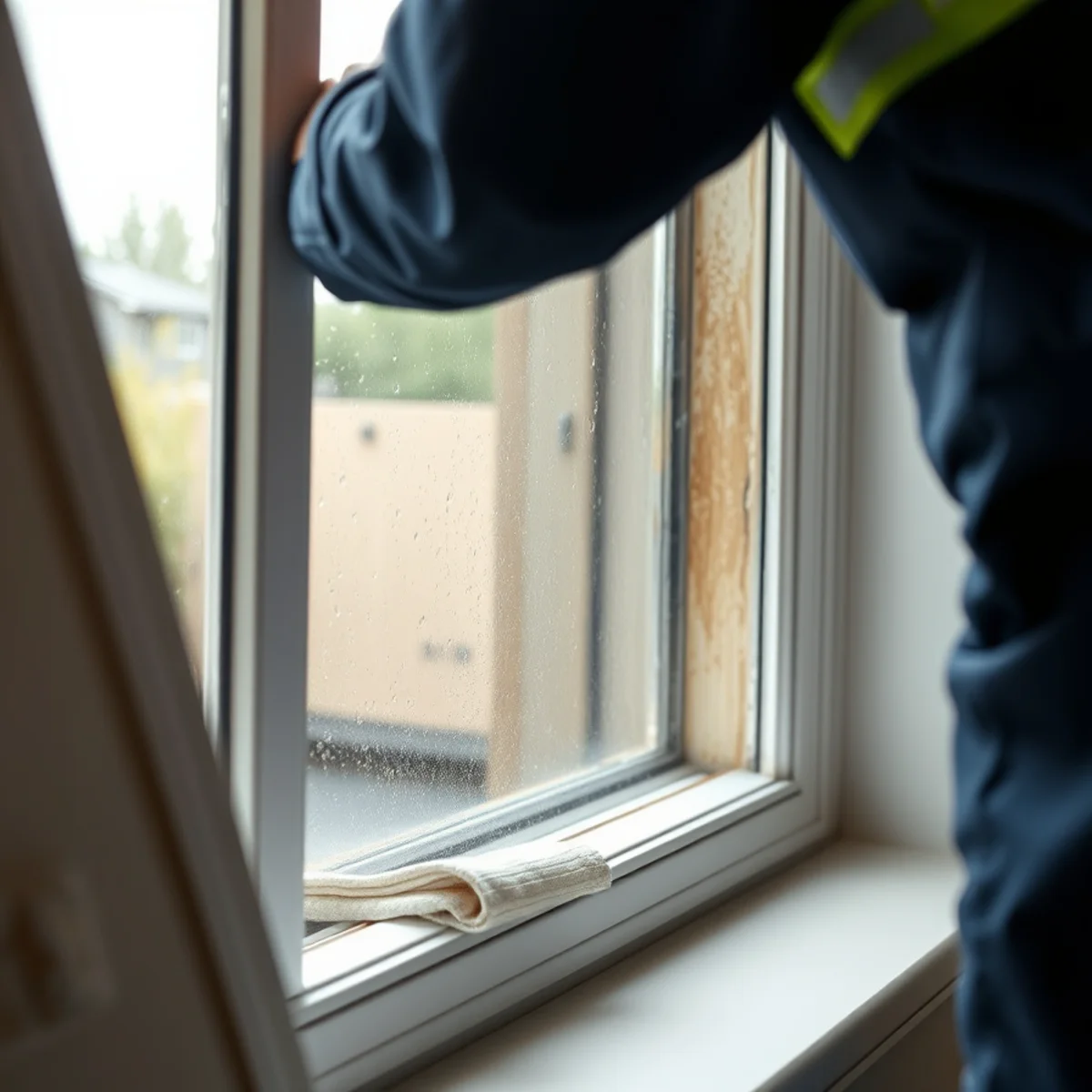
The pattern is the tell. Water appearing at the top or side of a window rather than the sill, damp at a wall-to-wall junction, staining that only occurs after storms from a certain quarter, and interior moisture with no plumbing above or beside it.
We map moisture on the interior, thermal image the wall assembly, and where necessary water-test the exterior with directed spray at suspect details to reproduce the failure. That is the only reliable way to separate an envelope leak from a roof leak or a plumbing leak, and it saves opening walls on a guess.
The repairs are usually sealant, flashing and stucco work rather than anything structural — but they have to be done at the right detail, and finding the right detail is the whole job.
The scopes we run most often at this address type. Every one is available 24/7.

Emergency tarping and board-up first, then extraction, drying and repairs — with the wind-versus-flood documentation your claim depends on.
Storm Damage in FullertonThermal imaging, acoustic equipment and moisture mapping locate the leak before we open anything — one small repair, not an exploratory demolition.
Leak Detection in FullertonFullerton's most common hidden loss. Detection, plumber coordination, slab drying and full restoration on one file.
Slab Leak Damage in FullertonBalanced air movers and dehumidifiers, daily moisture logs, and a documented dry standard — so nothing is left wet behind the wall.
Structural Drying in FullertonContainment, HEPA filtration, source removal and independent clearance testing — plus fixing the moisture that caused it.
Mold Remediation in FullertonExposed elevated ground where rain arrives sideways and gets in through the walls rather than the roof.
Wind-driven rain intrusion only happens under specific conditions. We reproduce it with directed spray instead of opening a wall on a hunch.
Water at the top or side of a window rather than the sill, after storms from one direction, means envelope not roof.
The stucco cracks that let water in are frequently caused by soil movement rather than age alone.
From our base, dispatched within 60 minutes at any hour.
Often not. On exposed elevated ground, wind drives rain horizontally against walls and pushes it through gaps gravity would never use — failed window perimeter sealant, cracked stucco, deteriorated weep screeds. The giveaway is water appearing at the top or side of a window rather than the sill, and only after storms from one direction.
We map the interior moisture, thermal image the wall assembly, and then water-test the exterior with directed spray at suspect details to reproduce the failure deliberately. That is the only way to be certain before opening a wall, and it avoids exploratory demolition based on a guess.
Expansive clay soil on sloping ground. It swells in a wet winter and shrinks in a dry summer, and on a slope that movement is uneven, so the building is stressed differently at each corner. Those cracks are also the route wind-driven rain uses, which is why the two problems tend to arrive together.
Diagnosis is a fixed-scope investigation and it is far cheaper than opening walls on a guess. It usually takes a half day: interior moisture mapping, thermal imaging of the wall assembly, then directed water testing on the exterior to reproduce the failure. On Rolling Hills elevations that testing is the only reliable way to separate an envelope leak from a roof leak, and you get the finding in writing.
We cover Rolling Hills alongside the surrounding neighbourhoods and cities.
Hillside custom homes on former citrus ranch land; the highest ground in Fullerton, with slope drainage, wind exposure and genuine freeze nights.
1950s–60s post-war tracts; original slab-on-grade construction now at peak slab-leak and galvanized-pipe failure age.
Established 1960s family tracts; mature oak and sycamore canopy over original clay-tile sewer lines.
Homes adjacent to the Coyote Hills golf course and creek corridor; the highest flood exposure in Fullerton plus clay-soil movement.
A mix of 1940s–50s ranches and 1960s–70s tracts; older sewer laterals and mature landscape root intrusion across two construction eras.
A stained ceiling can wait until morning. A bulging one cannot — it is holding weight and it fails all at once. Here is how to tell the difference and what to do.
Read the guideThat smell is microbial growth producing gas. It is not an odour problem — it is a moisture problem that has not been found yet.
Read the guideCrews dispatched within 60 minutes — on-site in 60–90 minutes. Fullerton Water Damage Pros · 1500 S Raymond Ave, Fullerton, CA 92831 · +1 (201) 277-9344.