
Emergency Guides6 min read
Water Heater Flooded the Garage: Emergency Steps Before Help Arrives
A failed tank is not a forty-gallon spill — it keeps refilling until you close one valve. Here is where that valve is and what to do next.
Read the guide24/7 emergency line — crews dispatched within 60 minutes
1500 S Raymond Ave, Fullerton, CA 92831
Fullerton, CA
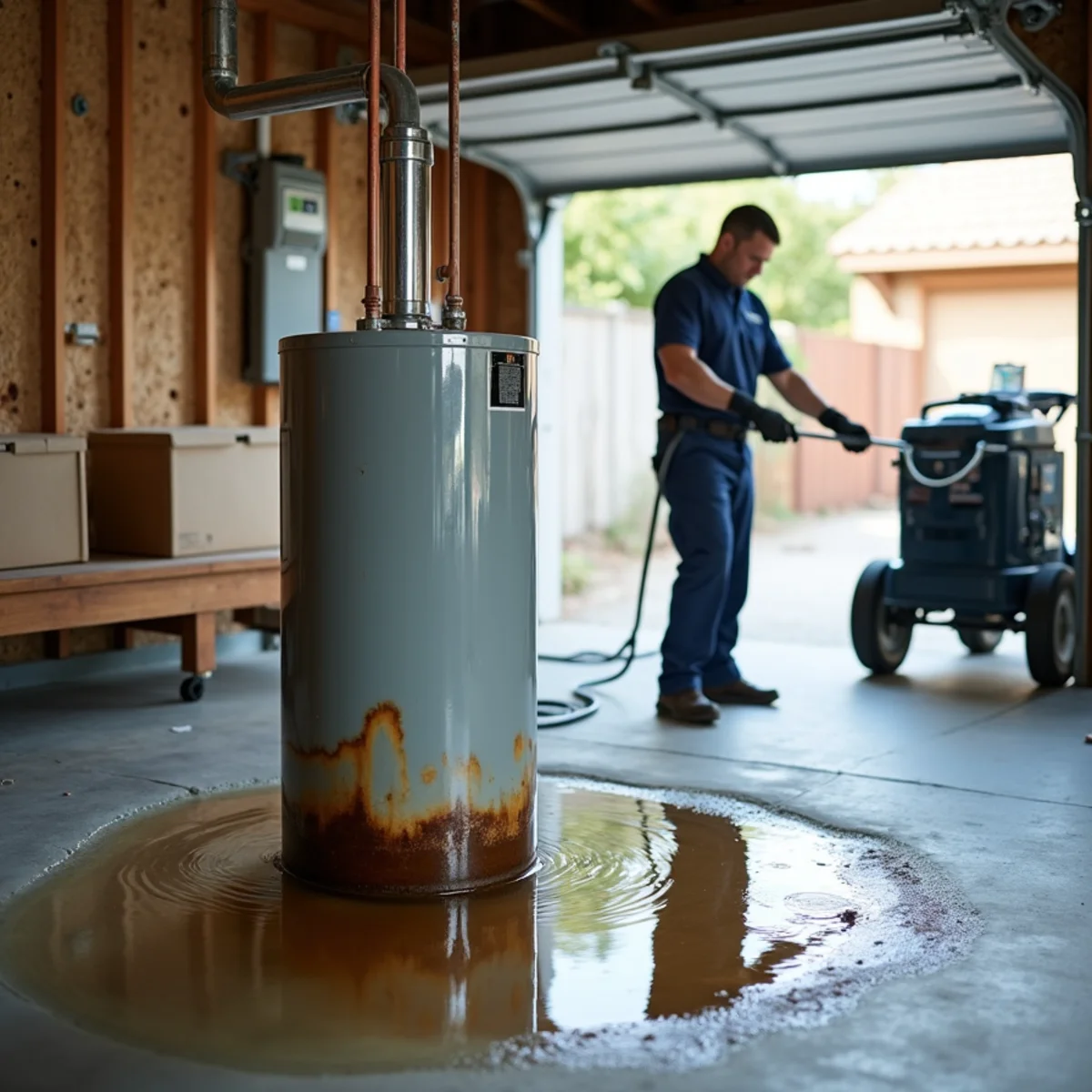
A failed water heater does not just release its tank. If the failure is in the tank wall and the supply is still open, cold water keeps feeding in and running straight out — so this is not a forty-gallon spill, it is a continuous flow until someone closes the cold inlet valve above the unit.
In Fullerton the great majority of water heaters live in the garage, which is both good and bad. Good because a garage floor slopes to the door and much of the water leaves the building. Bad because the shared wall between garage and house is drywall sitting on a bottom plate, and water wicks straight through it into the hallway, the closet or the bedroom on the other side.
The other thing that gets ruined is everything stored on the garage floor. Cardboard boxes wick water upward like a lamp wick, and the contents are usually the part people actually care about.
Crews dispatched within 60 minutes — on-site in 60–90 minutes
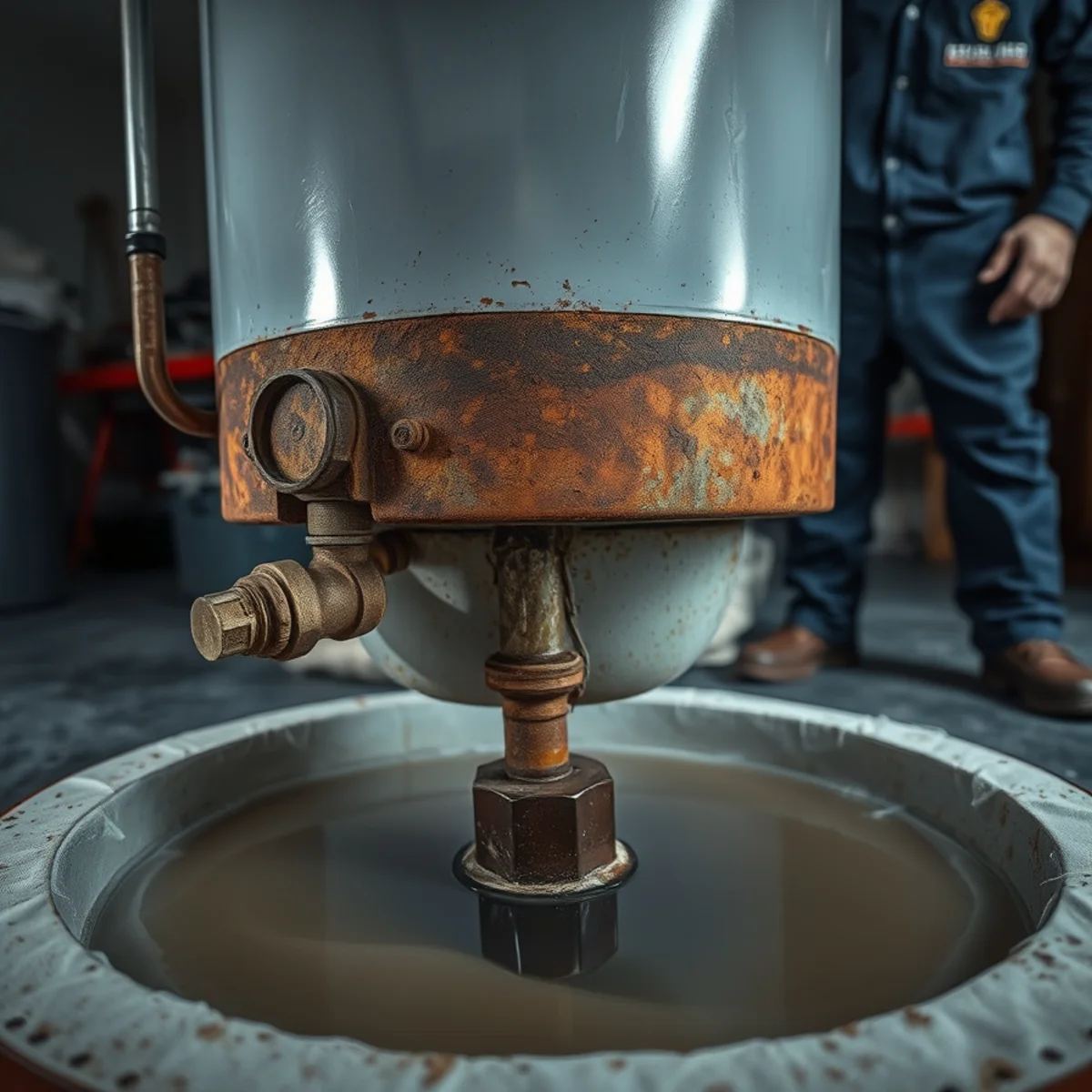
+1 (201) 277-9344Tanks almost always warn you. These are the signals:
The garage is only where it started. The scope follows the water into the house:
Order matters here and it takes about two minutes.
It is on the cold line directly above the heater. This stops the refill and turns a continuous flood back into a fixed volume. If it will not close, shut the house main.
For gas, turn the control to OFF and close the gas shut-off at the unit. For electric, switch the dedicated breaker off. A tank that keeps firing while empty damages the unit and creates a real hazard.
Garages have outlets, openers, freezers and often the sub-panel. If water has reached any of it, cut power at the panel before you go in — or wait for us.
Cardboard wicks. Anything on the floor in boxes is on a clock, and photographs of it in place are worth taking before you move it.
Photograph the pooling water and the water line on the garage wall first. That documentation is what supports the contents portion of your claim.
The floor is bare concrete and it slopes to the door, so an hour after the failure the visible water is largely gone and people assume the problem left with it.
It did not. Concrete is porous and holds moisture in its top layer. The garage-to-house wall is drywall on a bottom plate, and that plate has been standing in water — it wicks upward into drywall and insulation, and travels along the plate into the adjoining room. The first sign inside the house is often a damp baseboard or a musty smell in a hallway closet several days later.
Then there is the ceiling question. In a two-storey home or a house with living space over the garage, a heater on the garage wall can put water into the ceiling assembly and the floor structure above.
We meter the shared wall, the plate and the adjacent interior rooms on every water heater call, because the garage is almost never the whole extent of the loss.
Worth knowing, and worth checking this weekend.
California Health and Safety Code section 19211 requires water heaters to be braced, anchored or strapped to resist horizontal displacement from earthquake motion. Practically, that means two straps — one in the upper third of the tank and one in the lower third, kept at least four inches above the controls — anchored into wall framing.
A forty-gallon tank weighs roughly four hundred pounds when full. In a quake, an unstrapped tank walks, and when it moves it shears the gas line or the water connections. That is a fire risk and a flood risk in the same event, and it is a code requirement at sale or transfer.
While you are looking: check that the tank sits in a drip pan with a drain line to the exterior, and that the temperature and pressure relief valve has a discharge pipe running down to within six inches of the floor. Missing TPR discharge piping is one of the most common defects we see in Fullerton garages, and it is genuinely dangerous.
Tank water is Category 1 clean water at the moment of failure, so early response saves a lot of material. It does not stay clean once it has run across a garage floor and into whatever was stored there.
We extract the standing water, remove saturated contents and packaging, and open the base of the shared wall where the plate is wet — usually a flood cut a foot or so up, which is far cheaper than replacing a whole wall later. Wet insulation comes out.
Then we dry the slab, the plate, the cavity and any affected interior rooms, with readings at each. Garages need more drying attention than people expect because that concrete slab holds moisture and the space is often poorly ventilated.
We coordinate replacement of the unit with a licensed plumber, and we will point out if the installation was missing straps, a pan or TPR discharge piping so the new one goes in correctly.
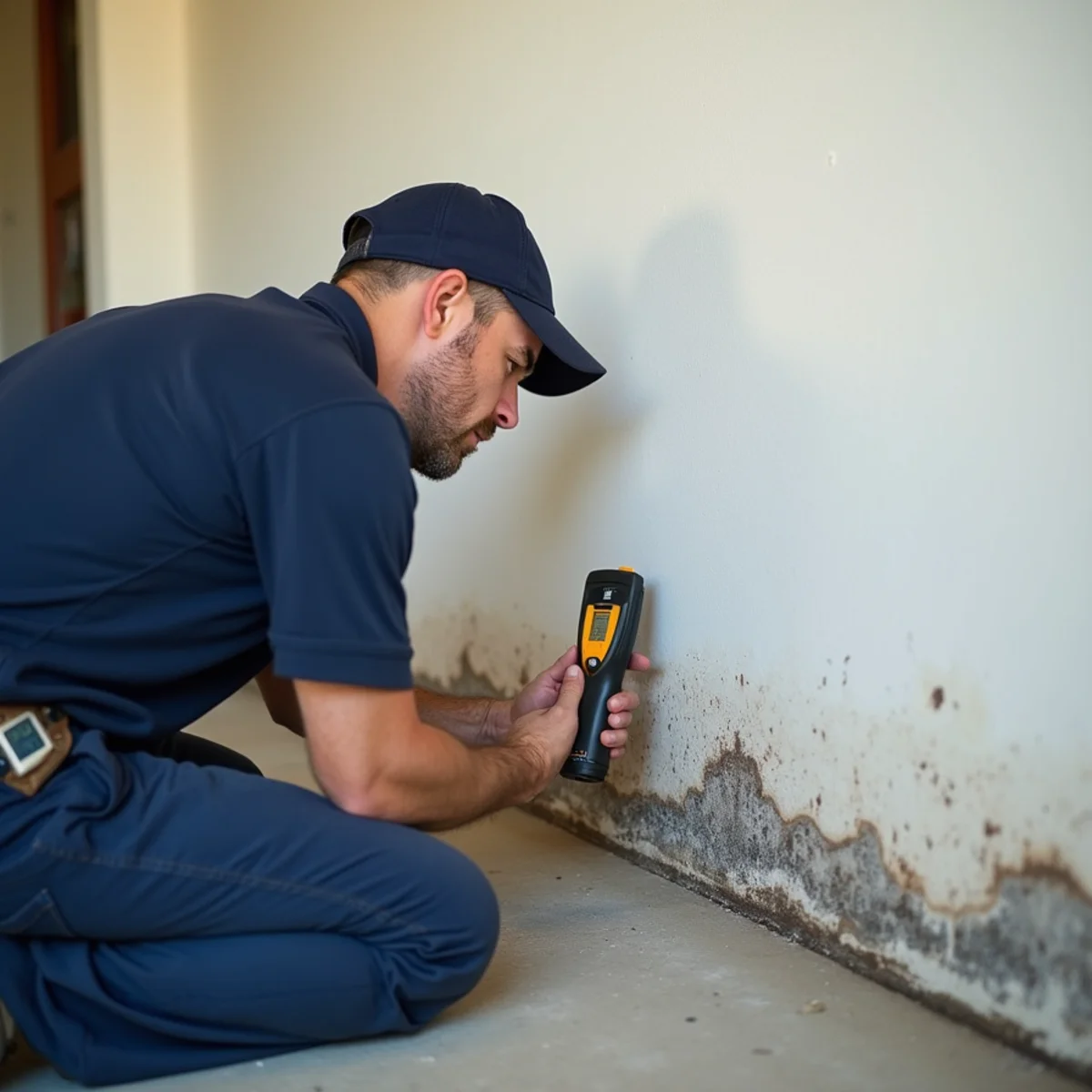
Metering the shared garage wall after a water heater leak in Fullerton
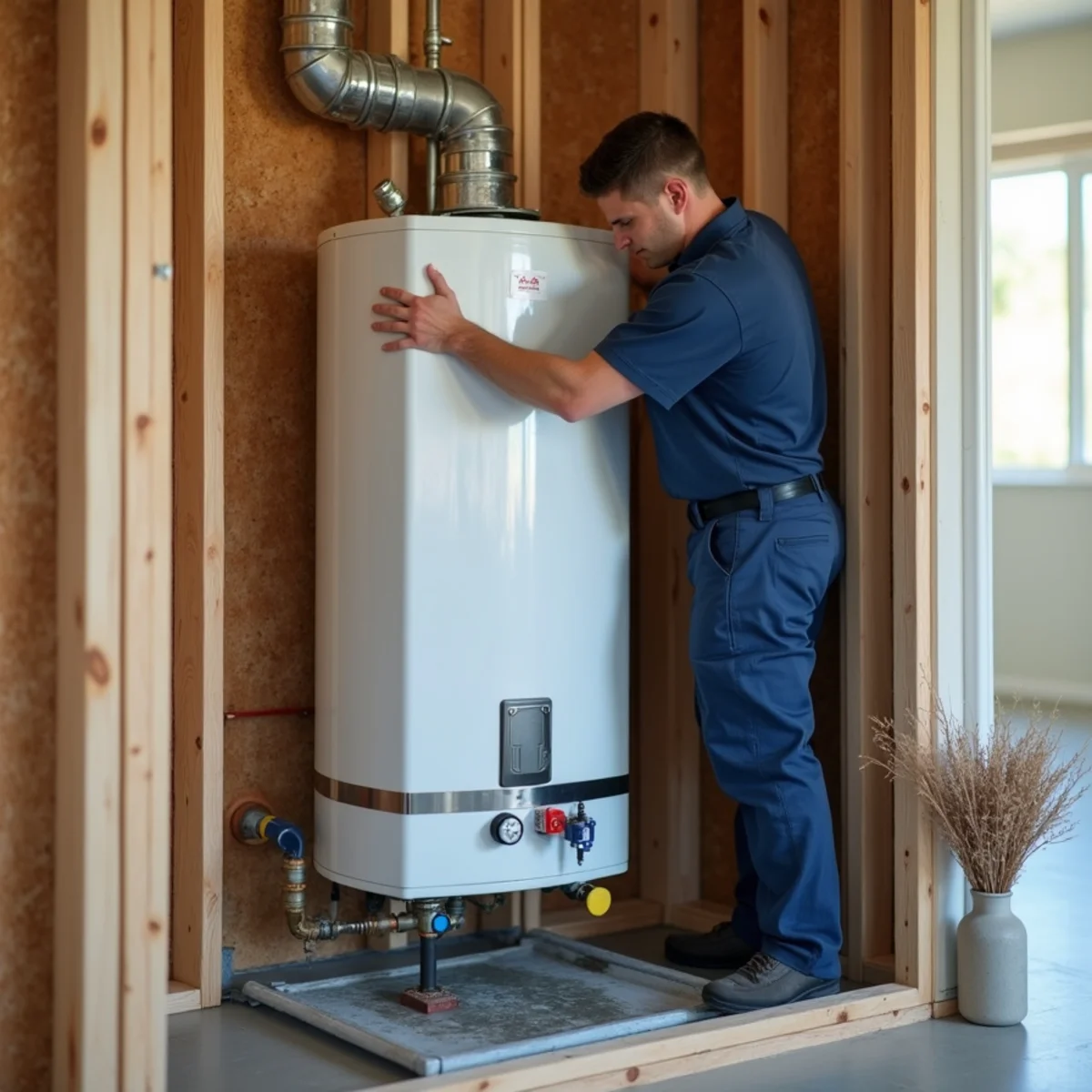
Technician checking a newly installed replacement water heater in a Fullerton, CA garage
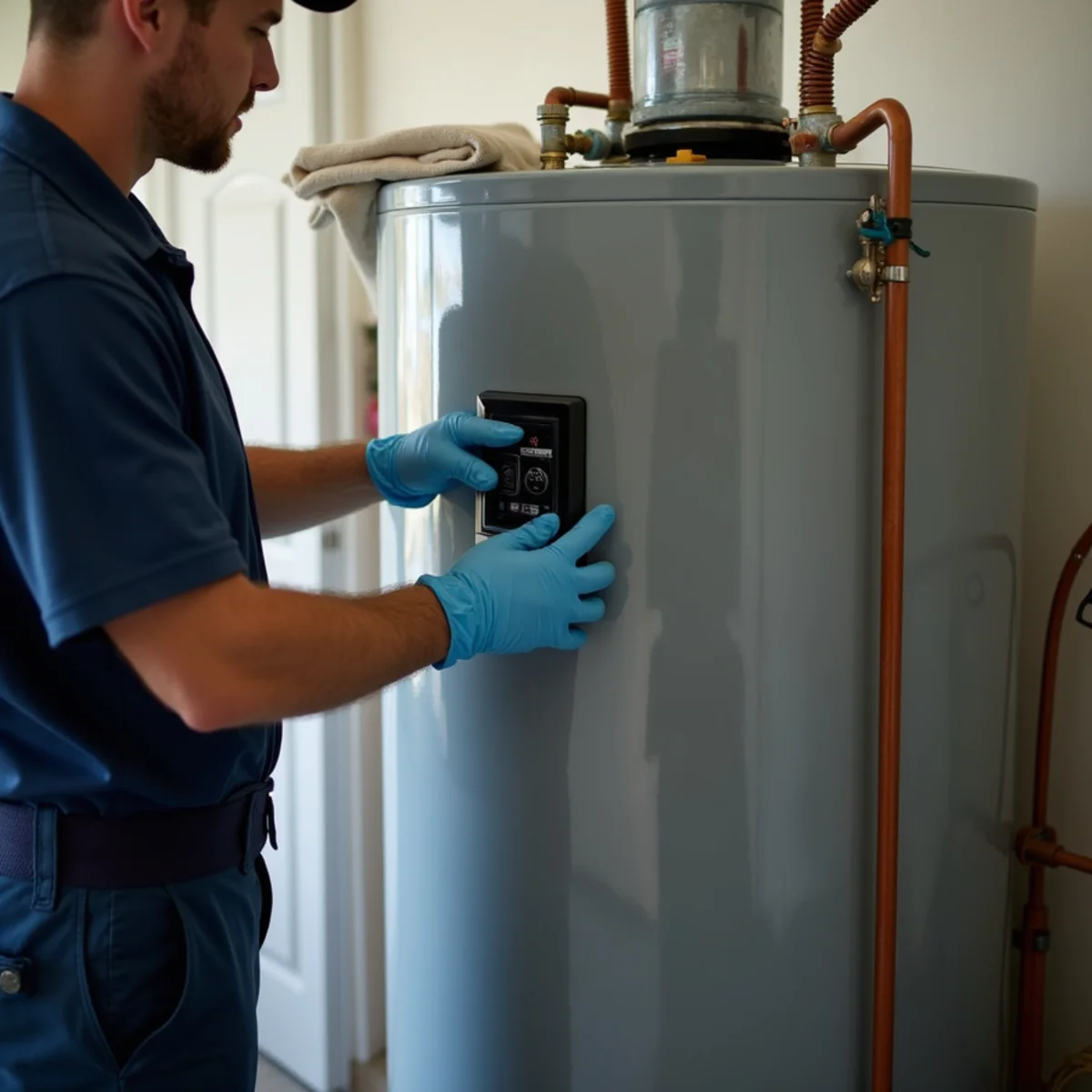
Inspecting seismic straps on a garage water heater
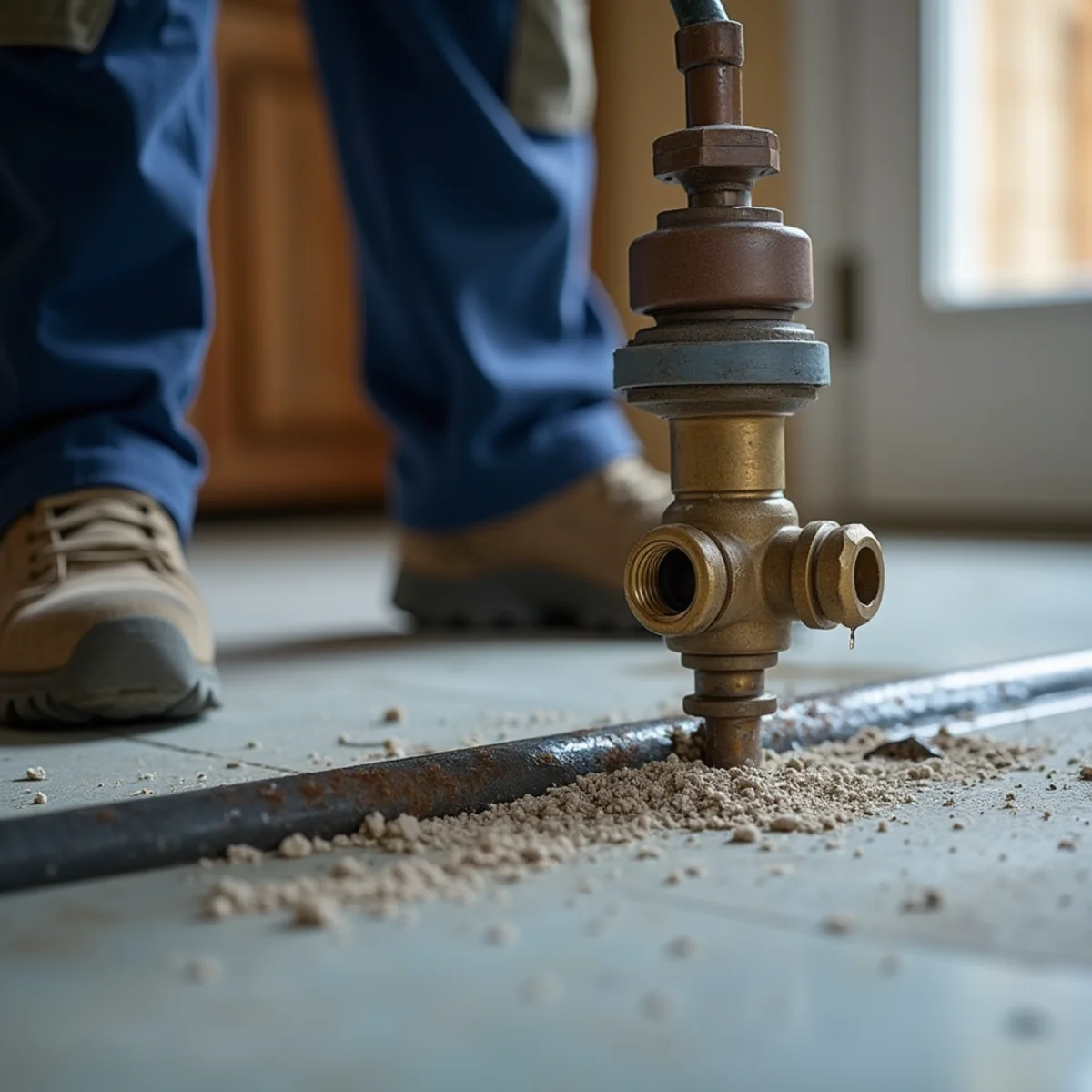
Checking the temperature and pressure relief discharge line
Most water heater losses are contained and cheap — if the shared wall is checked. When it is not, they surface as a hallway mold problem weeks later.
It takes two minutes and it is the single difference between a garage clean-up and a mold remediation in the adjoining bedroom. Most companies do not do it.
Cardboard wicks, so what looks dry on top is soaked at the base. We photograph stored items in place because that is your contents claim.
Missing straps, no pan drain, or a capped TPR valve are safety issues. We point them out even though the replacement is the plumber's scope.
A tank that failed while the family was away is a completely different job from one caught in twenty minutes. Speed is the whole variable.
Most of these are contained jobs if caught quickly. What changes the scope:
The serial number on the manufacturer's label encodes the build date, and the format varies by brand — most begin with a letter or digits representing the month and year. If the label is unreadable, the permit history for the property often shows the last replacement. Anything you cannot date at all is almost certainly old enough to be worth planning for, and a tank in a garage above finished flooring deserves a drain pan either way.
Less than you think. A tank that has begun to weep at a seam is corroding through, and that process accelerates. It can go from a drip to an open failure in days. Close the cold inlet, call a plumber for replacement, and call us if any water has reached the shared wall or the living space.
No — we are a restoration company, not a plumbing contractor. We handle the water: extraction, drying the garage slab and any wall the water reached, and removing material that cannot be saved. The tank itself is replaced by your plumber, and we will coordinate the timing so the drying equipment is not fighting a new installation. Worth knowing: the resulting damage is usually a covered loss while the tank is usually treated as a maintenance item.
Usually just the bottom section. If the bottom plate and lower drywall are wet, we flood cut roughly twelve to eighteen inches above the water line, pull the wet insulation, dry the cavity and put it back. That is much less expensive than leaving a wet plate behind a closed wall and dealing with mold in the hallway later.
Extraction is usually a couple of hours. Drying the slab and the shared wall cavity runs three to five days with equipment running, and the garage stays usable around it in most cases — we route hoses and place units to keep a bay clear where we can. If a flood cut was needed, the drywall, texture and paint go back after the readings confirm the cavity is dry.
Crews dispatch within 60 minutes across Fullerton and north Orange County.
Related
A real person answers at 3 a.m. Crews dispatch within 60 minutes, on-site in 60–90, with extraction gear on the first truck.
Emergency Water Removal in FullertonFrom the shut-off to the finished wall: extraction, drying, plumber coordination and reconstruction on one file.
Burst Pipe Cleanup in FullertonOne company from the first extraction to the final coat of paint — no handoff between a mitigation crew and a rebuild contractor.
Residential Restoration in FullertonFurther Reading
A failed tank is not a forty-gallon spill — it keeps refilling until you close one valve. Here is where that valve is and what to do next.
Read the guideA full tank weighs around 400 pounds. In a quake, an unstrapped one walks and shears its gas and water connections. Two minutes to check yours.
Read the guideCrews dispatched within 60 minutes — on-site in 60–90 minutes. We extract, dry to a documented standard, and hand your adjuster a file they cannot argue with.