
Local Fullerton Risks
California's Water Heater Strapping Law (HSC §19211): The Earthquake Leak Risk Hiding in Your Garage
A full tank weighs around 400 pounds. In a quake, an unstrapped one walks and shears its gas and water connections. Two minutes to check yours.
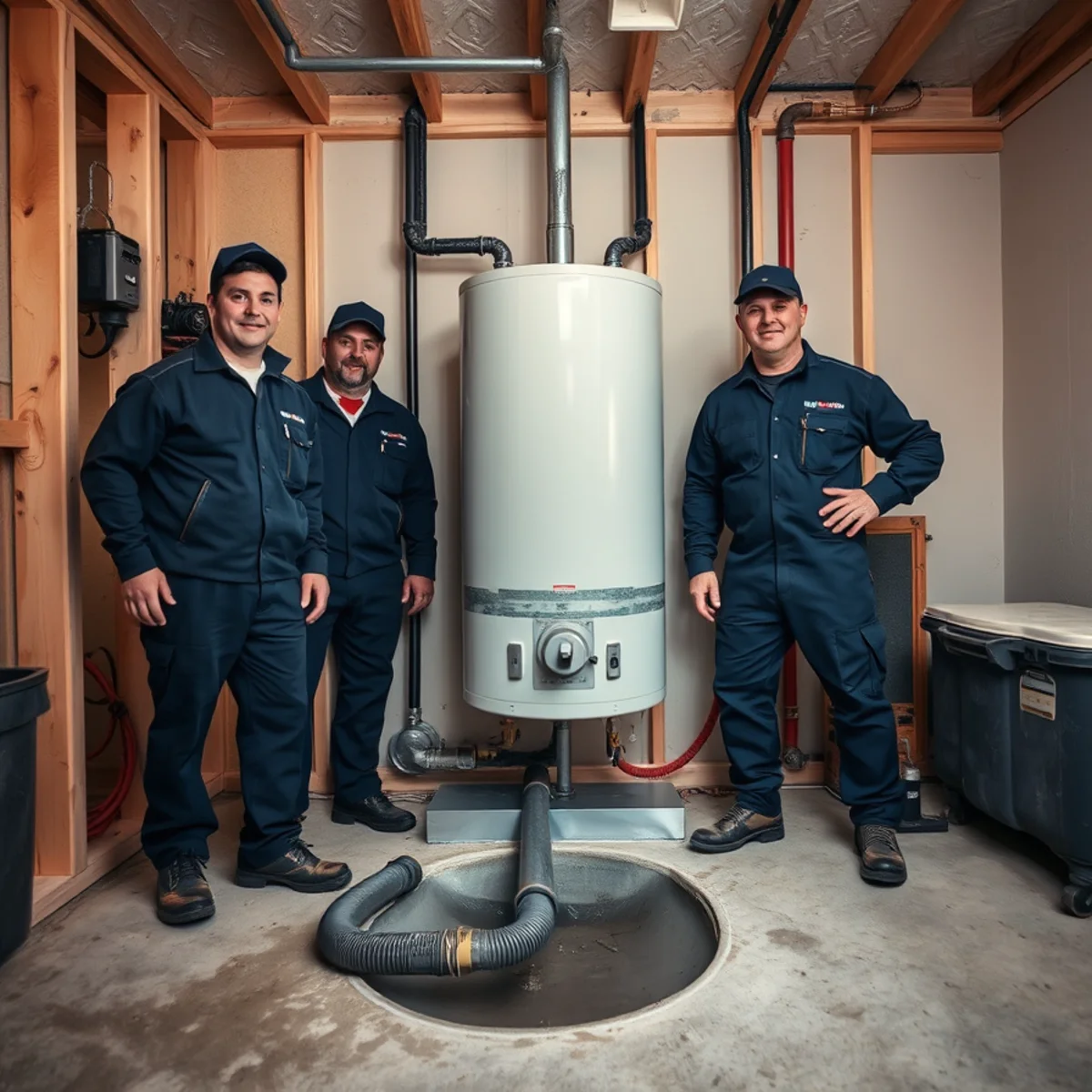
The short answer
California Health and Safety Code section 19211 requires water heaters to be braced, anchored or strapped against earthquake displacement, to the standard set by the California Plumbing Code — in practice two straps, one in the upper third of the tank and one in the lower third at least four inches above the controls, anchored into wall framing. A full 40-gallon tank weighs around 400 pounds.
Go and look at your water heater. If it is in the garage, which in Fullerton it almost certainly is, this takes two minutes and it is one of the highest-value things you can check in the house.
You are looking for two metal straps around the tank, anchored into the wall framing. If they are not there, or there is only one, or they are anchored into drywall, your water heater is not compliant and it is a genuine risk.
Dealing with this right now?
Crews dispatched within 60 minutes — on-site in 60–90 minutes, anywhere in Fullerton. Call and we will talk you through the first two minutes while a crew is dispatched.
- 60-minute dispatch, anywhere in Fullerton
- IICRC-aligned · licensed & insured
- Direct insurance documentation
What The Law Requires
California Health and Safety Code section 19211 requires water heaters to be braced, anchored or strapped to resist horizontal displacement due to earthquake motion.
It applies to new installations and replacements, and compliance is generally required at the point of sale or transfer of a property — which is when most people discover their heater is not strapped, during escrow.
The standard interpretation, reflected in the California Plumbing Code and in local enforcement, is two straps: one in the upper third of the tank and one in the lower third, with the lower strap kept at least four inches above the controls on a gas unit.
The straps must be anchored into structural framing — studs or masonry — not into drywall alone. Heavy-gauge metal strapping, not plumber's tape.
Why It Actually Matters
A standard 40-gallon tank holds roughly 330 pounds of water and weighs around 400 pounds full.
In seismic shaking, an unrestrained mass that heavy on a narrow base does not stay put. It rocks, walks, and in a significant event topples.
When it moves, it takes its connections with it. The rigid gas line shears — which is a fire and asphyxiation risk. The water connections shear — which is an uncontrolled flood at household pressure, in a garage, potentially while you are dealing with everything else an earthquake has caused.
That combination is the reason this is a code requirement rather than a recommendation. It is also, incidentally, a genuinely likely flood scenario in Southern California, and a common one in post-earthquake damage surveys.
Two Minutes: How To Check Yours
Look at the tank and work through this list:
- Two straps, not one. One strap in the upper third of the tank, one in the lower third.
- The lower strap at least four inches above the gas controls, so it does not interfere with them.
- Straps anchored into wall framing or masonry, with visible substantial fixings — not screwed into bare drywall.
- Heavy-gauge metal strapping, snug against the tank. Loose straps or plumber's tape do not count.
- If the tank sits away from the wall, blocking between the tank and the wall so it cannot rock backwards.
- Flexible connectors on the water lines and, on a gas unit, a flexible gas connector — rigid connections shear where flexible ones may survive movement.
The Two Other Defects We See Constantly
While you are looking, check these. Both are common in Fullerton garages and both matter.
First, the drip pan and its drain. The tank should sit in a metal or plastic pan with a drain line running to the exterior or to a suitable drain. A pan with no drain line simply fills and overflows, which achieves nothing — and a great many installations we see have the pan and not the line.
Second, the temperature and pressure relief valve discharge pipe. The TPR valve is the safety device that releases if the tank over-pressurises, and it must have a discharge pipe running down to within about six inches of the floor, terminating in the open where a discharge is visible.
Missing TPR discharge piping is one of the most common defects we find, and it is genuinely dangerous — a TPR valve that discharges scalding water and steam at head height, or a valve that has been capped off entirely, is a serious hazard rather than a paperwork issue.
The Age Question
While you are at the tank, find the serial number on the label. The manufacture date is encoded in it — most manufacturers put the year and week in the first four characters, though formats vary.
A standard tank unit lasts eight to twelve years. In Orange County's water, at roughly 14 to 25 grains per gallon, closer to eight. Hardness deposits sediment on the tank bottom, which insulates it from the burner, drives up operating temperature, and accelerates corrosion of the tank wall and the sacrificial anode.
Past ten years, replacing on your schedule costs dramatically less than replacing on the tank's. And a replacement is the natural moment to get the strapping, the pan, the drain line and the TPR discharge all done correctly.
Signs it is close: rust-coloured hot water in the morning, rumbling or popping as it heats, visible corrosion at the bottom seam or fittings, water in the pan, or hot water running out sooner than it used to.
What Strapping Does Not Cover, and What Else Fails in a Quake
Strapping keeps the tank upright. It does nothing about the connections, and in most post-earthquake water losses the tank is still standing while the plumbing at the top of it has failed.
If you are going to spend twenty minutes on the water heater, spend it on all of this rather than just the straps.
- Rigid copper supply connections: these snap when the tank moves even slightly. Flexible braided connectors absorb the movement and are an inexpensive swap.
- The gas line: a rigid gas connection is a serious hazard. It should be a flexible appliance connector, and an automatic seismic gas shut-off valve is worth considering.
- The temperature and pressure relief valve discharge pipe: it must run down to within six inches of the floor, in an approved material, with no threads on the end.
- Elevation in a garage: gas water heaters in garages generally require the ignition source to be at least eighteen inches above the floor unless the unit is listed as flammable-vapour-ignition resistant.
- Combustion air and venting: check the flue is properly seated and has not been knocked out of alignment by storage stacked around the tank.
- And a drain pan plumbed to a drain, if the heater sits anywhere that a tank failure would damage — which in a slab garage means anywhere adjacent to living space.
Frequently asked
HSC §19211 applies to new installations and replacements, and compliance is generally required at point of sale or transfer. Practically, retrofitting is inexpensive, takes under an hour, and removes a real fire and flood risk — most people do it rather than wait for escrow to force it.
Retrofit kits are readily available and the work is within reach of a competent DIYer. The critical details are anchoring into framing rather than drywall, using heavy-gauge strapping, and keeping the lower strap clear of the gas controls. If you are not confident about locating framing, have a plumber do it.
That is the temperature and pressure relief discharge line, and it should run to within about six inches of the floor and terminate in the open. If your TPR valve has no discharge pipe, or has been capped, that is a serious safety defect and worth fixing immediately.
The bottom line
Two straps, anchored into framing, lower one clear of the controls. Then check the pan drain and the TPR discharge.
Two minutes in the garage, and it covers a fire risk and a flood risk at once.