
Prevention & Maintenance
When to Replace Washing Machine Hoses, Water Heaters, and Supply Lines (The Ages That Matter)
Every water-carrying part in your house has a service life. Here they are, with the ones Orange County's water shortens.
The short answer
Rubber washing machine hoses every three to five years, braided stainless every eight to ten. Water heaters at eight to twelve years — closer to eight in Orange County's hard water. Toilet fill valves and flappers every four to five. Take the lower end of every range in this market.
Every component that carries water in your house has a service life, and almost none of them are replaced on schedule. They are replaced after they fail, which is expensive and entirely avoidable.
Here are the ages that matter, and where Orange County's hard water changes them.
Dealing with this right now?
Crews dispatched within 60 minutes — on-site in 60–90 minutes, anywhere in Fullerton. Call and we will talk you through the first two minutes while a crew is dispatched.
- 60-minute dispatch, anywhere in Fullerton
- IICRC-aligned · licensed & insured
- Direct insurance documentation
The Replacement Schedule
Typical service lives, with local adjustment noted:
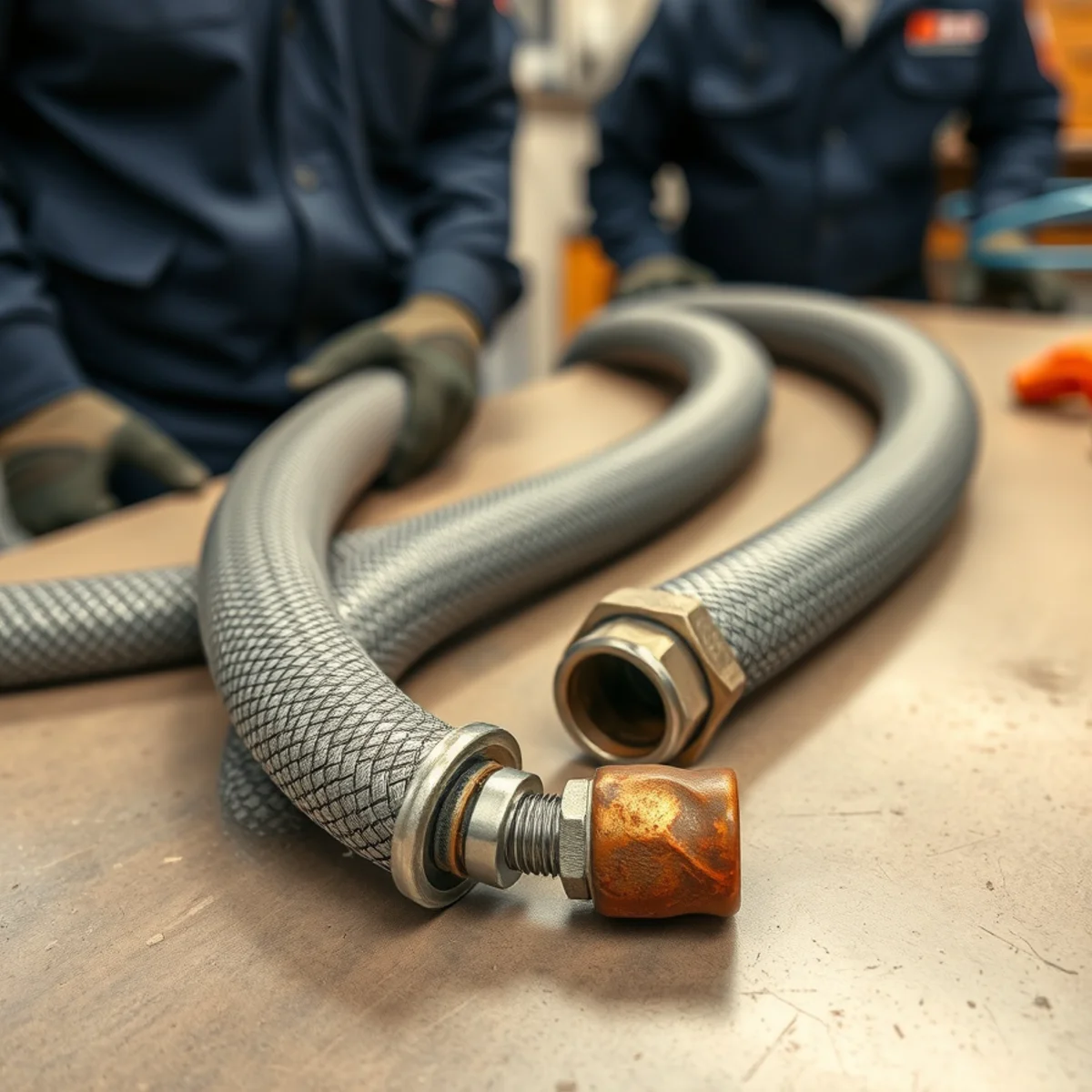
- Rubber washing machine hoses: 3–5 years. Replace with braided stainless instead and the problem largely goes away.
- Braided stainless supply lines: 8–10 years, and inspect annually for rust at the crimps.
- Water heater (tank): 8–12 years nationally, closer to 8 in Orange County's hard water.
- Tankless water heater: 15–20 years with annual descaling — and descaling is not optional in this water.
- Toilet fill valve and flapper: 4–5 years. A few dollars each and the cheapest fix in the house.
- Angle stops (shut-off valves under sinks and behind toilets): 15–20 years, and much sooner if they are the old multi-turn type and have seized.
- Dishwasher and refrigerator supply lines: 5–10 years, particularly plastic ice maker tubing.
- P-traps and drain connections: 15–25 years depending on material.
- Water pressure regulator: 10–15 years. A failed one lets house pressure rise and stresses everything downstream.
Why Hard Water Shortens Several Of These
Orange County water runs roughly 14 to 25 grains per gallon. That has direct, measurable effects on component life.
In a water heater, dissolved minerals precipitate out as sediment on the tank bottom. That sediment insulates the tank from the burner, so the burner runs longer and hotter to heat the same water. Higher operating temperature accelerates corrosion of the tank wall and consumes the sacrificial anode faster.
The audible sign is rumbling or popping as it heats — that is water boiling under the sediment layer. Once you hear that, the tank is on a shortened clock.
In supply lines and fixtures, scale narrows bores, restricts flow at aerators and valves, and in copper pipe drives the pitting corrosion that produces pinhole leaks.
So in this market, take the lower end of every published lifespan range as the realistic figure.
The Three Highest-Value Swaps
If you do nothing else on this page, do these three.
Braided stainless washing machine hoses with a single-lever shut-off valve behind the machine. A burst washer hose is one of the leading causes of residential water damage, it fails at full pressure, and it typically happens when nobody is home. The parts cost very little and fitting takes about fifteen minutes.
Water heater replacement at ten years rather than at failure. Replacing on your schedule means a plumber, a quiet Tuesday and a planned cost. Replacing on the tank's schedule means a flooded garage, a shared wall wicking water into the house, and an insurance claim.
Toilet flappers every four or five years across the house. A few dollars each, ten minutes each, and they eliminate the single most common cause of a mysteriously high water bill.
Maintenance That Extends Life
Flush the water heater annually. Attach a hose to the drain valve and run several gallons off until it comes clear. This removes sediment before it insulates the tank bottom, and in hard water it makes a genuine difference to tank life.
Check the anode rod every three to five years on a tank heater. It is a sacrificial component designed to corrode instead of the tank, and once it is consumed the tank starts corroding. Replacing it is far cheaper than replacing the heater.
Descale a tankless unit annually. In this water that is a firm requirement rather than a suggestion — a neglected tankless unit scales up and fails well short of its potential life.
Check your water pressure with an inexpensive gauge on a hose bib. Above about 80 psi accelerates wear on everything and stresses fittings; a pressure regulator is a modest fix.
And exercise shut-off valves annually — the main and the angle stops — so they still work when you need them.
How To Find Out How Old Everything Is
The water heater tells you directly. The manufacture date is encoded in the serial number on the label — most manufacturers put the year and week in the first four characters, though formats vary by brand.
For everything else, look for a date written on it by whoever last installed it, and if there is not one, start the habit: write the date in permanent marker on every hose, supply line and flapper you replace. It takes two seconds and it removes all guesswork for the next fifteen years.
If you have just bought the house, assume everything is original unless you have documentation otherwise. Ask for any records from the previous owner, and check the panel and the water heater for permit or service stickers.
Doing the Cheap Half Yourself
Several items on this schedule are genuinely homeowner jobs, and doing them costs less than a single service call. The rest are worth paying for, and knowing the line between them saves both money and flooded floors.
Turn the relevant water off first, and put a towel and a bowl under anything you are about to disconnect.
- Washing machine hoses: entirely a homeowner job. Two connections, hand-tight plus a quarter turn with pliers, and braided stainless costs very little.
- Toilet flapper and fill valve: straightforward, sold as a kit, and it fixes both the silent leak and the running toilet at once.
- Sink and toilet supply lines: simple, provided the angle stop turns. If the angle stop is seized or weeps when you move it, stop and call a plumber — that is the job that floods kitchens.
- Water heater anode rod: worth having done at the same time as a flush. It needs a breaker bar and the clearance to pull a long rod, which many garage installations do not have.
- Water heater flush: a homeowner can do it, but on a Fullerton tank that has never been flushed the drain valve often clogs or fails to reseat. Have it done the first time.
- Anything involving the gas connection, the T&P valve or the seismic straps: professional, without exception.
Frequently asked
Considerably. The braid is a stainless sleeve over an inner tube, and it resists the bulging and splitting that kills rubber hoses under constant pressure. They are not permanent — inspect for rust at the crimps every year or two — but they are a very large improvement for a few dollars.
The serial number on the label encodes the manufacture date. Most brands put the year and week in the first four characters, though formats vary — a quick search on the brand and serial format will decode it. If the tank is past ten years in Orange County water, plan the replacement.
For the cheap, high-consequence items, absolutely. A washing machine hose costs a few dollars and can flood a house. A water heater replaced on schedule is a planned expense; replaced at failure it is a flooded garage plus a claim. For expensive low-consequence items, running to failure is more reasonable.
The bottom line
Braided hoses, a water heater replaced at ten years, and flappers every five. Those three cover most of it.
Then write the date on everything you replace, so the next decision is not a guess.