
Prevention & Maintenance
The 10-Minute Monthly Leak Inspection: Everywhere Water Hides in Your Home
Ten minutes a month, no tools, room by room. Almost every expensive water loss we attend gave warning somewhere on this list.
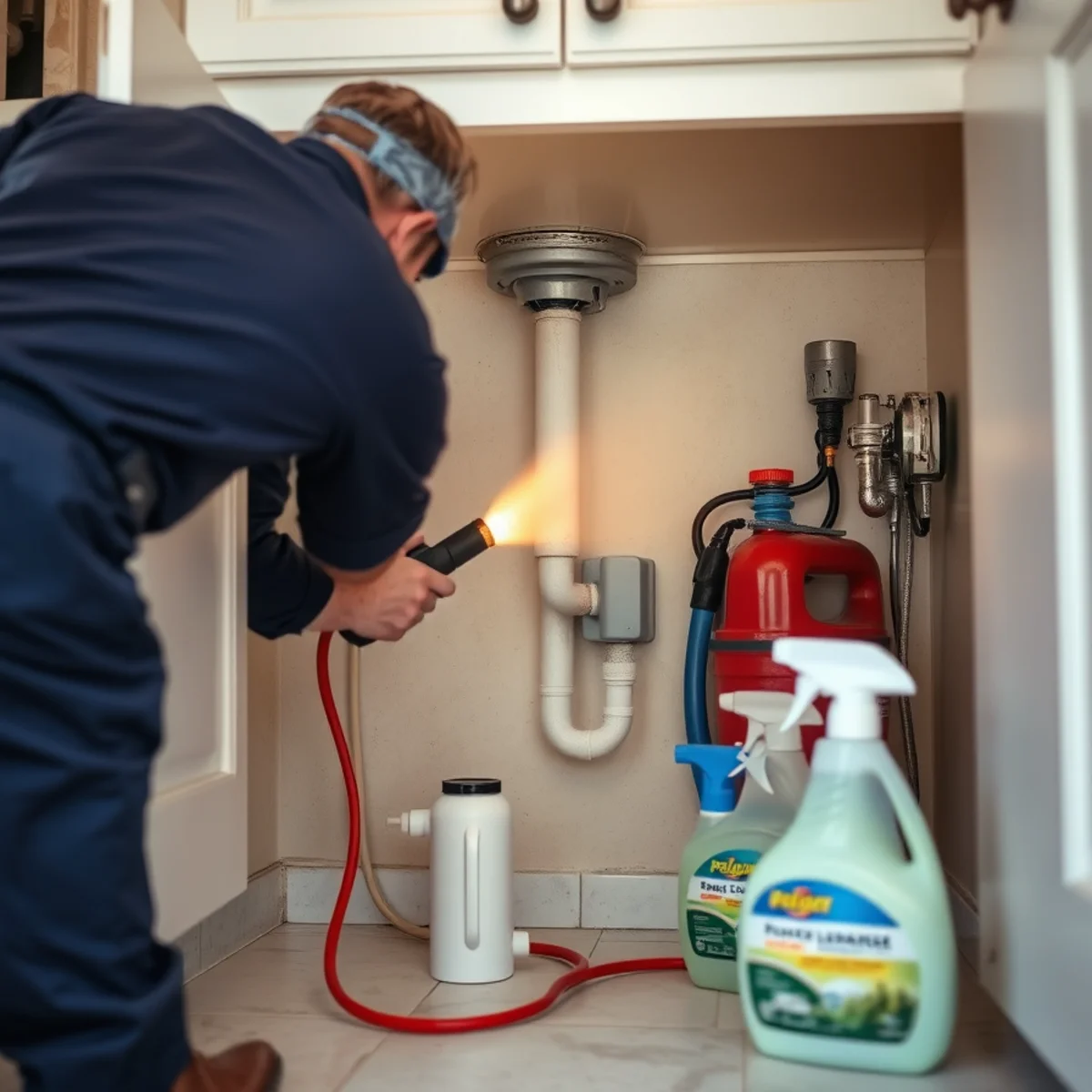
The short answer
Ten minutes a month with a torch and your hands: feel the back corner of every under-sink cabinet, check the washing machine hoses and behind the appliances, press the floor at each toilet base, look up at ceilings and along wall bases, and walk the perimeter outside for soil that never dries.
Almost every expensive water loss we attend gave a warning first. A damp cabinet base, a corroded fitting, a stain that was slightly larger than last time.
Nobody was looking. This takes ten minutes a month and needs no tools beyond a torch and your hands.
Dealing with this right now?
Crews dispatched within 60 minutes — on-site in 60–90 minutes, anywhere in Fullerton. Call and we will talk you through the first two minutes while a crew is dispatched.
- 60-minute dispatch, anywhere in Fullerton
- IICRC-aligned · licensed & insured
- Direct insurance documentation
Under Every Sink (3 minutes)
Open every cabinet with plumbing in it — kitchen, bathrooms, laundry, wet bar — and use your hands rather than your eyes.
- Feel the cabinet floor, especially at the back corners where water collects and light does not reach.
- Run your hand along the supply lines and the angle stops. Damp, or crusty white mineral deposits, means a weep that has been evaporating.
- Check the P-trap and the drain connections for staining or drips.
- Look for swelling or discolouration of the cabinet base — particleboard swells before it stains.
- Check the garbage disposal body and its drain connection.
- Smell it. A musty smell in a closed cabinet is moisture you have not found yet.
Appliances (3 minutes)
Behind the washing machine: check both supply hoses for bulging, cracking, rust at the crimps, or dampness at the connections. If they are rubber, plan to replace them with braided stainless — a few dollars and ten minutes.
The dishwasher: look at the floor in front of it and at the base of the adjacent cabinet. Dishwasher leaks go backwards and sideways into the cabinet run before anything appears at the front.
The refrigerator: pull it out occasionally and check the ice maker supply line and the floor behind it. Plastic ice maker lines are a common slow-failure item.
The water heater: look at the base and the pan for water, at the fittings for corrosion, and at the TPR discharge pipe. Rust-coloured water or rumbling when it heats means sediment and a shortening life.
Any water filter, softener or reverse osmosis unit — check its connections and the cabinet beneath.
Toilets (1 minute)
Press gently on the floor around the base. Any sponginess means the flange seal has been leaking, and the subfloor is going.
Look at the base for staining or caulk separation.
Check the supply line and angle stop behind it for damp or mineral crust.
Listen after a flush cycle completes. A toilet that keeps running, or cycles on its own, is passing water.
Every few months, dye-test the tanks: a dye tab or food colouring, fifteen minutes without flushing, and colour appearing in the bowl means the flapper is passing.
Ceilings, Walls And Floors (2 minutes)
Walk the house and look up, particularly under bathrooms and under the attic if you have an air handler up there.
Any ceiling stain, and specifically whether it has grown since last month. Take a phone photo each time and you have a record.
Wall bases in rooms adjoining bathrooms, kitchens and the garage. Bubbling paint, discoloured baseboard, or a baseboard pulling away from the wall.
Floors: cupping in wood, lifting seams in laminate or vinyl, tile that sounds hollow when tapped, or a section that feels cooler or warmer underfoot. A warm patch on a slab floor is the slab leak signature.
And use your nose in closets and rarely used rooms. A musty smell with no visible cause is a finding worth chasing.
Outside (1 minute)
Walk the perimeter. You are looking for soil that never dries, an area of grass noticeably greener than the rest, and water surfacing anywhere.
Check irrigation valve boxes for standing water — a valve weeping continuously moves a lot of water and nobody sees it.
Look at the hose bibs for drips and at the wall below them for staining.
Check the parkway strip between the meter and the house. A permanently damp patch there is a service line leak, which is your responsibility.
And look at the meter box itself. If there is water in it that is not rain, something upstream is leaking.
Twice A Year, Add These
The meter isolation test: everything off, watch the low-flow indicator, then close the house main and watch again. Ten minutes, and it definitively tells you whether water is leaving the system and whether the leak is inside or outside the building.
The attic, if you have access: look for staining on the underside of the roof deck, damp or matted insulation, and daylight visible through the sheathing. Step only on framing.
The crawl space, on a raised foundation: standing water, damp soil, mold on the underside of the subfloor, and rusting on ductwork or plumbing straps. This is the single most commonly ignored space in a house.
Exercise the main shut-off valve — off and back on, gently — so it does not seize.
What to Do With What You Find
Finding something on a monthly check is the point of doing it, and the useful part is knowing which findings are a Saturday job, which are a phone call this week, and which are today.
Sorting them correctly is what keeps this routine from becoming either alarming or ignorable.
- Today: any active drip you cannot stop, any warm patch on a slab floor, any wet drywall, or the sound of running water with everything off.
- This week: staining on a cabinet base, corrosion or mineral crust at a connection, a toilet that rocks at the base, or a slow drain that has got noticeably slower.
- This month: a water heater past ten years, rubber washer hoses of unknown age, or an angle stop that will not turn.
- Note it, watch it: a hairline stucco crack, a ceiling mark you are not sure is new, or a very slight musty note that comes and goes.
- Photograph anything you are watching, with the date. Comparing two photographs three months apart is far more reliable than memory.
- Keep a single note on your phone with dates. That log is also useful evidence of prompt maintenance if you ever have a gradual-damage argument with an insurer.
All 6 steps, in pictures
Each image matches the numbered item above it in the same order.
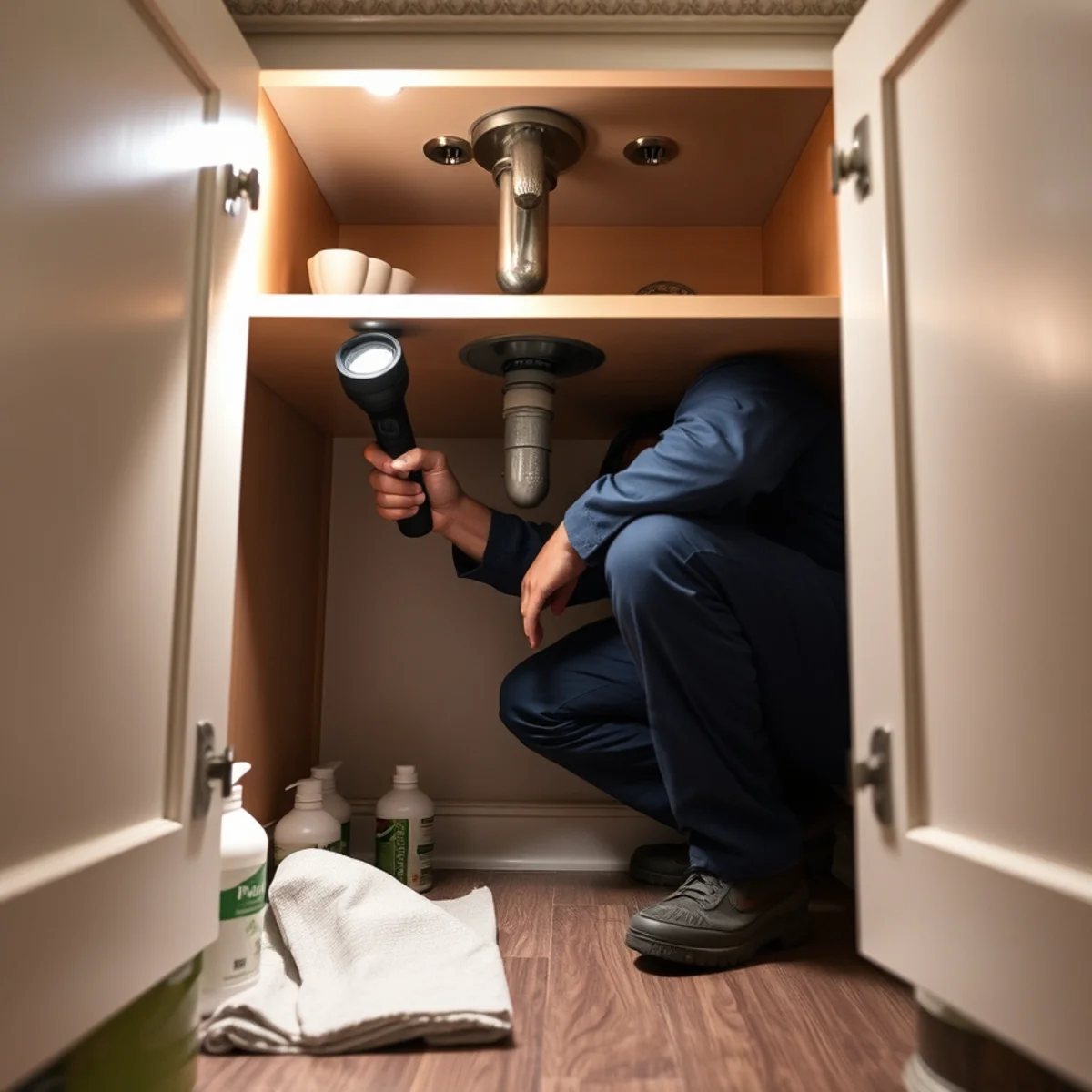
Checking the back corner of an under-sink cabinet for leaks

Inspecting washing machine hoses and connections for wear

Testing the floor around a toilet base for sponginess
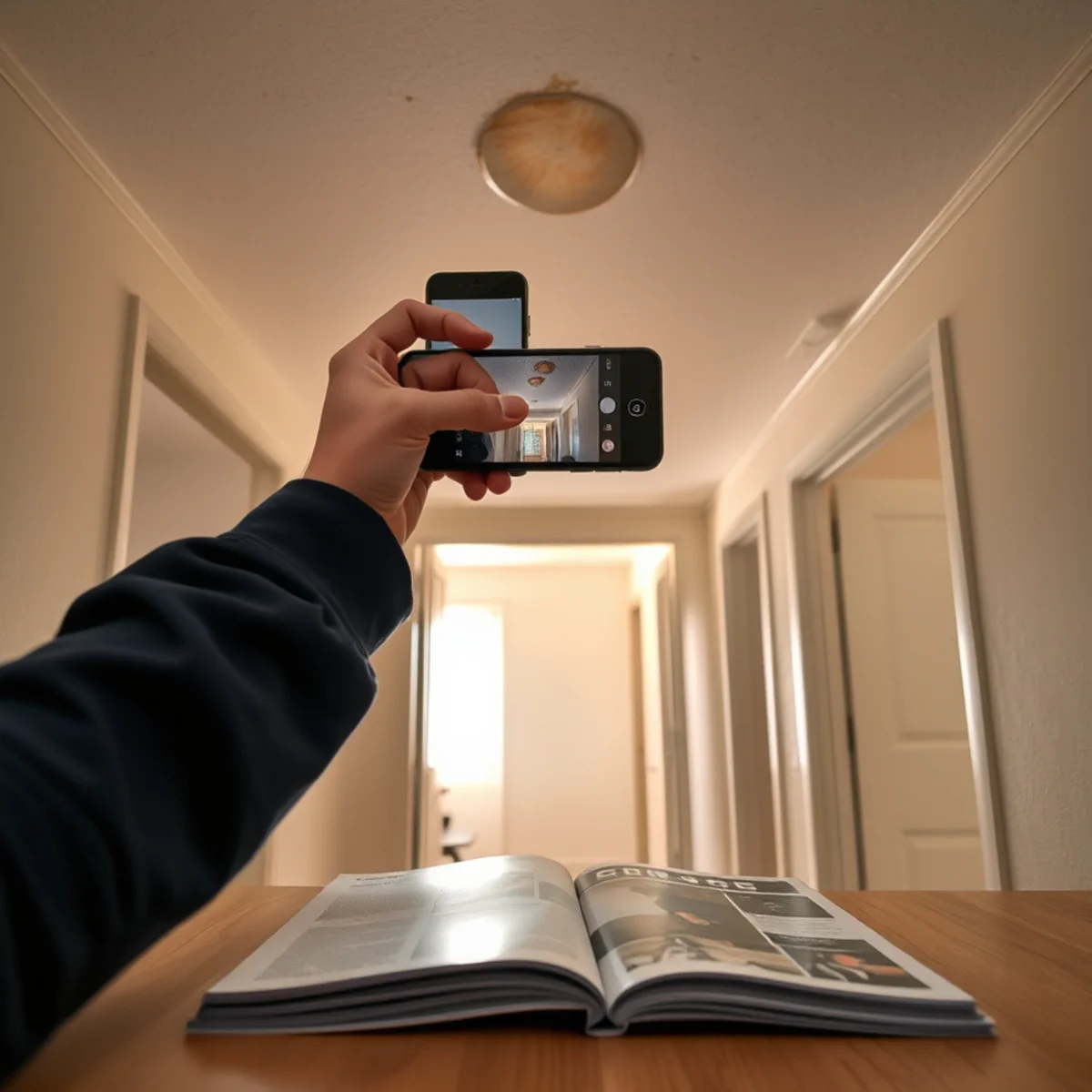
Checking ceilings and wall bases for new water stains
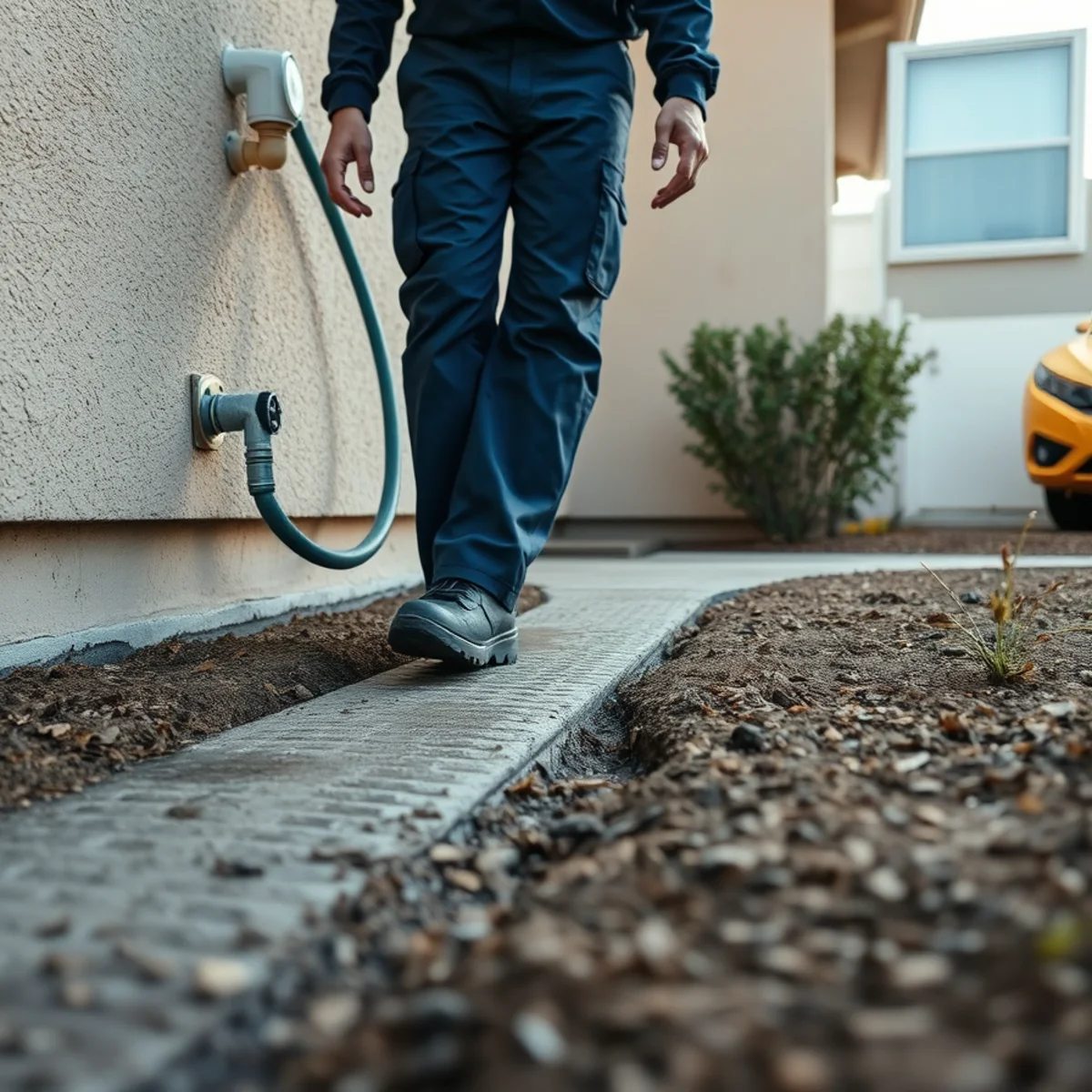
Walking the perimeter to check for damp ground and irrigation leaks
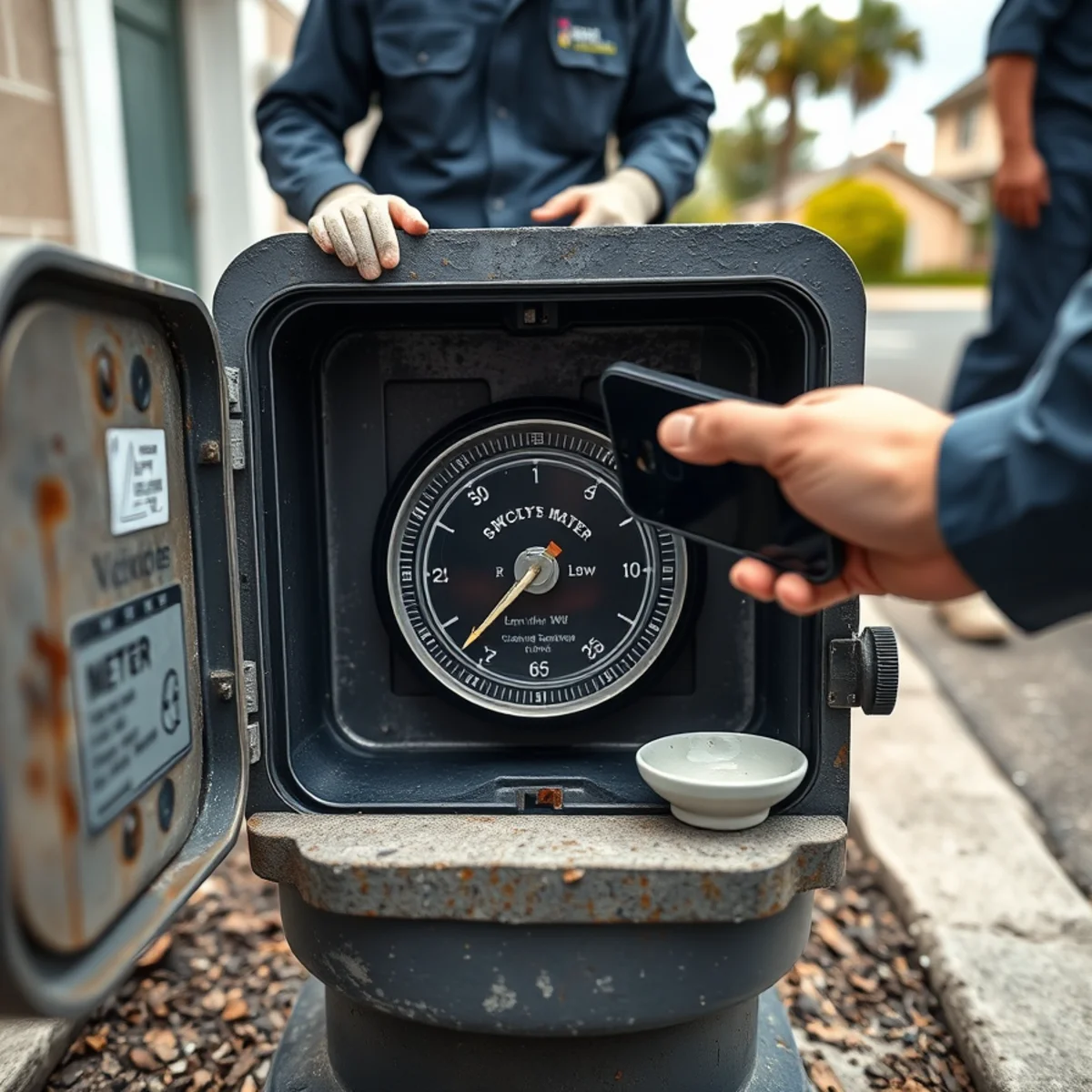
Running a twice-yearly water meter isolation test
Frequently asked
Monthly is ideal because the point is catching change rather than spotting an obvious problem. A stain that is the same size as last month is old; one that has grown is active. Quarterly still catches most things. The under-sink check is the highest value single habit.
The back corner of the cabinet under the kitchen sink, and the toe-kick void under a cabinet run. Both are dark, enclosed and unventilated, and both hold water for weeks. Use your hand rather than a glance — feel the back corners.
Photograph it, dry it, and check again in a few days. Damp that returns is active. If you find damp with no obvious source, or a musty smell you cannot trace, a moisture reading takes minutes and settles whether it is a wipe-up or a wall to open.
The bottom line
Under the sinks, behind the appliances, around the toilets, then eyes up and a walk outside.
Ten minutes. Use your hands, and photograph anything you are not sure about so you can compare next month.