
Prevention & Maintenance
Smart Water Sensors and Automatic Shut-Off Valves: Are They Worth It for Your Home?
They prevent one specific and very expensive failure mode: the leak nobody is home to notice. Here is who genuinely benefits.
The short answer
Point-of-use sensors are cheap and worth it for any home with upstairs plumbing or a water heater in a finished space. A flow-monitoring automatic shut-off on the main is a bigger investment that makes sense for two-storey homes, properties that stand empty, and houses with plumbing already in the failure window.
The most expensive water losses we attend share one feature: nobody was home. A supply connector fails on a Friday and runs until Sunday evening.
That is the specific failure mode these devices exist to prevent, and understanding that is how you decide whether they are worth it for your house.
Dealing with this right now?
Crews dispatched within 60 minutes — on-site in 60–90 minutes, anywhere in Fullerton. Call and we will talk you through the first two minutes while a crew is dispatched.
- 60-minute dispatch, anywhere in Fullerton
- IICRC-aligned · licensed & insured
- Direct insurance documentation
Two Different Categories Of Device
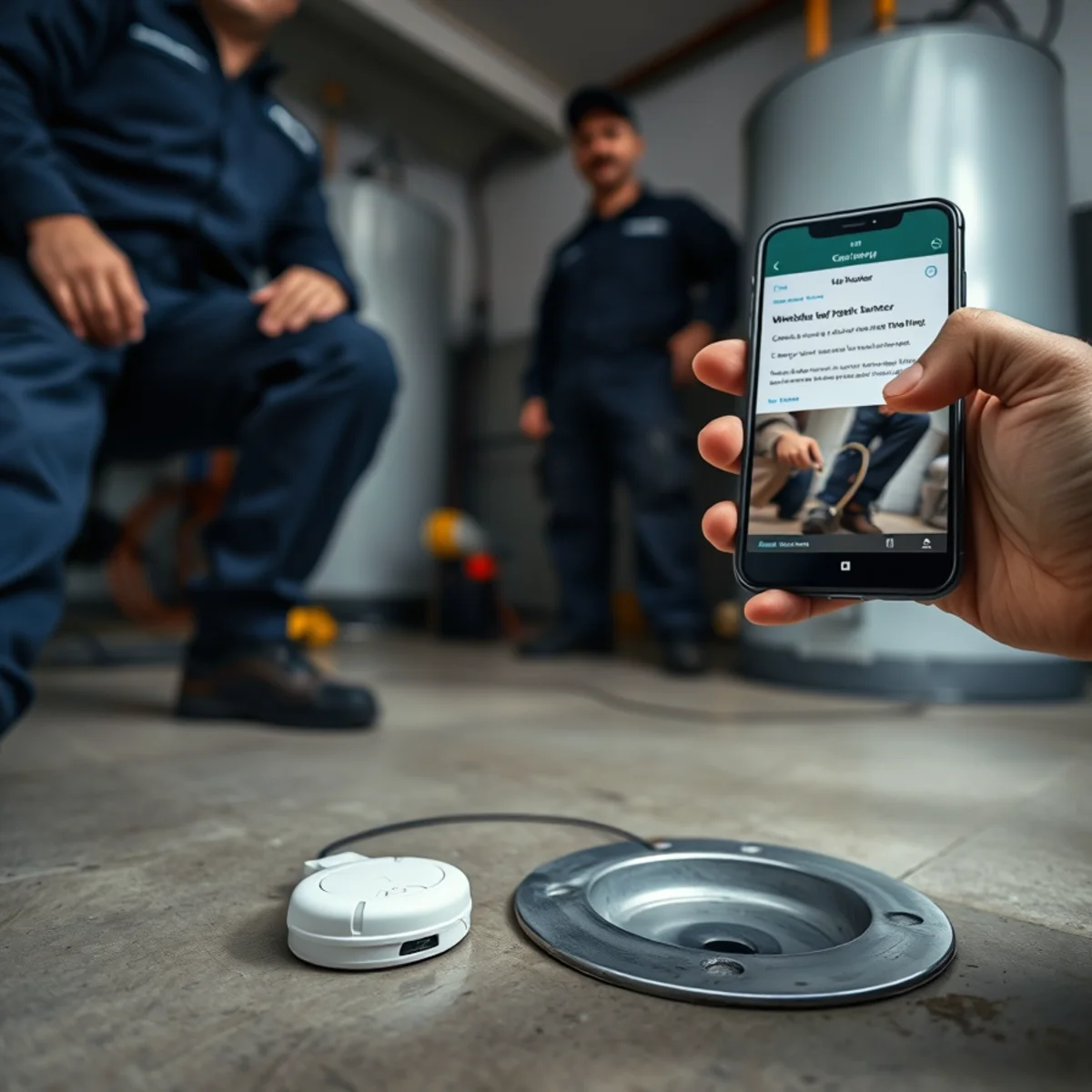
Point-of-use leak sensors are small battery-powered units you place where water would appear first — under a sink, beside the water heater, behind the washing machine, in a laundry pan. They detect water contact and alert your phone. Some also sound an alarm.
They are inexpensive, take seconds to install, and require nothing plumbing-related. What they do is tell you. They do not stop anything.
Automatic shut-off valves fit on the main water line and can close it. Two main types: those triggered by paired leak sensors, and those with built-in flow monitoring that watch usage patterns and close the valve when they see something that does not look like normal household use — continuous flow for an extended period, for example.
Flow-monitoring units also give you visibility into consumption, which is genuinely useful for catching slow leaks like a passing toilet flapper.
Who Genuinely Benefits
Not everyone. These are the situations where the case is strong:
- Two-storey homes with upstairs laundry or upstairs bathrooms. A second-floor failure puts water through a floor assembly and a ceiling before anyone notices — common in Amerige Heights, West Coyote Hills, Eastlake and Olinda Ranch.
- Houses that sit empty regularly — frequent travel, a second home, or a rental between tenancies.
- Older homes with original copper in the pinhole failure window, where the failure mode is a slow weep rather than an obvious burst.
- Homes with finished basements, extensive built-in cabinetry, or expensive flooring where the cost of a loss is high.
- Any property where a previous water loss has already occurred — that is a genuine risk indicator.
- Landlords with units that stand vacant, particularly student rentals near Cal State Fullerton that empty over academic breaks.
The Honest Limitations
Point sensors only detect water where you put them. A pinhole leak inside a wall or a slab leak under the floor releases water into the building structure, not onto the floor beside a sensor. These devices do not catch that.
Flow monitoring is better at hidden leaks because it watches the meter rather than the floor — a continuous small flow shows up as a usage pattern. But it needs a baseline period to learn your household, and it can produce false triggers on unusual but legitimate use, like filling a pool or a long irrigation run on an unmetered zone.
Automatic valves need power and, for alerting, network connectivity. Check what a given unit does during a power cut or a wifi outage — better designs fail safe or have battery backup.
And installation of a main-line valve is plumbing work. Budget for a plumber unless you are confident, and check whether your jurisdiction requires a permit.
The Cost Calculation
Point sensors are cheap enough that the calculation is trivial — a handful of them costs less than an hour of restoration labour, and one avoided incident pays for them many times over. For any house with plumbing on an upper floor, just buy them.
Automatic shut-off valves are a more meaningful investment: the device plus installation. Against that, consider what a genuinely unattended failure costs. The average water damage insurance claim payout runs near $13,954, and unattended losses sit well above average because they run for hours.
There is also a deductible and premium dimension. Avoiding one claim entirely means avoiding the deductible and avoiding a claims-history entry. Some insurers offer premium discounts for whole-home leak detection systems — worth asking your agent before you buy, as it can materially change the payback.
Where To Put Sensors
If you are only buying a handful, these are the highest-value locations, roughly in order:
- Beside the water heater, and in its drip pan if it has one.
- Behind or beneath the washing machine.
- Under the kitchen sink, at the back corner.
- Under each bathroom vanity.
- Behind the toilet in the ground-floor bathroom, and behind any upstairs toilet.
- Beside the dishwasher, on the floor at the side rather than the front.
- At any point where plumbing enters the house from outside.
- In a crawl space or sub-area if you have one, at the low point.
The Free Version
Before spending anything, there is a habit that costs nothing and covers the biggest single risk.
Close the valves behind the washing machine, or the main shut-off, whenever you leave for more than a couple of days. That removes the unattended-failure scenario entirely, which is the scenario these devices are designed for.
It requires you to remember, which is exactly why the devices exist. But if you travel rarely, it may genuinely be all you need.
Either way, know where your main shut-off is and make sure it turns. A shut-off valve you cannot operate is worse than no plan at all.
Installing and Living With Them
The devices work. Most of the disappointment comes from installation choices and from what happens after the novelty wears off, and both are avoidable.
A sensor that is unplaced, unpaired or ignored provides exactly as much protection as no sensor at all.
- Put sensors on the floor at the lowest point, not on a shelf or taped to a pipe. Water finds the low point and that is where you need the alarm.
- Prioritise by consequence rather than by likelihood: upstairs laundry, the water heater, under the kitchen sink, behind the refrigerator, and any bathroom above a finished ceiling.
- Choose a device with a loud local siren as well as a phone notification. A push alert is useless if the phone is on silent and you are asleep.
- Check the batteries when you change the smoke alarm batteries, and use the same date each year so it is a habit rather than a task.
- For an automatic shut-off on the main, have it installed by a licensed plumber, and know how to bypass it manually — you will need that during a repair.
- Test the whole thing once a year with a damp cloth on each sensor. An untested system is an assumption, not a safeguard.
Frequently asked
No. Slab leaks release water into the ground beneath the floor rather than onto it, so a floor-level sensor never sees water. Flow-monitoring shut-off devices are better here because they watch the meter — a continuous small flow shows up as an abnormal usage pattern even when nothing is visible.
Some do, particularly for whole-home flow-monitoring shut-off systems rather than point sensors alone. It varies by carrier and it can be worth a meaningful percentage, so ask your agent before you buy — the discount can materially change the payback period.
It depends on the device, and it is the right question to ask before buying. Better designs have battery backup and fail to a safe state. Some cheaper units simply stop protecting during an outage — which matters, because storms cause both power cuts and water damage.
The bottom line
Point sensors are cheap and obviously worth it for any house with upstairs plumbing or a water heater in a finished space.
Automatic shut-off valves make most sense for two-storey homes, properties that stand empty, and houses with plumbing already in the failure window.