
Emergency Guides
Washing Machine Supply Line Burst: 5 Steps to Limit the Damage
A burst washer hose runs at full household pressure and does not stop. Five steps to limit it — and the fifteen-dollar part that stops it happening at all.
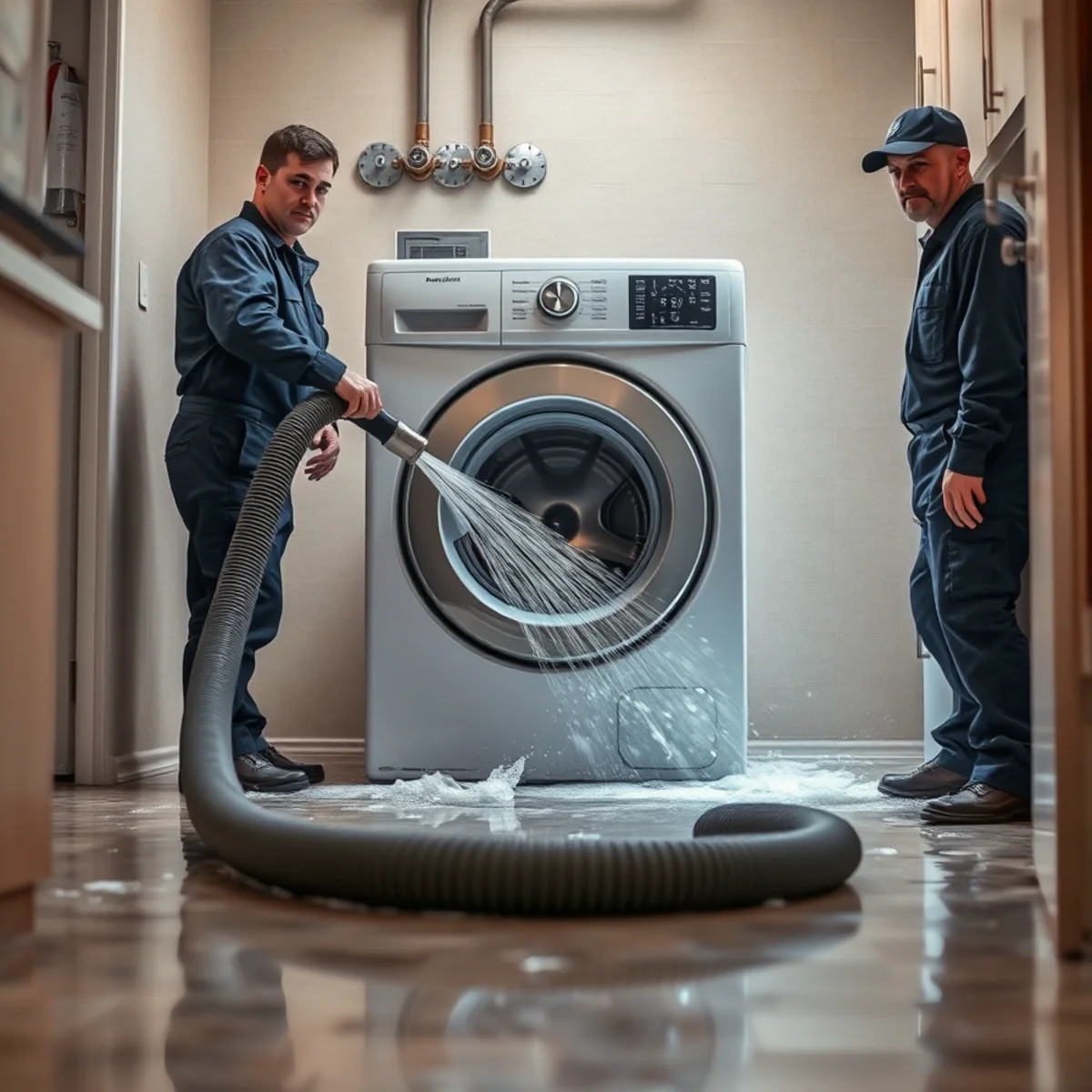
The short answer
Close both taps on the wall behind the machine, or shut the house main if they are seized. Cut power before entering standing water, then check the adjoining rooms — a hose at full pressure spreads much further than the laundry. Photograph the failed hose before it is thrown away; it is your evidence the failure was sudden.
Washing machine supply hoses are one of the leading causes of residential water damage, and the reason is simple: they are under full household pressure every hour of every day, whether the machine is running or not.
When one lets go, it does not drip. It sprays at pressure until someone closes a valve, and because laundry areas are frequently in a garage, a hallway closet or an upstairs room nobody sits in, that is often hours.
Dealing with this right now?
Crews dispatched within 60 minutes — on-site in 60–90 minutes, anywhere in Fullerton. Call and we will talk you through the first two minutes while a crew is dispatched.
- 60-minute dispatch, anywhere in Fullerton
- IICRC-aligned · licensed & insured
- Direct insurance documentation
Step 1: Close The Valves Behind The Machine
There are two taps on the wall behind the washer, hot and cold. Close both.
If they are old-style round-handle screw valves that have not been turned in fifteen years, they may be seized. Do not force one hard enough to break it — go to the house main instead, which in most Fullerton homes is at the front of the house near the meter, in the garage where supply enters, or on the exterior wall nearest the street.
Reaching behind a washer while water is spraying is unpleasant and sometimes not possible. The main valve is the reliable answer.
Step 2: Cut Power Before You Wade In
The washer is plugged in, the dryer next to it is plugged in, and in a garage there may be a freezer, an opener and a sub-panel.
If water has reached outlets or appliances, shut the circuits off at the panel before entering the area. Do not unplug something standing in water.
Step 3: Work Out Where The Water Went
This is where washer failures get badly underestimated, because the answer is almost never 'the laundry room'.
A hose at household pressure moves a large volume, and water follows the path of least resistance. On a ground floor it goes under the flooring, along the bottom plate of every wall it reaches, and into adjoining rooms. On flat slab construction — most of South Fullerton, West Fullerton and the tract neighbourhoods — it spreads outward evenly rather than pooling, so the wet area is routinely two or three rooms wide.
Upstairs is worse. A second-floor laundry, common in the newer plans across Amerige Heights and West Coyote Hills, puts water into the floor assembly and through the ceiling below within minutes.
Check the rooms either side and, if upstairs, the ceiling underneath. Touch the carpet at doorways in adjacent rooms — cool and damp means it got there.
Step 4: Photograph, Then Lift
Photograph the failed hose itself before it gets thrown away — that is the physical evidence of cause, and it matters if there is any question about whether this was sudden or long-running.
Then wide shots of each affected room, close-ups of the water lines on walls and cabinet bases, and the contents on the floor.
After that, lift what you can. Get boxes, laundry, and anything porous off the floor. Put foil or blocks under furniture legs in carpeted rooms so finish does not bleed into the carpet.
Step 5: Call For Extraction Before It Wicks
The window that matters is the first few hours, and it is about wicking rather than the puddle.
Water sitting against drywall climbs it at roughly an inch an hour. Water in carpet pad soaks in and stays. Water under vinyl or laminate has nowhere to evaporate to. The longer any of that continues, the more material has to be removed rather than dried.
A shop vac will not get there. Carpet pad holds several times its own weight in water and surface suction skates over it — professional extraction uses weighted heads that compress the pad against the subfloor while vacuum pulls, which is the difference between saving your carpet and skipping it.
The Fifteen-Dollar Fix
Almost every washing machine hose failure we attend involves the original rubber hoses, and rubber hoses have a service life measured in years.
Replace them with braided stainless steel connectors. They cost very little, they take about ten minutes to fit, and they do not fail the way rubber does.
While you are back there, fit a single-lever shut-off valve that closes both hot and cold at once. Then get into the habit of closing it when you go away for more than a couple of days. That one action removes the single most common cause of a week-long unattended flood.
And if your laundry is upstairs, put a leak sensor in the pan or on the floor behind the machine. In a two-storey home the payback on that is one avoided incident, ever.
Why Washer Hoses Fail, and Which Ones
Not all supply lines are equal. This is what actually gives way, and roughly when:
- Original black rubber hoses: three to five years of useful life, and they are under full household pressure every hour of every day whether the machine runs or not.
- Reinforced rubber with a plastic nut: the nut is usually the failure point, and it splits without warning.
- Braided stainless: considerably better, but not permanent — inspect the crimp fittings for rust every year or two.
- Any hose showing a bulge, a soft spot, cracking at the bend or rust at the crimp is already failing and should be replaced now.
- A hose that has been kinked behind a machine pushed too far back is a hose on borrowed time.
- No shut-off valve behind the machine means you cannot isolate it quickly — a single-lever valve is a ten-minute fix.
The Second-Floor Laundry Problem
A burst supply line in a ground-floor laundry room is a bad afternoon. The same failure in a second-floor laundry closet is a whole-house loss, because gravity distributes it through the ceiling below and into every wall cavity the water finds on the way.
Builders started putting laundry upstairs for convenience, and a great many Fullerton homes built or remodelled since the 1990s have it. If yours is one of them, the risk calculation is genuinely different and worth acting on.
- The water does not stay in the laundry room. It runs along the joists and comes down wherever it finds a penetration — a light fixture, an HVAC boot, or the top plate of a wall.
- The ceiling below is the visible damage. The insulation in that ceiling cavity, which holds water and dries very slowly, is the expensive part.
- A pan under the machine only helps if it is plumbed to a drain. An unplumbed pan holds a couple of gallons and then overflows.
- This is the single strongest case for an automatic shut-off valve on the laundry supply, triggered by a sensor on the floor.
- At minimum, close the supply valves when you leave for more than a day. Most upstairs failures happen with nobody home.
- Replace rubber hoses with braided stainless immediately if you have not — the cost is trivial against a ceiling replacement.
All 5 steps, in pictures
Each image matches the numbered item above it in the same order.
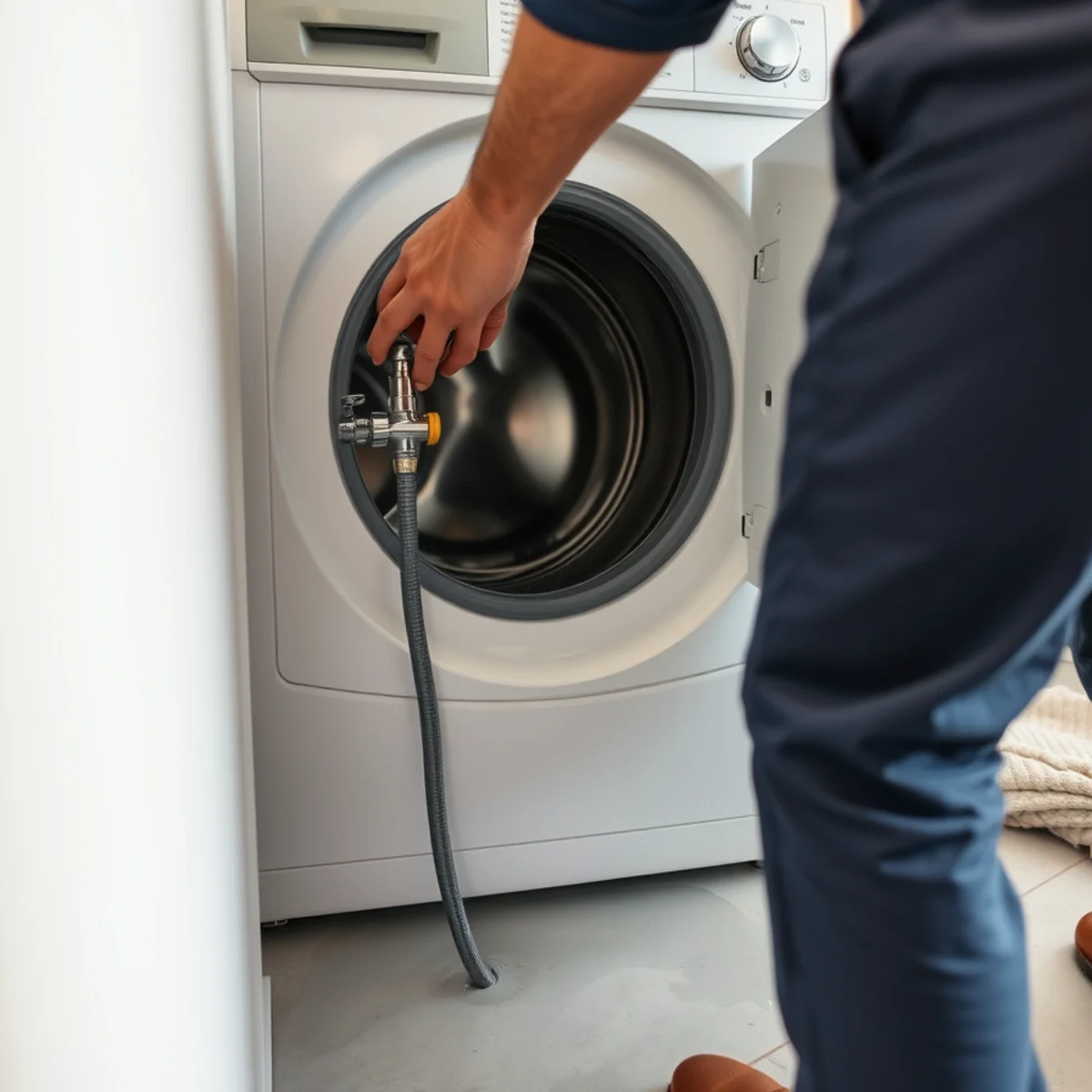
Technician disconnecting the supply hose at a washing machine after a burst
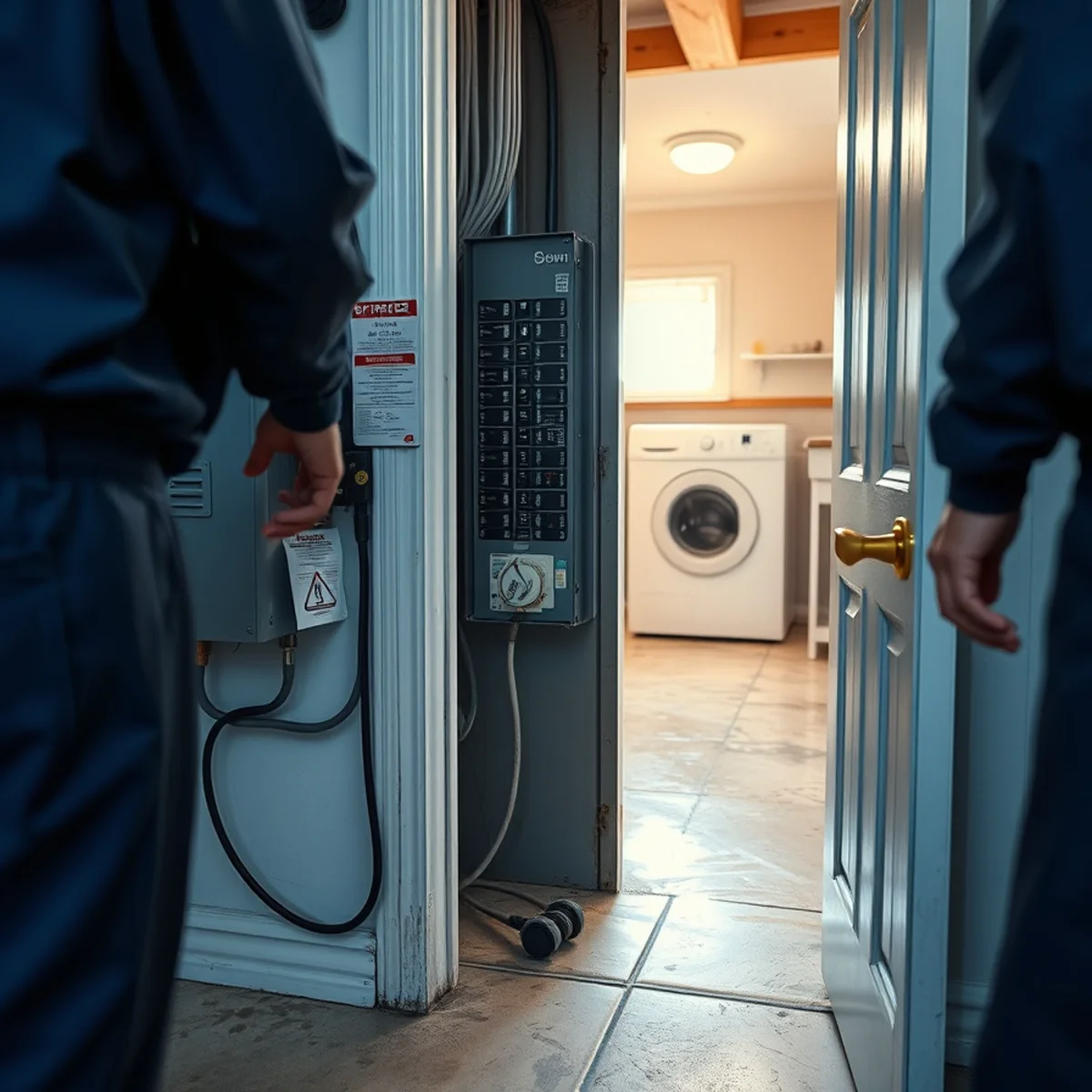
Cutting power to a flooded laundry area at the breaker panel
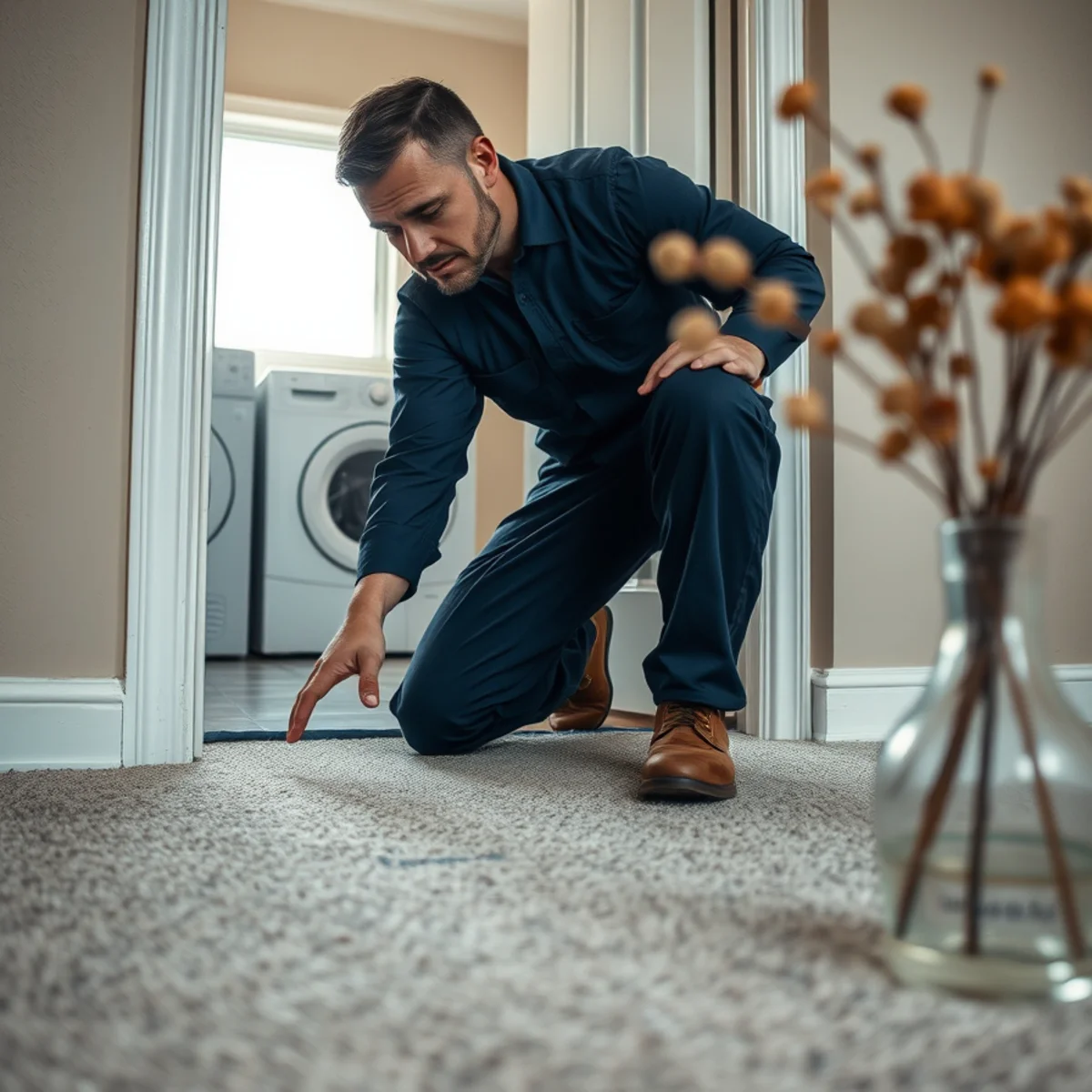
Checking adjoining rooms for water spread from a laundry leak
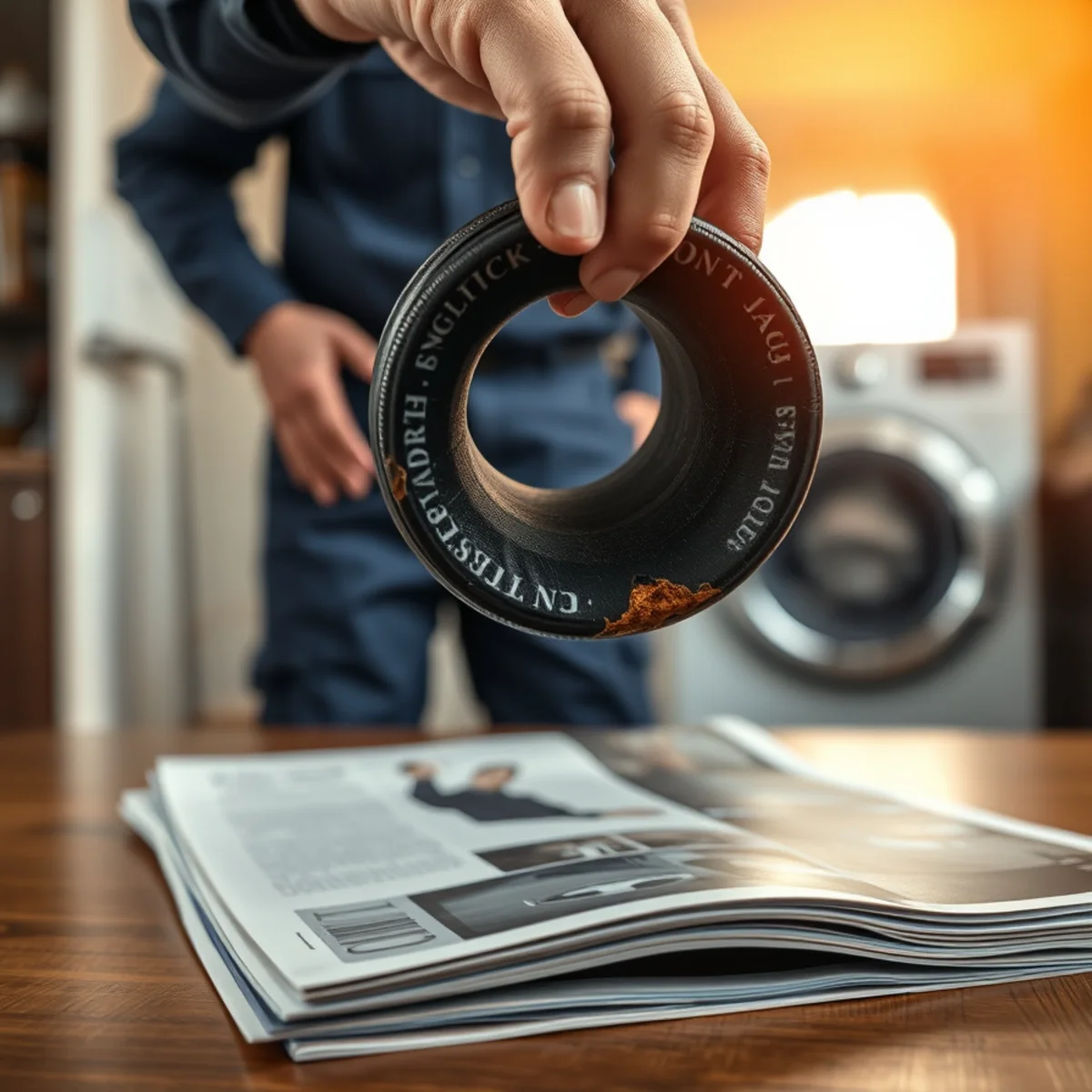
Failed rubber washing machine part kept as evidence for an insurance claim
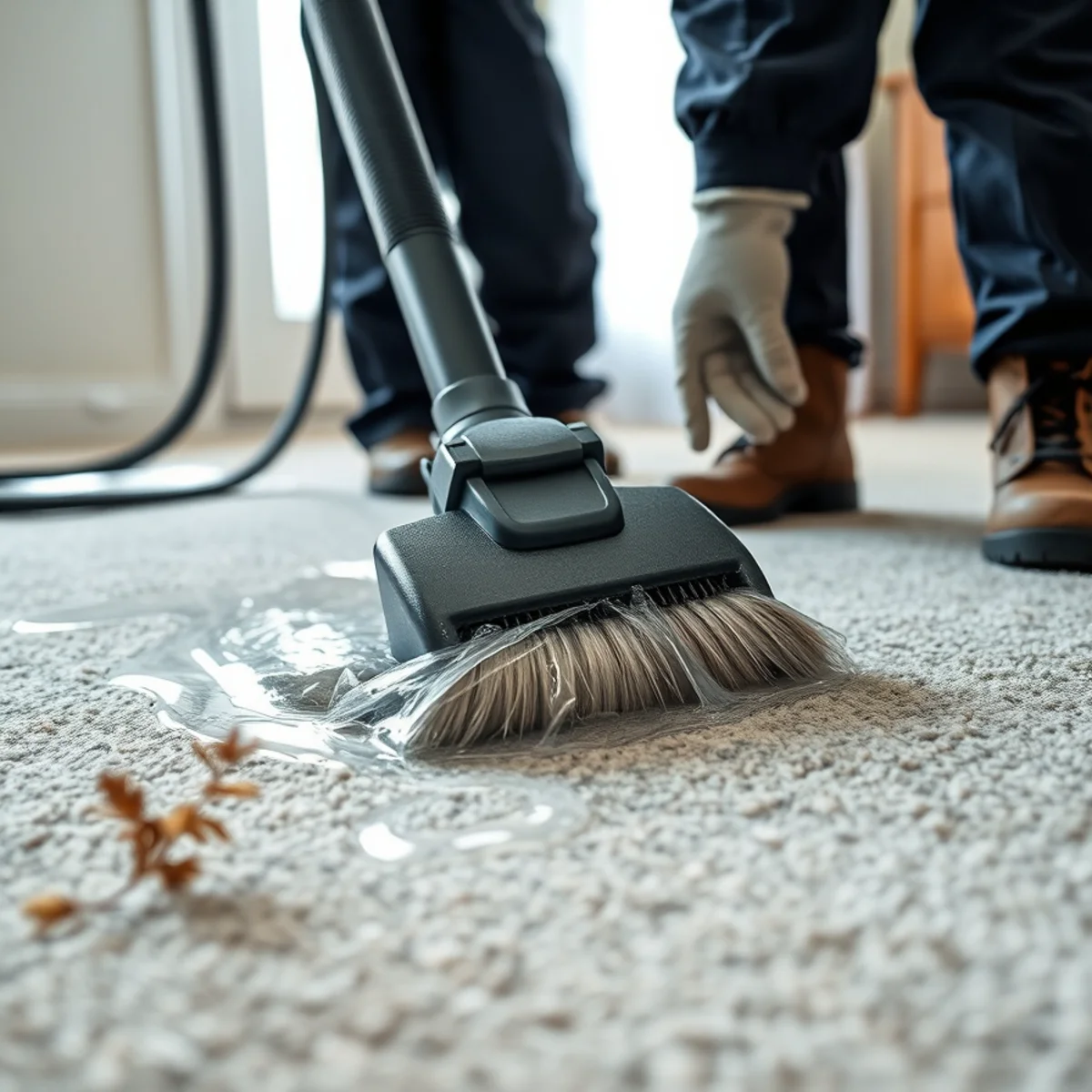
Professional extraction pulling water from carpet pad after a hose burst
Frequently asked
Rubber hoses every three to five years, and immediately if you see bulging, cracking, rust at the crimp or any dampness at the connections. Braided stainless connectors last considerably longer and are the better answer — they cost a few dollars and take ten minutes.
Generally yes. It is a sudden and accidental failure, which is exactly what a standard homeowners policy covers, including the resulting water damage and repairs. Keep the failed hose — it is evidence that the failure was sudden rather than a long-running leak.
Keep everyone out from under any bulging area, cut power to lights in that ceiling, and get it looked at. The critical part is the floor assembly between the two levels — the joist bay and subfloor hold most of the water, and drying only the ceiling below and the room above leaves the middle wet.
The bottom line
Valves off, power off, check the adjacent rooms, photograph, then call. In that order.
Afterwards, spend fifteen dollars on braided stainless hoses. It is the cheapest insurance in the house.