
Problem Solving
Why Shop-Vaccing a Flooded Carpet Isn't Enough (What Professional Extraction Pulls Out)
The carpet feels better and the pad underneath is still loaded. That difference decides whether your flooring is dried or replaced.
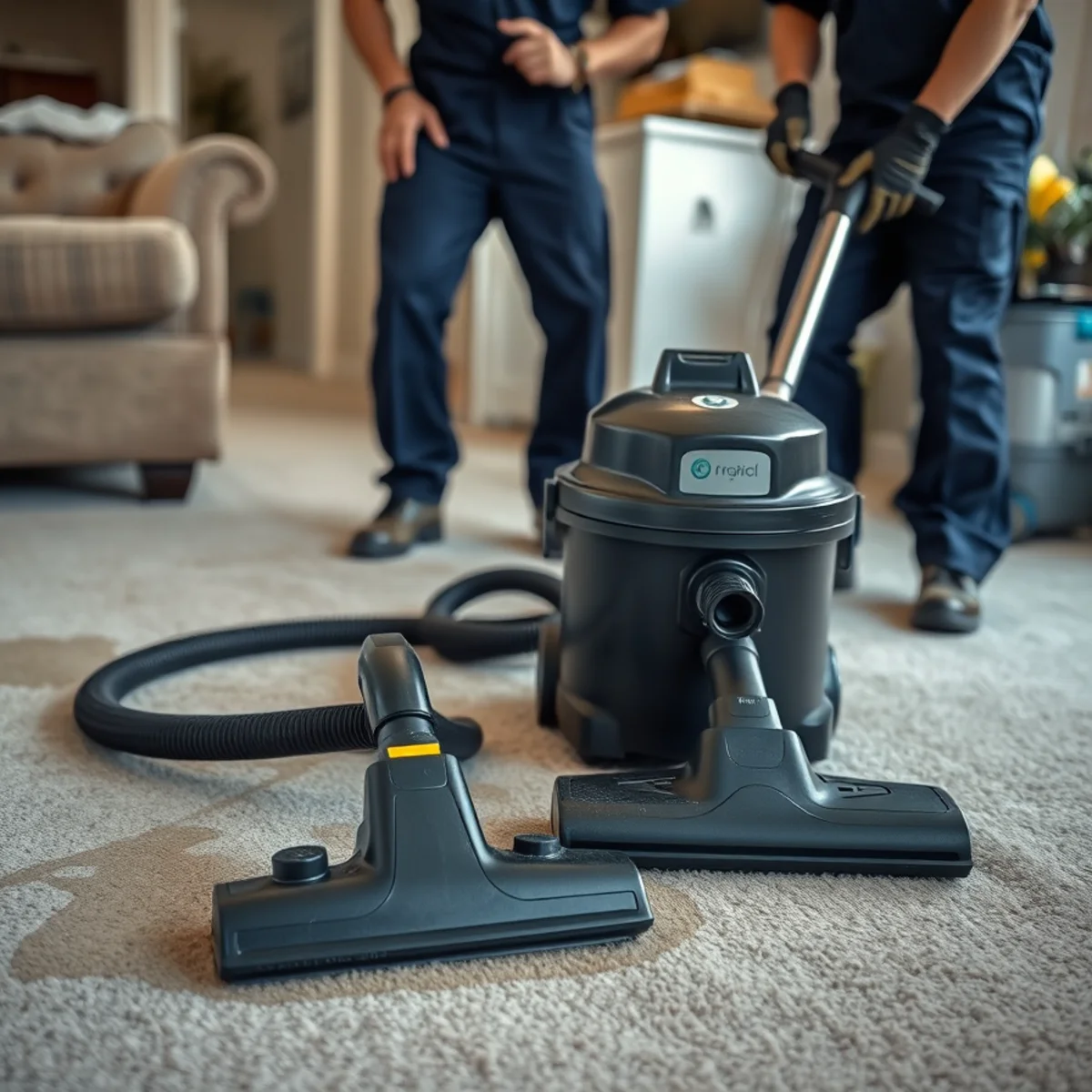
The short answer
A shop vac skims water out of the carpet face but leaves the pad underneath loaded, because it never compresses it. Professional weighted extraction heads press the carpet and pad against the subfloor while vacuum pulls, squeezing water out rather than skating over it. That difference decides whether your carpet is dried or skipped.
A wet vac makes the carpet feel dramatically better within twenty minutes, which is exactly the problem. It creates the impression the job is done while most of the water is still in the building.
The difference is not suction power. It is depth, and it comes down to what happens to the pad underneath.
Dealing with this right now?
Crews dispatched within 60 minutes — on-site in 60–90 minutes, anywhere in Fullerton. Call and we will talk you through the first two minutes while a crew is dispatched.
- 60-minute dispatch, anywhere in Fullerton
- IICRC-aligned · licensed & insured
- Direct insurance documentation
The Pad Is The Problem
Carpet pad acts like a sponge sitting under a filter. It holds several times its own weight in water, and it is the layer nobody can see.
Surface suction skims the carpet face. It removes the water in the fibres, which is the water you can feel, and it barely touches the pad because it never compresses it. So the carpet feels nearly dry, the homeowner stops, and three days later the room smells and the tack strip is going black.
Professional weighted extraction heads solve it mechanically rather than with more vacuum. The tool's own mass presses the carpet and pad down against the subfloor while vacuum pulls, so water is squeezed out of the pad rather than skated over.
The Numbers, Roughly
A five-gallon wet vac moves somewhere around 60 to 90 cubic feet of air per minute at low lift, and it stops every few minutes to be emptied.
A truck-mounted extractor moves several hundred CFM at far higher vacuum, continuously, with no tank to empty. On a large loss that difference compounds over hours.
But the volume gap matters less than the compression. A portable professional extractor with a weighted head will outperform a more powerful vacuum with an ordinary wand every time, because the head is doing mechanical work the wand cannot do.
Why Extraction Speed Decides The Whole Job
Every gallon removed mechanically is a gallon that does not have to be evaporated, captured by a dehumidifier and carried out as vapour over the following days.
That is the entire economics of a water loss. Aggressive early extraction shortens drying by days, reduces the equipment count, and keeps materials that would otherwise be cut out and replaced.
It also protects the salvage decision. Clean supply water extracted within roughly 24 to 48 hours usually means the carpet and often the pad can stay. Grey water typically costs the pad. Category 3 means both leave the building regardless of how quickly you got there.
What Else Gets Missed
Carpet is only the visible part. The materials that actually determine the scope are underneath and beside it.
- The subfloor. Plywood and OSB absorb water and delaminate if they stay wet — that is the springy feel you get months later.
- Tack strip and the perimeter. Water collects at the edges of a room and sits against the bottom plate of the wall.
- The wall itself. Water wicks up drywall at roughly an inch an hour, so a carpet loss is very often a drywall loss by the time anyone calls.
- Under transitions and thresholds, where water crosses into a room that looks completely dry.
- Under furniture, where nobody lifted anything.
When A Shop Vac Is Genuinely Fine
It has a place, and pretending otherwise is not useful.
A spill on a hard non-porous floor — tile, sealed concrete, vinyl over a sound subfloor — caught within minutes and covering a small area, is a shop vac job. Get it up, dry the surface, done.
The line is porosity and time. Once water is in carpet pad, drywall, insulation or subfloor, or once it has been sitting for more than an hour or two, a wet vac cannot reach what matters.
If you are unsure, a moisture reading answers it in five minutes and costs nothing to ask for.
What Happens Immediately After Extraction
Extraction is not the finish line. It is the point where drying becomes possible.
As soon as bulk water is out, we take readings in materials that still look fine — the bottom plate, the back of the drywall, the subfloor two rooms away. That is where the water went while you were finding a phone number.
Those readings set the drying plan and the equipment count, and they establish a dry standard taken from an unaffected part of your own house. Materials are dry when they match that number, not when the surface feels dry.
What Truck-Mount Extraction Actually Does That a Shop Vac Cannot
The difference is not the size of the tank. It is vacuum lift measured in inches of water column, and heated weighted extraction heads that press water out of the pad and up through the carpet backing rather than pulling it off the surface.
A shop vac generates enough lift to pick up standing water from a hard floor. It does not generate enough to overcome the capillary hold of a bonded urethane pad, which is why the carpet feels dry an hour later and the pad is still saturated three days on.
This is also why extraction is billed by area rather than by hour. The crew is making repeated overlapping passes in both directions until the recovery tank stops filling, and that number of passes is what determines whether the pad survives.
- Vacuum lift: a truck-mount pulls roughly 12 to 14 inches of mercury against a shop vac's one to two, which is the entire difference at the pad.
- Weighted heads: 30 to 40 pounds of downforce compresses the pad and releases bound water that no upright wand will reach.
- Heat: warming the water lowers its viscosity and surface tension, so more of it releases per pass.
- Continuous discharge: the truck never stops to empty, so extraction is uninterrupted rather than a series of five-gallon pauses.
- Moisture mapping: every pass is verified with a meter, so the crew stops on a reading rather than on a guess.
- Antimicrobial application on the exposed subfloor before drying begins, which a wet-vac workflow skips entirely.
Frequently asked
Often, if the water was clean and extraction happened quickly. Clean supply water caught within roughly 24 to 48 hours usually means the carpet and often the pad stay. Grey water typically costs the pad. Sewage or floodwater means both are removed — that is an IICRC health standard rather than an upsell.
For a typical residential loss of one to three rooms, bulk extraction runs one to three hours. Drying equipment goes in on the same visit rather than at a second appointment.
No, but get it metered rather than assuming. Surface extraction leaves the pad, subfloor and wall bases loaded, and those are the materials that decide whether this becomes a mold job. A moisture reading takes minutes and tells you where you actually stand.
The bottom line
The carpet feeling better is not the same as the building being dry.
If water reached carpet pad, drywall or subfloor, get it metered before you decide the job is finished.