24/7 emergency line — crews dispatched within 60 minutes

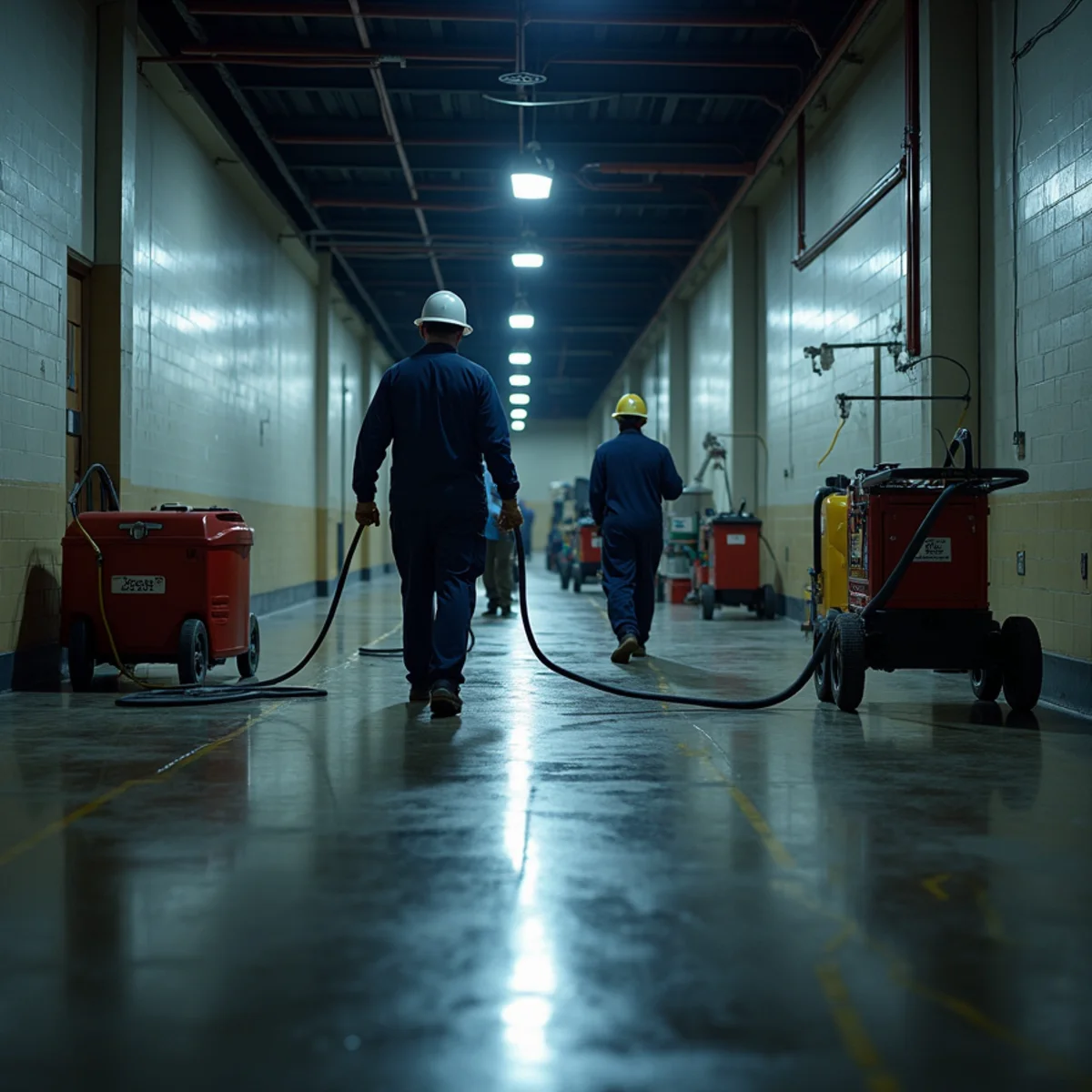
Commercial water damage restoration crew drying a flooded office in Fullerton, CA

Fullerton, CA

Commercial Water Damage Restoration in Fullerton, CA

On a commercial loss the water damage is rarely the biggest number. The lost trading days are.

  • On-site in 60–90 minutes
  • IICRC-aligned · licensed & insured
  • Staged on 1500 S Raymond Ave

That changes how the job is planned. We phase and contain so the parts of your building that can stay open, stay open, and we do the disruptive work overnight and on weekends. A restaurant on Harbor Boulevard that reopens Friday instead of the following Wednesday has recovered several times the cost of the restoration.

We work with Fullerton's full commercial mix: the downtown restaurant and bar district, the retail corridors along Orangethorpe and Euclid, the industrial and warehouse blocks in the south of the city, medical and professional offices, and the student housing and multifamily around Cal State Fullerton.

Crews dispatched within 60 minutes — on-site in 60–90 minutes

+1 (201) 277-9344

Commercial Losses We Respond To

The failure modes in commercial buildings are different from homes, and usually larger:

  • Fire sprinkler activation or a failed sprinkler head — enormous volume, fast, and often overnight
  • Roof drain or scupper blockage on a flat roof, ponding until it finds a seam
  • Failed HVAC condensate lines and rooftop units discharging into ceiling assemblies
  • Restaurant equipment failures — ice machines, dish machines, grease-line backups
  • Main line or sewer backups affecting multiple tenant spaces
  • Water heater or boiler failure in a shared mechanical room
  • Upstairs tenant leaks that migrate down into another tenancy
  • Storm intrusion through roof, dock doors, or storefront glazing
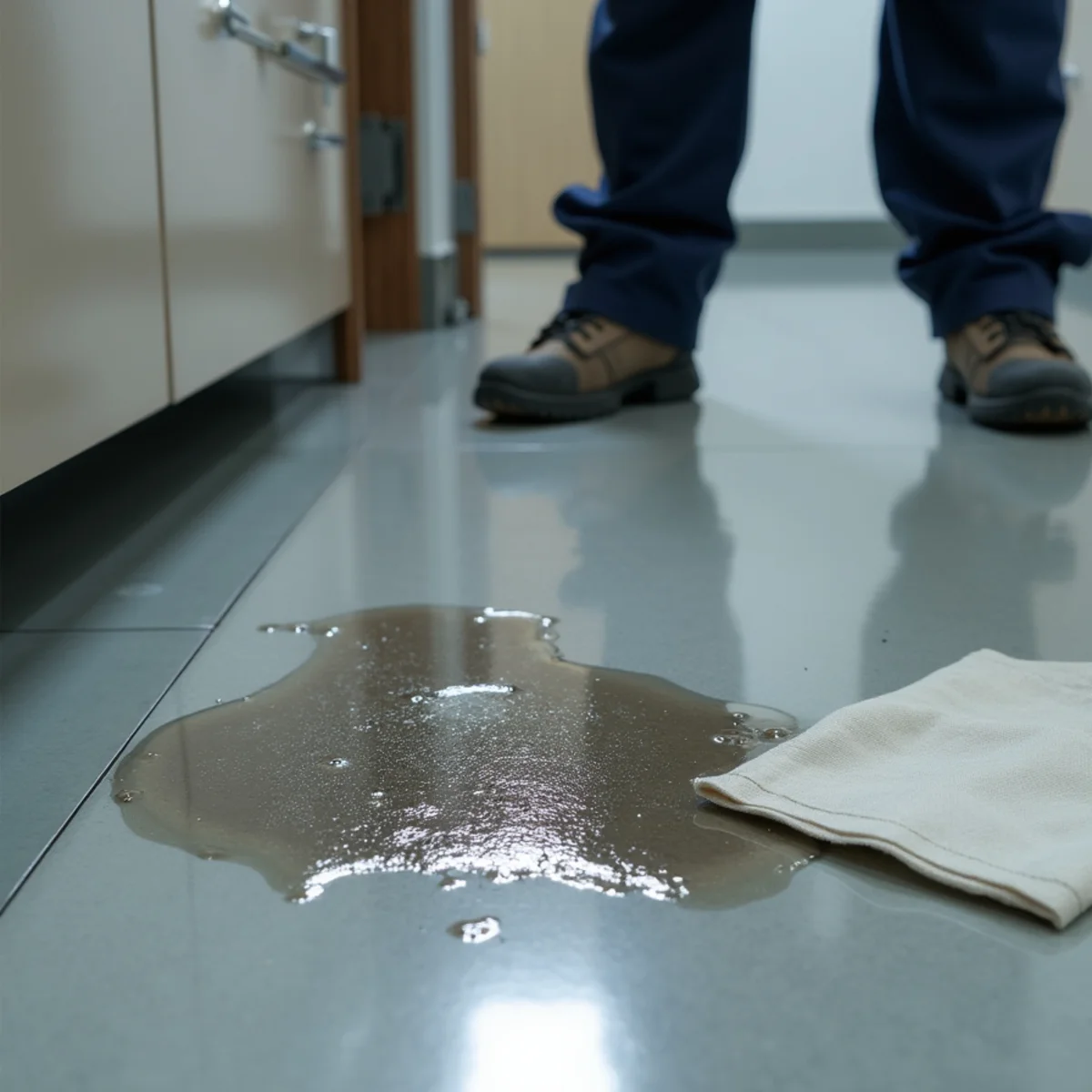
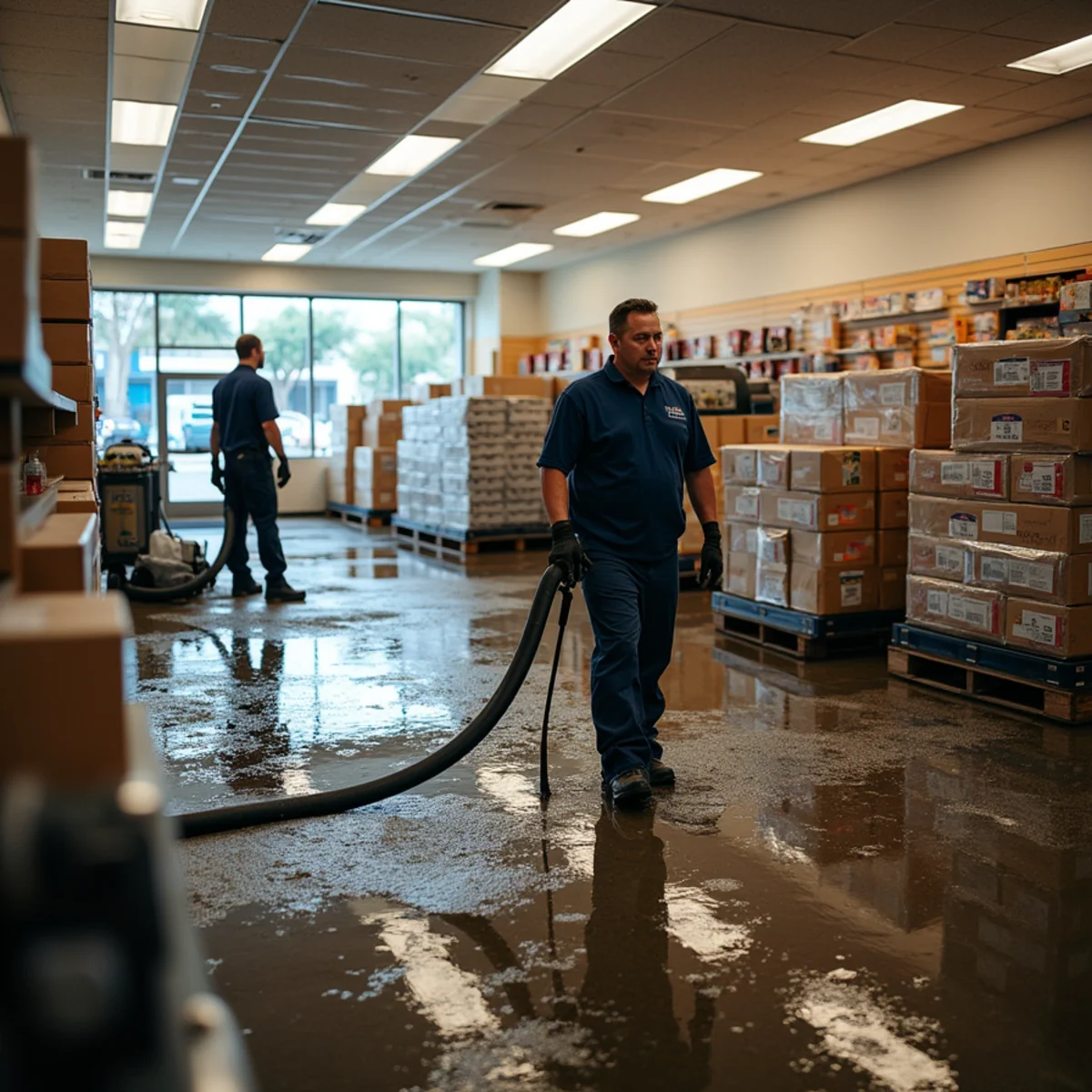
Dirty sprinkler water damage across a Fullerton commercial floor

What Commercial Water Damage Restoration Includes

Scoped around your trading hours and your carriers, not around our convenience:

Phased containment plan
Barriers and negative air isolating the work from occupied space, sequenced so revenue-generating areas are restored first.
After-hours scheduling as standard
Demolition and loud extraction overnight for retail and hospitality, evenings and weekends for offices. Our crews already run 24/7.
Stock, records and equipment handling
Inventory moved to raised pallets and wrapped, records and electronics prioritised, and disposal documented with values and condition.
Large-volume extraction and slab drying
Warehouse and open-floor drying where humidity control across the volume is the hard part, not the water itself.
Per-tenancy documentation
Affected area mapped by suite and demised boundary, with separate scoping so each owner, tenant and carrier sees their own share.
Business interruption records
Dated evidence of which zones were unusable and for how long, created as the work happens because it cannot be reconstructed later.
Compliance coordination
Fire system reset and recertification with your fire protection contractor, and health department standards where food service is involved.

Keeping You Trading While We Work

The first conversation on site is not about equipment. It is about which areas have to keep operating and what the actual deadline is.

From there we build a phased plan. Containment barriers isolate the work from occupied space, negative air keeps dust and odour out of your trading area, and we sequence so that revenue-generating areas are restored first even when a back-of-house area is the larger loss.

Most disruptive work — demolition, noisy extraction, anything requiring the space to be empty — is scheduled after hours. For retail and restaurants that means overnight. For offices, weekends and evenings. Our crews already run 24/7, so this is not a premium arrangement.

Where a space genuinely cannot operate, we say so immediately and in writing, because your business interruption claim depends on having that documented from day one rather than reconstructed afterward.

Commercial Documentation Is A Different Standard

Commercial claims involve more parties: your carrier, possibly the landlord's carrier, a property manager, sometimes a tenant's separate policy and occasionally a third-party contractor's liability insurer.

That means the documentation has to answer questions a residential file never gets asked.

  • Cause and origin documented precisely, because in a multi-tenant building the answer determines who pays
  • Affected area mapped by suite, tenancy and demised boundary, not just by room
  • Moisture readings and drying logs kept per zone so each carrier can see their own scope
  • Contents and equipment inventoried with values, condition and disposition
  • Business interruption support: dated records of which areas were unusable and for how long
  • Daily written progress reporting to owners, property managers and adjusters simultaneously

Sector-Specific Work In Fullerton

Different buildings fail differently and have different constraints. A few we handle regularly:

  • Restaurants and bars: health department compliance drives everything. Sanitising to food-service standards, walk-in and prep-area drying, and grease-line contamination treated as Category 3. Downtown Fullerton's older buildings often add lath-and-plaster walls and shared party-wall assemblies.
  • Retail: stock protection first, then customer-facing areas. We move and protect inventory, dry behind fixtures and slatwall, and keep the sales floor presentable while work continues in stockrooms.
  • Offices and medical: server rooms and records rooms get priority — a wet server room is a business-ending event and a wet records room is a compliance event. Document drying and controlled handling for patient and client files.
  • Warehouse and industrial: large-volume extraction, racking and palletised stock handling, and drying concrete slabs across big open floor areas where humidity control is the hard part.
  • Multifamily and student housing near Cal State Fullerton: unit-by-unit scheduling around tenants, common-area work, and clear separation between owner and tenant responsibility.

Fire Sprinkler Discharges — The Most Common Big Commercial Loss

A single sprinkler head discharges a very large volume of water very quickly, and it almost always happens when nobody is in the building.

The water is not clean. It has been sitting in the sprinkler pipe for years and typically comes out black with corrosion products and scale. It stains carpet, ceiling tile and stock, and it is treated as Category 2 or worse.

It also travels. Sprinkler water sheets across a floor, runs down through floor penetrations, and reaches electrical, IT and stock rooms below.

Response speed matters more here than almost anywhere. We extract, protect and remove stock, dry the structure and coordinate with your fire protection contractor for the system reset and recertification, because your building cannot legally reopen until the system is back in service.

Our Commercial Response Process, Step By Step

The sequence differs from a residential loss in one important way: operations come before equipment.

  1. Make safe and stop the source

    Affected electrical isolated, and the water shut off — for a sprinkler discharge that means the fire system control valve, which needs someone who knows which one it is.

  2. Establish the operating constraint

    Which areas have to keep trading, what the deadline is, and what stock, records or equipment is at risk. Everything downstream is built from this.

  3. Document per tenancy

    Cause and origin, affected area mapped by suite, and dated records of which zones are unusable — the foundation of both the property and the business interruption claim.

  4. Protect and relocate contents

    Stock onto raised pallets and wrapped, records and electronics prioritised, and anything unsalvageable inventoried before disposal.

  5. Contain, then extract and dry in phases

    Barriers and negative air isolate the work zone so the trading area stays usable, with disruptive work scheduled after close.

  6. Reinstate and recertify

    Reconstruction, plus fire system reset and recertification with your fire protection contractor — the building cannot legally reopen until that is done.

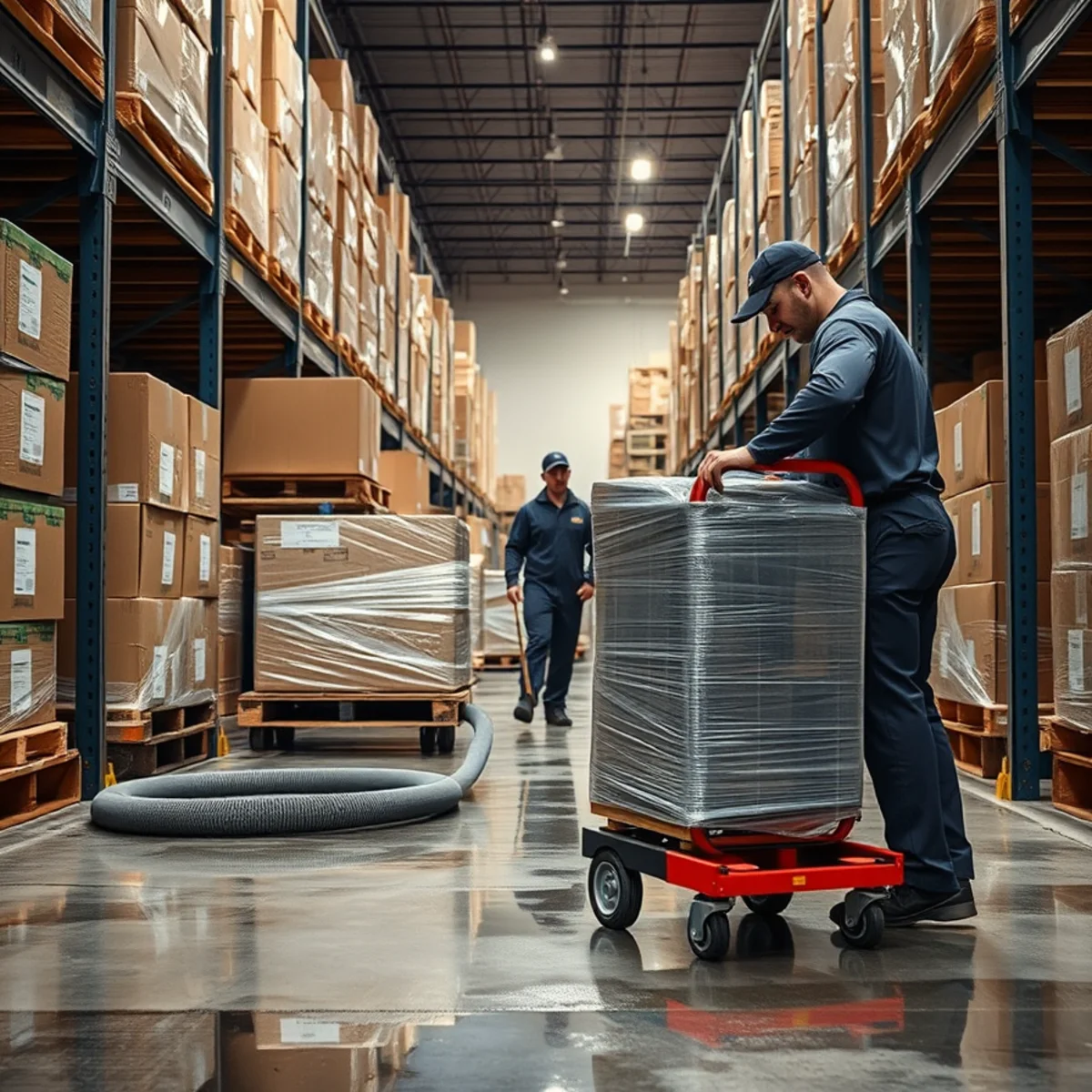
  • Protecting and moving stock during commercial water damage cleanup in Fullerton

    Protecting and moving stock during commercial water damage cleanup in Fullerton

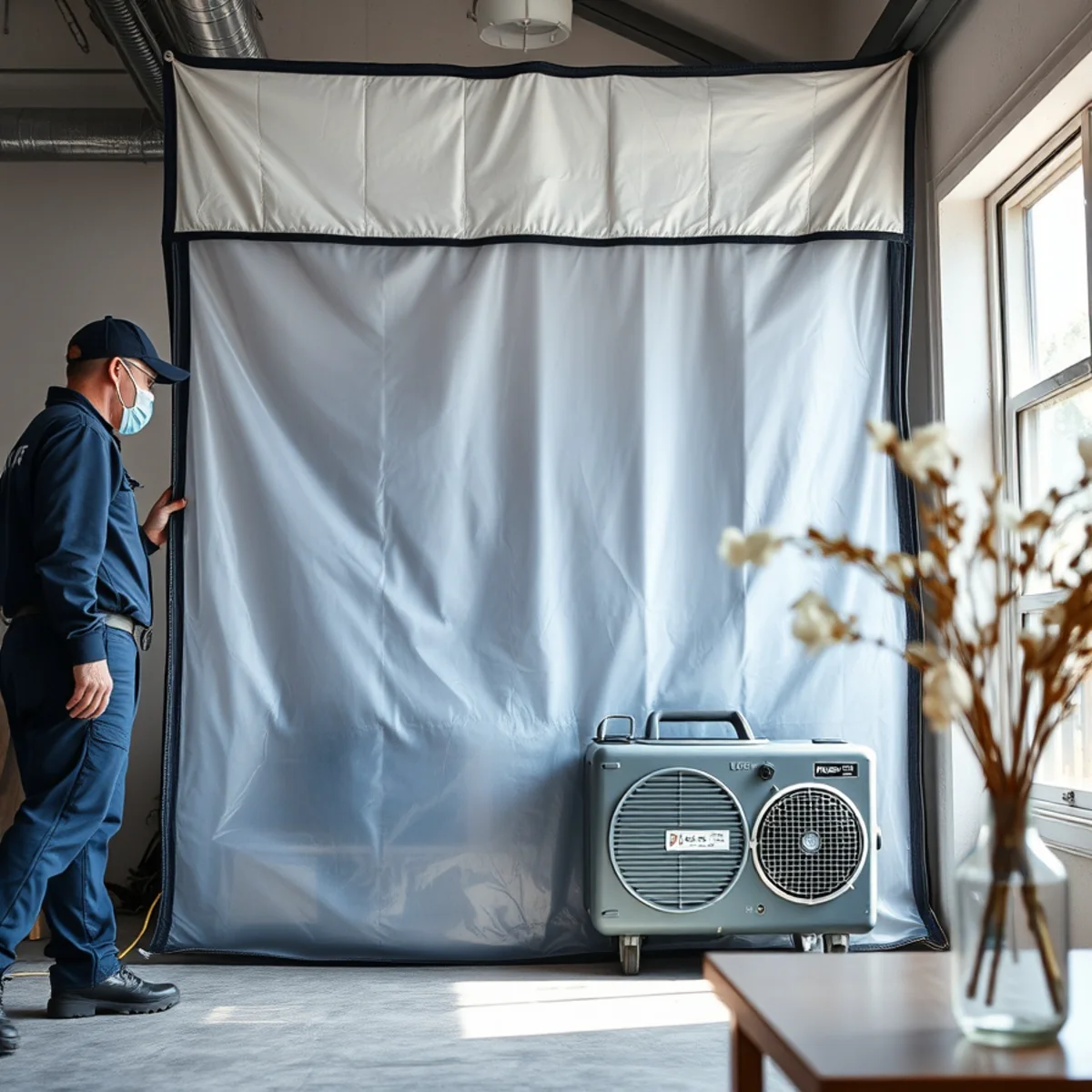
  • Phased containment keeping a Fullerton business trading during drying

    Phased containment keeping a Fullerton business trading during drying

  • Phased containment keeping part of a business trading

    Phased containment keeping part of a business trading

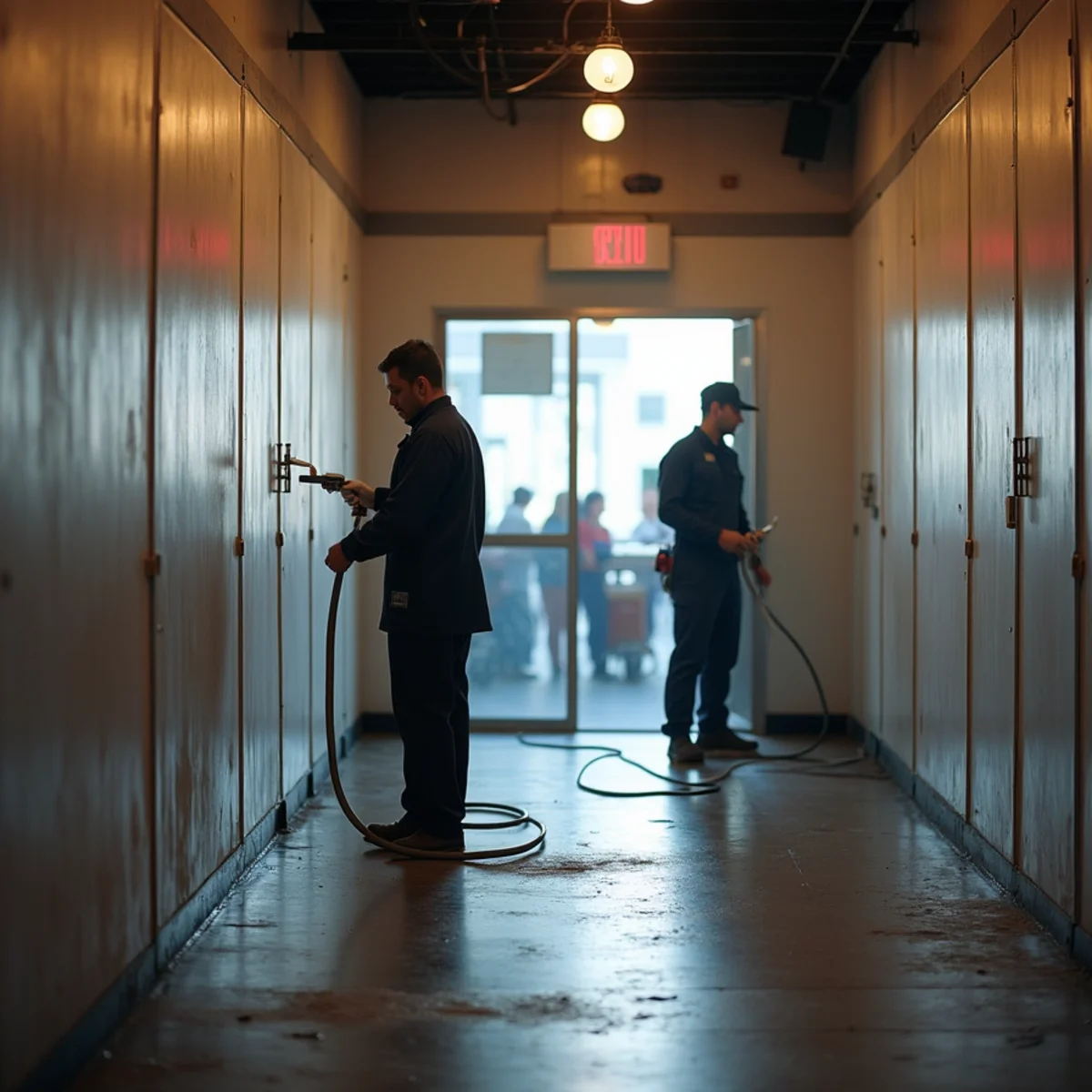
  • After-hours restoration crew working a commercial space

    After-hours restoration crew working a commercial space

Why Fullerton Businesses Use Us

On a commercial loss the restoration invoice is rarely the biggest number. The closed days are, and that shapes everything:

  • The first conversation is about trading, not equipment

    Which areas must stay open and what the real deadline is. The scope is built backwards from that rather than from a standard drying plan.

  • Overnight is standard, not a premium

    Because we already staff 24/7, working around your opening hours does not carry a surcharge the way it does for a day-shift contractor.

  • We meter the neighbouring tenancy

    In shared party-wall buildings — which is most of Downtown Fullerton and the Euclid and Orangethorpe corridors — the water is usually in both units before anyone reports it.

  • Documentation built for multiple carriers

    Cause and origin established precisely, because in a multi-tenant building that single finding decides who pays for everything that follows.

What Drives Commercial Restoration Cost

Commercial work is scoped and billed differently from residential. Variables:

Affected square footage and building height
Warehouse volume changes dehumidification requirements dramatically.
Business interruption pressure
Compressed timelines mean more crews and more equipment running in parallel.
After-hours and phased scheduling
Working around trading hours is how you protect revenue; it does add labour hours.
Contents, stock and equipment
Inventory handling, pack-out, cleaning and documented disposal.
Specialised areas
Server rooms, records storage, commercial kitchens, and clean or regulated spaces.
Number of tenancies affected
Multi-tenant losses need separate documentation per suite.
Compliance requirements
Health department, fire system recertification, and any regulated-material handling.

Commercial Restoration in Fullerton — Common Questions

Same window as residential — crews dispatched within 60 minutes, on-site in 60 to 90 minutes across Fullerton. For larger commercial losses we scale the crew rather than the timeline, and we can have multiple teams and additional equipment on site the same day.

Where we provide commercial restoration

Crews dispatch within 60 minutes across Fullerton and north Orange County.

Fullerton neighbourhoods

Nearby cities

All 60 service areas

Further Reading

Guides on this topic

Written for Fullerton property owners, with the local risk factors that actually apply here.

Need commercial restoration in Fullerton right now?

Crews dispatched within 60 minutes — on-site in 60–90 minutes. We extract, dry to a documented standard, and hand your adjuster a file they cannot argue with.

  • 60-minute dispatch, anywhere in Fullerton
  • IICRC-aligned · licensed & insured
  • Direct insurance documentation
Call 24/7Free Estimate