
Commercial & Property Managers
Property Manager's Guide to Tenant Water Damage: Who's Responsible for What in California
The split is decided by cause, and cause is decided by evidence gathered in the first hour. Here is how it actually works.
The short answer
Broadly, the building and its systems are the landlord's responsibility and the tenant's belongings are covered by a renters policy — but the cause of loss can shift that entirely. It is settled by cause-and-origin evidence gathered before anything is disturbed, not by argument afterwards.
Every rental water loss produces the same argument, and it is nearly always settled by what was documented in the first hour rather than by what anyone remembers afterwards.
This is a practical guide, not legal advice — tenancy law is fact-specific and a real dispute needs a California attorney. But the general framework is consistent and knowing it changes how you respond.
Dealing with this right now?
Crews dispatched within 60 minutes — on-site in 60–90 minutes, anywhere in Fullerton. Call and we will talk you through the first two minutes while a crew is dispatched.
- 60-minute dispatch, anywhere in Fullerton
- IICRC-aligned · licensed & insured
- Direct insurance documentation
The Default Split
Broadly, and subject to the lease:
The landlord is responsible for the building and its systems — plumbing, roof, structure, water heater, built-in appliances, and the habitability of the unit. That comes from California's implied warranty of habitability, which cannot be waived by a lease term.
The tenant is responsible for their own possessions, which are covered by a renters policy rather than the landlord's, and for damage they cause through negligence or misuse.
So a failed supply line inside a wall is the landlord's. A bathtub left running is the tenant's. Most real cases are somewhere in between, which is why cause matters so much.
Where It Gets Genuinely Contested
Four scenarios produce most of the disputes we see.
A tenant-owned appliance fails — a washing machine the tenant brought with them, whose supply hose lets go. The appliance is theirs; the building is the landlord's. Responsibility usually turns on whether the installation was reasonable and whether the tenant knew of a problem.
A tenant failed to report a known leak. A slow leak reported on day one is a maintenance issue. The same leak reported after three months of visible staining may shift responsibility for the escalated damage, because the tenant had a duty to notify.
The landlord failed to act on a report. This is the mirror image and it is the more common failure. A documented repair request that was not actioned makes the landlord responsible for the consequences, and in California it can raise habitability issues with real remedies attached.
Overflow through misuse — a blocked drain from what was put down it, an unattended sink. Cause and origin evidence decides these.
Habitability And What It Actually Requires
California law requires rental units to be habitable, and water damage can breach that in several ways: no working plumbing, an unusable bathroom or kitchen, mold affecting health, or structural damage.
The practical obligation on a landlord is to respond promptly and to make the unit habitable. What counts as prompt depends on severity — an active leak is not a two-week repair.
Where a unit becomes uninhabitable, tenants may have rights to rent reduction, to withhold rent in defined circumstances, or to relocation. Those are fact-specific and worth taking legal advice on rather than guessing.
The single best protection for a landlord here is a documented, fast response. A repair actioned the same day, with a written record, is very hard to characterise as neglect.
The Documentation That Settles It
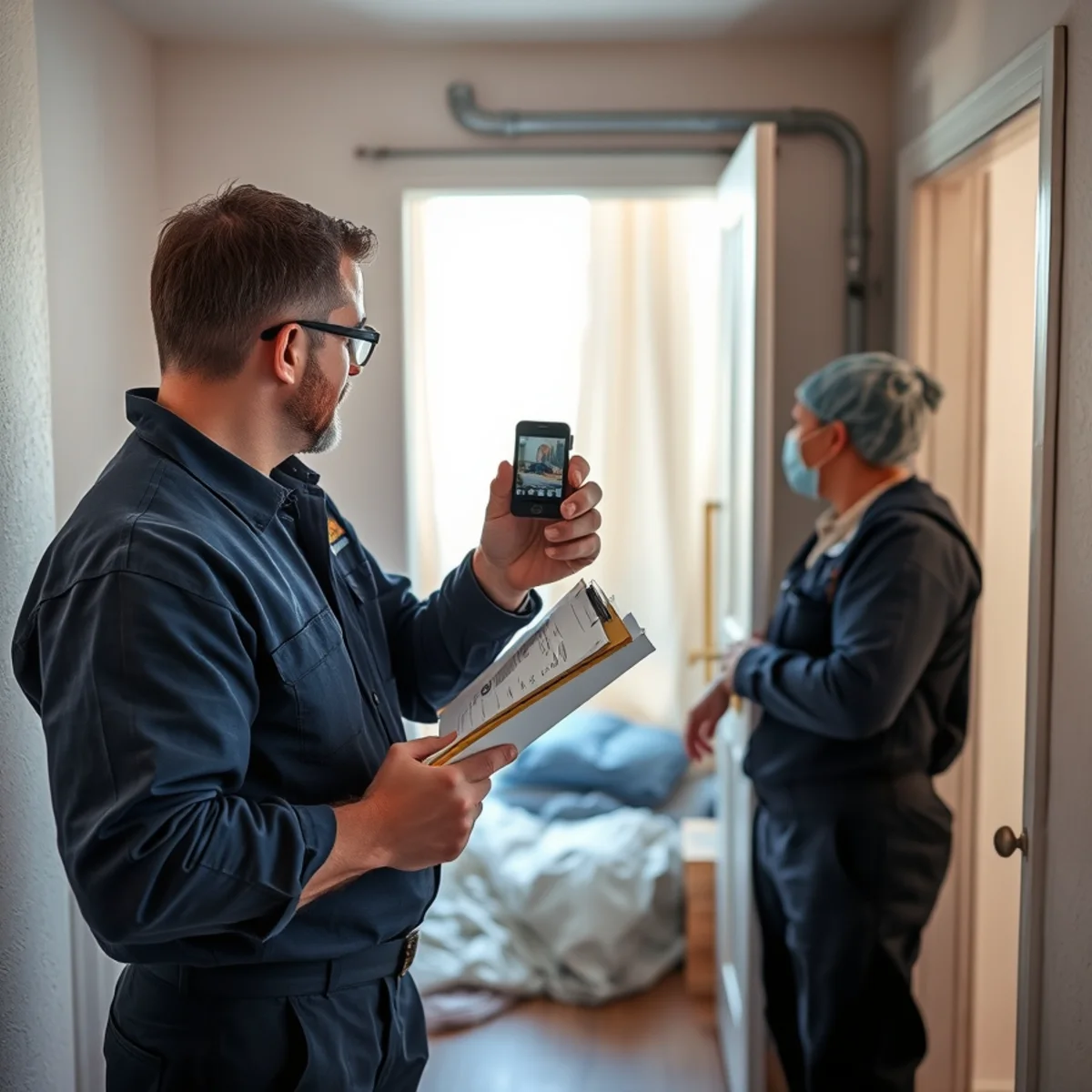
Cause and origin, established with photographs before anything is disturbed, is the whole ballgame. Once cleanup starts it cannot be recreated.
- Photographs and video of the source, the extent, and the water lines, taken before anything moves.
- The physical evidence — keep the failed hose, valve or pipe section, bagged and dated.
- A written cause-and-origin finding from the restoration company.
- Moisture mapping showing which areas were affected, per unit in a multi-unit building.
- The maintenance history for the unit: prior repair requests, when they were reported and when actioned.
- A dated log of communications with the tenant from the moment it was reported.
- For multi-unit buildings, readings from neighbouring and lower units even where nothing was reported.
Renters Insurance Is The Cheap Fix
Requiring renters insurance in the lease is the single most effective thing a landlord can do to reduce these disputes, and it is standard practice for good reason.
It covers the tenant's belongings, which the landlord's policy never does, and it usually includes personal liability — which responds when the tenant causes damage to the building or to a neighbouring unit.
It typically costs a tenant very little per month. Requiring it, and requiring proof of it at renewal, converts a large class of arguments into an insurance matter between two carriers.
For tenants reading this: it is one of the cheapest policies available and it covers your possessions, which the building's insurance does not, plus your liability if you flood the flat below.
Multi-Unit Losses Specifically
In a building, one unit's failure is rarely one unit's problem.
Water on an upper floor is in the ceiling assembly below before anyone has phoned anyone. It travels along the floor structure, finds plumbing and lighting penetrations, and appears in a unit whose occupants had nothing to do with the cause.
So the first operational move is to meter the units below and beside the loss, not just the one that reported it. Finding water in a neighbour's wall on day one is far better than that neighbour reporting mold in a month — and it is the single most common thing that gets skipped.
Then document per unit, per tenancy, so each party's carrier can see their own scope. In the rental-dense parts of north Orange County — The Hill near Cal State Fullerton, Brookhurst, and the older apartment stock across Anaheim and Santa Ana — that discipline is the difference between a clean claim and a year of argument.
The First Twenty-Four Hours, From the Manager's Side
How the first day is handled determines both the size of the loss and how defensible the position is afterwards. The technical response and the paper trail are the same job, done at the same time.
This is the sequence for a property manager or owner who has just taken the call.
- Confirm safety first: power to affected areas, any structural sagging, and whether the unit is habitable tonight. Habitability drives everything else legally.
- Stop the source and record who stopped it and when. That timestamp appears in every subsequent conversation.
- Dispatch mitigation immediately rather than waiting for insurer authorisation. Delay in mitigating is a defensible position for nobody.
- Photograph and video before anything is moved, including the cause point if it is visible. Cause-and-origin evidence disappears the moment repairs start.
- Preserve the failed component. The burst hose, the failed valve, the cracked fitting — bag it and label it. It settles the responsibility question later.
- Notify in writing: the owner, the carrier, and the tenant, with what is happening and expected timescales. Written notice on day one prevents most of the disputes that follow.
Frequently asked
Usually the tenant's renters liability coverage, if they have it, because the appliance was theirs and the damage was to another party. The building itself is generally the owner's responsibility to repair, with recovery pursued against the tenant's carrier. Cause and origin documentation is what makes that recovery possible.
California law provides remedies where a unit is uninhabitable, and those can include rent withholding in defined circumstances. The rules are specific and both sides should take advice rather than act on assumption. The practical protection for a landlord is a prompt, documented response — that is very hard to characterise as neglect.
Yes. It is standard practice, it costs the tenant very little, and it covers both their belongings and their liability for damage they cause. It converts a large category of disputes into a matter between two insurers. Require it in the lease and require proof at renewal.
The bottom line
Cause decides responsibility, and evidence decides cause. Photograph before anything is disturbed and keep what failed.
Then require renters insurance, respond fast, and document every step — that combination prevents most of the arguments before they start.