
Problem Solving
Black Mold vs. Mildew: How to Tell the Difference and When to Call a Pro
Mildew sits on the surface and wipes off. Mold grows into the material. Colour is close to useless as a diagnostic — here is what actually matters.
The short answer
Mildew sits on the surface and wipes off a damp cloth cleanly, leaving at most a light stain. Mold grows into the material, so wiping removes the surface and leaves the colony. Colour tells you almost nothing — the remediation procedure is essentially the same regardless of species.
The practical question is never really 'what species is this'. It is 'is this a cleaning job or a remediation job', and that has a straightforward answer.
Mildew sits on the surface. Mold grows into the material. Everything else follows from that.
Dealing with this right now?
Crews dispatched within 60 minutes — on-site in 60–90 minutes, anywhere in Fullerton. Call and we will talk you through the first two minutes while a crew is dispatched.
- 60-minute dispatch, anywhere in Fullerton
- IICRC-aligned · licensed & insured
- Direct insurance documentation
How To Tell Them Apart
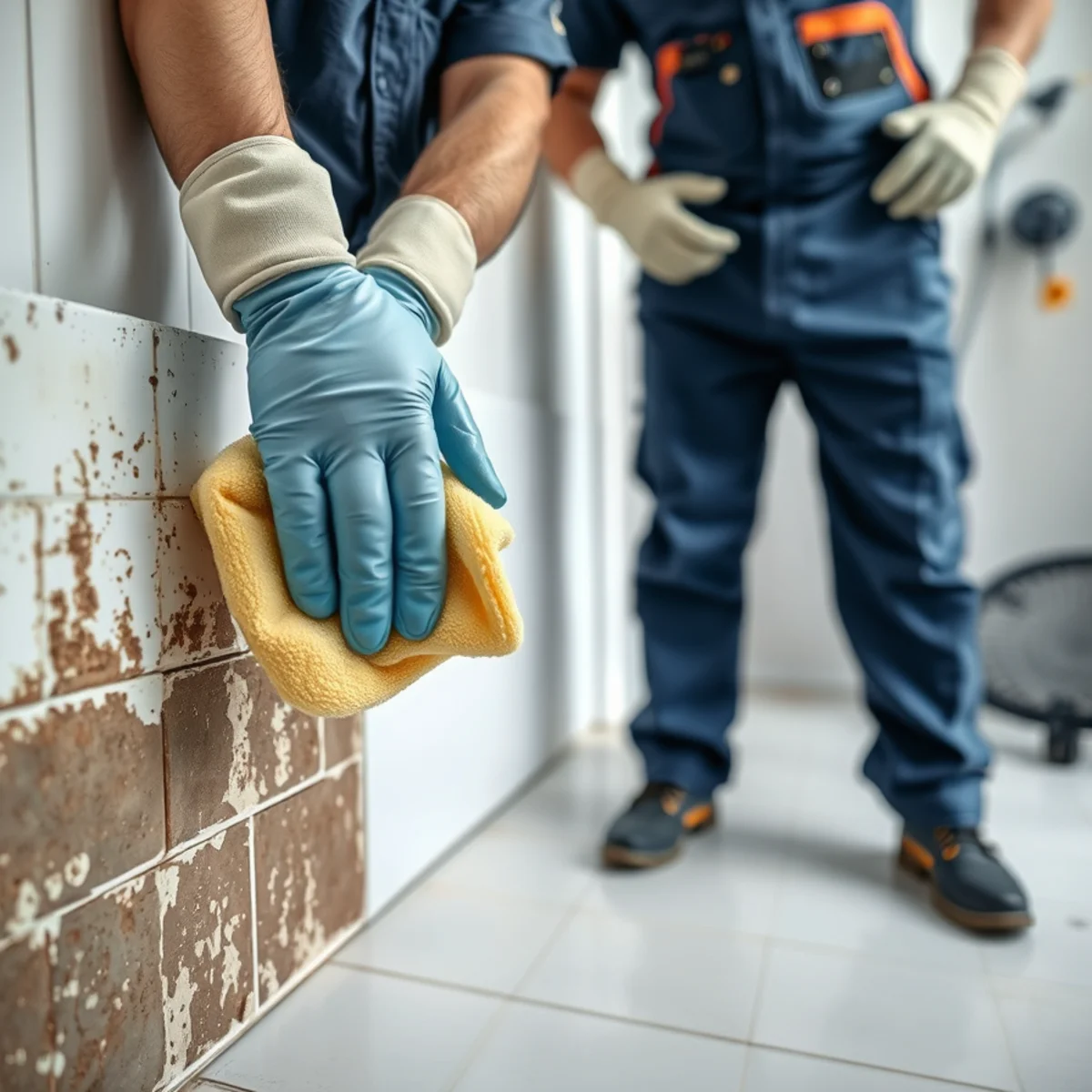
Mildew is a surface growth. It appears flat, powdery or downy, usually white, grey or light yellowish, and it stays on top of whatever it is on. Wipe it with a damp cloth and it largely comes off, leaving at most a light stain.
It shows up on bathroom grout, shower ceilings, window sills, and around poorly ventilated windows — surfaces that get wet regularly and dry slowly.
Mold is a colony growing into the material. It looks fuzzy, slimy or raised, often with visible texture and irregular spreading edges. Colours range across black, green, blue-green, brown, orange and white. Wiping it removes the surface and leaves the colony, because the hyphae are inside the material.
The test is genuinely that simple. Damp cloth, light pressure. If it comes away cleanly it is surface growth. If it smears, comes back, or the material underneath is stained and soft, it is growing in.
Why Colour Tells You Almost Nothing
'Black mold' has entered the language as a synonym for danger, and it is not a useful category.
Stachybotrys chartarum — the species people mean — is real. It is greenish-black, slimy when wet, and it grows on continuously saturated cellulose materials like the paper facing on drywall. It needs sustained wetness rather than occasional dampness.
But plenty of other moulds are dark. Cladosporium is extremely common, often dark green or black, and generally far less concerning. Aspergillus and Penicillium turn up in most water-damaged buildings in Orange County and come in a range of colours.
Here is the practically important part: the remediation procedure is essentially the same regardless of species. Contain, filter, remove colonised material, clean, dry, fix the moisture source. Species identification affects the urgency conversation and sometimes medical advice — it rarely changes the work.
Be cautious of any company that leads with a frightening species name before they have found where the water is coming from.
When It Is Genuinely A Cleaning Job
Surface mildew on non-porous material in a small area is a homeowner job and you do not need us.
Bathroom grout, shower tile, glass, sealed surfaces — clean it, then deal with the ventilation that let it happen. A bathroom extractor fan that actually vents outside and runs for fifteen minutes after a shower prevents most of it.
Bleach is fine on hard non-porous surfaces. It is close to useless on drywall or wood, because bleach is mostly water: the water soaks into the porous material and feeds the colony while the chlorine stays on the surface.
If mildew keeps returning in the same spot after cleaning, that is a ventilation or moisture problem to solve rather than a cleaning schedule to maintain.
The Three Situations That Need A Professional
First: any growth on porous building materials — drywall, wood framing, insulation, ceiling tile, carpet. The visible growth is the smallest part of it, and disturbing it without containment spreads spores through the rest of the house.
Second: a musty smell with no visible growth. That means it is somewhere you cannot see — inside a wall, under flooring, in a crawl space or in attic insulation. Finding it requires thermal imaging and moisture meters rather than looking harder.
Third: growth following a water loss, particularly one that was not professionally dried. Where mold has appeared after a leak, the moisture source is very likely still active or the material never reached a dry standard.
As a rough threshold, anything larger than about ten square feet, anything in an HVAC system, and anything in a household with asthma, allergies or an immunocompromised member should be handled professionally.
Symptoms Are Not A Diagnostic
Mold exposure causes real symptoms — congestion, cough, itchy eyes, throat irritation, worsened asthma — and the useful pattern is that they improve when you leave the building and return when you come back.
That pattern is worth taking seriously and worth mentioning to a doctor. What it is not is a way of identifying a species or a severity, and there is a lot of misinformation in this area.
Dead mold still causes allergic response, which is why surface killing without removal does not resolve symptoms. The material has to come out.
The Damp Cloth Test, and What Each Result Means
You can settle this in about ten seconds with a cloth and light pressure:
- Comes away cleanly, surface underneath is sound: surface mildew on a non-porous surface. Clean it, then fix the ventilation that let it happen.
- Comes away but returns in the same spot within weeks: the moisture source is still there. Cleaning harder will not help.
- Smears rather than lifts, and the material underneath is stained: growth has penetrated. On grout that is cosmetic; on drywall it is not.
- Material underneath feels soft, spongy or crumbles: the substrate is compromised and needs removing, not cleaning.
- Nothing visible at all but a persistent musty smell: it is behind a surface, and looking harder will not find it — that needs a meter.
- Anything larger than about ten square feet, or anything inside an HVAC system, should be handled with containment regardless of the cloth test.
Cleaning It Yourself Without Making It Worse
For the genuinely small, genuinely surface cases, doing it yourself is reasonable. Most of the harm we see from DIY cleaning comes from three specific mistakes rather than from the attempt itself.
If the affected area is larger than about ten square feet, is inside an HVAC system, or is on a material you cannot replace, stop and get a protocol written.
- Do not use bleach on porous materials. It is mostly water, the water penetrates and the chlorine does not, so it bleaches the stain and feeds what is underneath.
- Do not dry-brush, scrape or sand growth. That aerosolises spores into the rest of the house, and it is the most common way a contained problem becomes a whole-house one.
- Do not paint over it, including with mold-blocking primer. It hides the evidence and changes nothing underneath.
- Do use a detergent solution and physical removal on hard non-porous surfaces, then dry the surface thoroughly.
- Do wear an N95 at minimum, plus gloves and eye protection, and ventilate to the outside rather than into the rest of the house.
- And fix the moisture source first. Cleaning without correcting the humidity or the leak means doing it again in six weeks.
Frequently asked
Wipe it with a damp cloth. Surface growth that comes away cleanly is mildew and is a cleaning job. Growth that smears, returns, or leaves stained soft material underneath is mold growing into the substrate, and on porous materials that needs professional handling.
Stachybotrys is real and worth taking seriously, but colour is a poor indicator — plenty of common, less concerning species are dark. More usefully, the remediation procedure is the same regardless of species, so identification rarely changes what has to be done.
No. Painting seals moisture into the assembly and gives the colony a stable environment, and mould-resistant paint is designed to prevent growth on a clean dry surface, not to contain existing growth. The material has to be cleaned or removed and the moisture source fixed first.
The bottom line
Surface and wipes off: cleaning job, plus a ventilation fix.
Growing into the material, or a smell with nothing visible: get it looked at, and get the moisture source found rather than the growth painted over.