
Local Fullerton Risks
Living in the Coyote Creek Flood Plain: What Fullerton Homeowners Should Know About Flood Risk
The channel does its job most years. The risk is the atmospheric river landing on ground that is already saturated — and the coverage gap nobody discovers until January.
The short answer
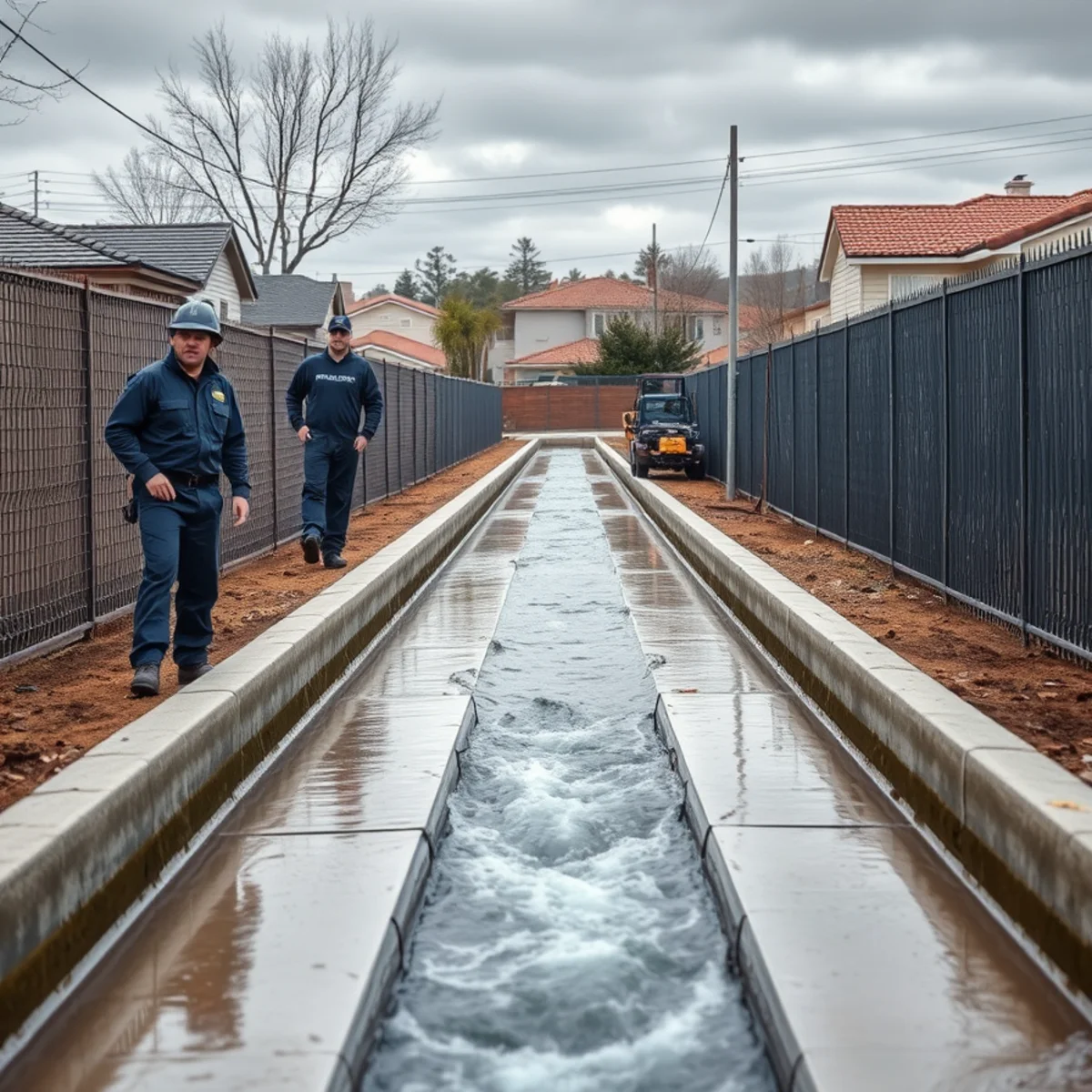
Fullerton sits in the Coyote Creek watershed, and Coyote Creek itself follows the county line along the city's northern and western side as a managed flood control channel, and it performs well in an ordinary year. The risk is an atmospheric river landing on already-saturated ground — and flood is excluded from every standard homeowners policy.
Fullerton sits in the Coyote Creek watershed. Brea Creek drains south through the city under Brea Dam's control and joins Coyote Creek, which follows the county line to the north and west. Orange County Public Works maintains the system, and in most years it does exactly what it was designed to do.
The risk is not the average year. It is the storm that exceeds the design assumptions, and the coverage gap most homeowners near the corridor do not know they have.
Dealing with this right now?
Crews dispatched within 60 minutes — on-site in 60–90 minutes, anywhere in Fullerton. Call and we will talk you through the first two minutes while a crew is dispatched.
- 60-minute dispatch, anywhere in Fullerton
- IICRC-aligned · licensed & insured
- Direct insurance documentation
How The System Works
Southern California flood control is built around moving water out fast rather than absorbing it. Concrete-lined channels, debris basins and dams intercept runoff from the hills and carry it to the ocean.
Coyote Creek is part of that network, draining a catchment that includes the hills north of Fullerton and running southwest toward the San Gabriel River. Brea Dam upstream provides detention capacity that moderates peak flows.
It works well for the storms this region normally gets. What tests it is a specific combination: an atmospheric river delivering several inches in 24 to 48 hours, landing on ground already saturated by an earlier storm so that almost nothing infiltrates and almost everything runs off.
What The Rainfall Pattern Actually Is
Fullerton averages roughly 14 inches of rain a year. That number makes people relax and it should not, because of how it arrives.
Almost all of it falls between November and March, and within that window it is concentrated into a small number of intense events rather than spread evenly. A single atmospheric river can deliver a meaningful fraction of the annual total in a day or two.
That is the pattern the drainage has to cope with, and it is why our storm call volume in East Fullerton and around Coyote Hills clusters into a handful of days each winter rather than spreading across the season.
Who Is Actually Exposed
Exposure varies street by street, and the authoritative answer for any specific property is the FEMA flood map for that parcel — which is free to look up and worth doing.
Broadly, three groups carry more risk in this city.
Properties adjacent to the creek corridor and the flood control channels, in parts of East Fullerton and around Coyote Hills, have the most direct exposure.
Low flat areas are the second group. South Fullerton below Commonwealth has no grade to shed water and relies entirely on street drainage; when that backs up, water stands and thresholds are only inches away.
Properties below slopes are the third — Rolling Hills, the streets under Bastanchury, and the Coyote Hills edge — where sheet flow arrives at the back of the house and silted-up swales cannot cope.
There is also a subtler effect worth knowing: after a saturating storm the local water table rises, and hydrostatic pressure pushes moisture up through slabs and into wall bases. That presents as damp slab edges and persistent garage humidity rather than as flooding, and it is often mistaken for a plumbing leak.
The Coverage Gap
This is the part that catches Fullerton homeowners every single winter.
A standard California homeowners policy covers sudden and accidental water damage originating inside the building. It excludes flood — surface water and rising water entering from outside — entirely.
That coverage comes from a separate NFIP policy or from the private flood market. NFIP residential limits are $250,000 for the building and $100,000 for contents, and critically there is normally a 30-day waiting period before a policy takes effect.
You cannot buy it when the forecast turns. For it to be useful in a January storm it has to be in place by the autumn.
One nuance in your favour: water that entered because wind created an opening — a lifted tile, a broken window — is generally a wind loss and covered under your homeowners policy. That is why we document the entry point and direction of flow before anything is cleaned up.
Why Storm Water Is A Category 3 Cleanup
Water that comes in from outside has crossed streets, driveways, lawns and storm drains. It carries whatever it picked up on the way — soil, fertiliser, petroleum residue, animal waste, and whatever was in the gutter.
That makes it Category 3 under IICRC classification, and it is handled accordingly: containment, extraction, removal of porous materials that absorbed it, cleaning before disinfection, and documented disposal.
Carpet and pad that took storm water do not stay. Drywall in contact with it comes out plus a margin above the line. Insulation comes out.
That is why flood cleanup costs more per square foot than a clean-water loss and why 'it was only an inch of water' is not the reassurance people think it is.
What To Do Before November
Look up your FEMA flood zone and make the flood insurance decision in September or October, not in January when the waiting period makes it academic.
Add the water and sewer backup endorsement to your policy regardless — that is a separate and more likely gap for most Fullerton homes.
Then do the physical work, which is unglamorous and effective: clear area drains and swales, extend downspout discharge well away from the foundation, clear gutters and valleys after the Santa Ana wind months, and check that landscaping or hardscape added over the years has not redirected water toward the house.
Most storm water we extract from Fullerton homes did not come from a creek. It came off the roof or across a yard and had nowhere to go.
Three Groups of Fullerton Property at Higher Risk
Exposure varies street by street, but three situations carry more of it than the rest of the city:
- Properties adjacent to the creek corridor and flood control channels in parts of East Fullerton and around Coyote Hills — closest to the margin when a storm exceeds design.
- Low flat areas with no grade to shed water, particularly South Fullerton below Commonwealth, which relies entirely on street drainage.
- Homes below a slope — Rolling Hills, the streets under Bastanchury, the Coyote Hills edge — where sheet flow arrives at the back of the property.
- A fourth, subtler effect: after a saturating storm the local water table rises and pushes moisture up through slabs and into wall bases.
- That last one presents as damp slab edges and persistent garage humidity rather than flooding, and is routinely mistaken for a plumbing leak.
- The authoritative answer for your address is the FEMA flood map for that specific parcel, not a statement about the neighbourhood.
Frequently asked
Exposure varies street by street, and the authoritative answer is the FEMA flood map for your specific parcel rather than a general statement about the neighbourhood. It is free to look up. Properties adjacent to the corridor in East Fullerton and around Coyote Hills carry the most direct exposure.
No. Standard California homeowners policies exclude flood — surface water and rising water entering from outside. That needs separate NFIP or private flood coverage, and NFIP policies normally have a 30-day waiting period, so it has to be arranged before the season.
After a saturating storm the local water table rises and hydrostatic pressure pushes moisture up through the slab and into wall bases. It shows as damp edges and persistent humidity rather than running water. It is a drainage and vapour management issue, not a plumbing failure.
The bottom line
The channel handles the ordinary years. Plan for the storm that does not fit the ordinary pattern.
Look up your flood zone this month, and clear your drains before the first November system arrives.