
Local Fullerton Risks
Do Pipes Really Freeze in Fullerton? Foothill Freeze Nights in Bastanchury
A handful of nights a year, the Fullerton foothills drop into the high twenties. Here is what is genuinely at risk and what is not.
The short answer
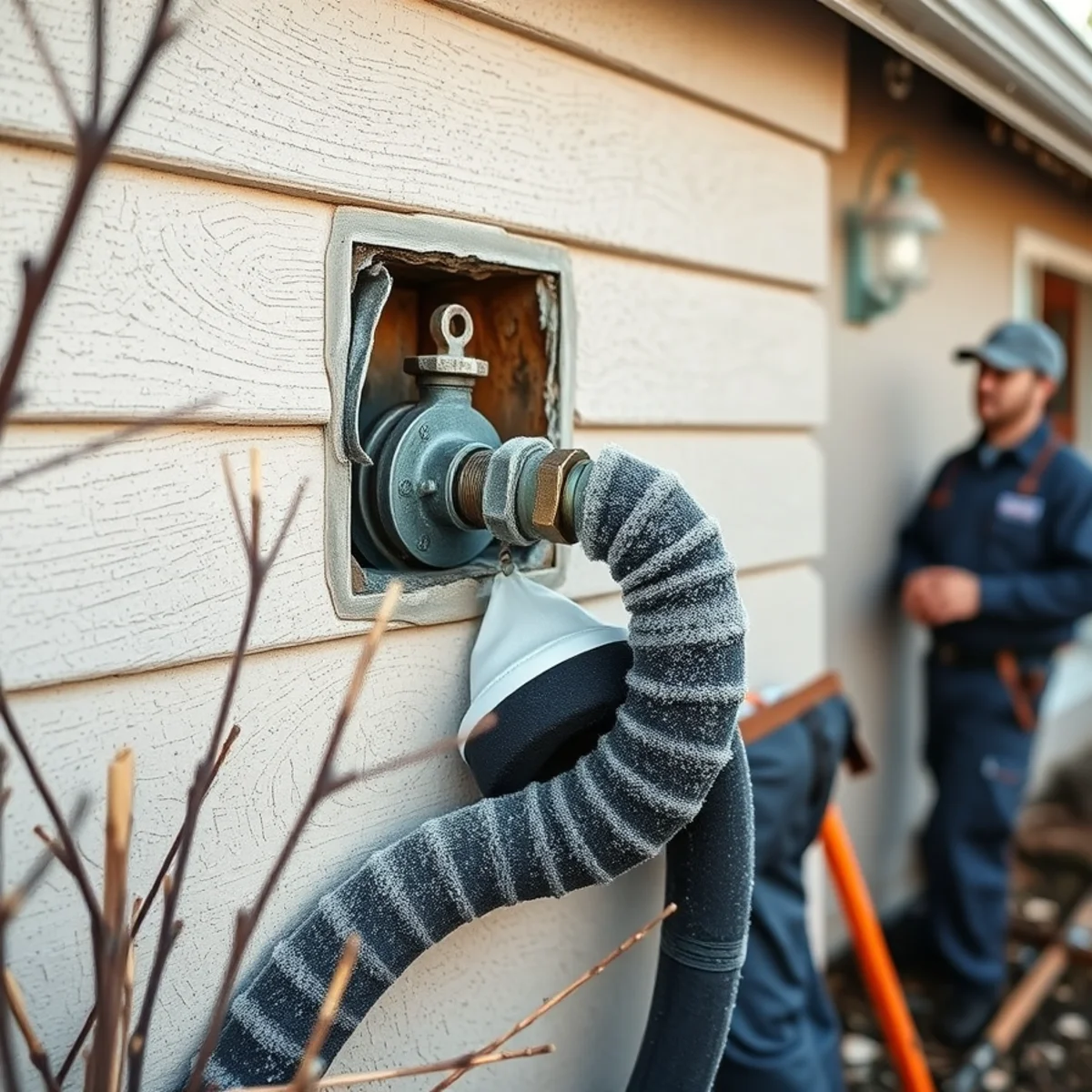
Fullerton is not a freezing city, but record lows here have reached the high twenties. On those few nights a year the genuine risks are exposed hose bibs, uninsulated garage runs, irrigation backflow assemblies and pool equipment — not interior plumbing in a heated house.
Ask most Fullerton homeowners about frozen pipes and they will laugh. Reasonably — this is not a freezing climate and burst-from-freezing is not a common failure here.
But it is not zero either, and what is at risk is a short, specific list. Record lows in Fullerton have reached the high twenties, and on those few nights a year some specific things are genuinely at risk.
Dealing with this right now?
Crews dispatched within 60 minutes — on-site in 60–90 minutes, anywhere in Fullerton. Call and we will talk you through the first two minutes while a crew is dispatched.
- 60-minute dispatch, anywhere in Fullerton
- IICRC-aligned · licensed & insured
- Direct insurance documentation
Why The Foothills Are Colder
Two effects, and they work in opposite directions on the same hillside.
Cold air is denser than warm air and drains downhill at night, pooling in low areas and valleys. That is why the coldest readings on a still winter night are often at the bottom of a slope rather than the top.
But elevation also means clearer skies, less urban heat retention, and more radiative cooling on a still night. The foothill neighbourhoods north of the city sit at the top of Fullerton's elevation range, and they are more exposed than the built-up flats.
In practice the coldest nights in Fullerton are clear, still, dry post-Santa Ana nights — when the offshore flow has scoured out humidity and there is no cloud cover to hold heat in.
Bastanchury sits at the highest ground in the city. Rolling Hills, the upper parts of Sunny Hills and the Coyote Hills ridge are in the same band.
What Is Actually At Risk
Not your interior plumbing. These are the vulnerable points:
- Exterior hose bibs, especially with a hose left attached — water trapped in the hose freezes back into the bib and splits it.
- Uninsulated supply lines running through an unheated garage, particularly along an exterior wall.
- Plumbing in exterior walls on the north side of a house, where there is minimal insulation and no solar gain.
- Pipes in a vented crawl space, on the older raised-foundation homes.
- Irrigation backflow preventers and above-ground valve assemblies — the most commonly damaged item in a Southern California freeze.
- Pool and spa equipment, exposed pumps and filters.
- Anything in an unheated outbuilding, workshop or detached garage.
How A Freeze Burst Actually Works
Water expands about nine percent when it freezes, and the burst mechanism is not what most people assume.
The pipe rarely splits where the ice forms. What happens is that ice forms at a cold point and blocks the pipe, and continued freezing behind it pushes water toward the closed tap. Pressure builds in the trapped section between the ice plug and the fixture, and the pipe fails at the weakest point in that section — which may be a considerable distance away.
The second thing people get wrong is the timing. The burst frequently does not release water while it is frozen, because ice is plugging it. It releases when everything thaws the following morning — which is why freeze damage is discovered at breakfast rather than overnight, and why a house left empty during a cold snap can be found flooded days later.
Ten Minutes Of Prevention
This is genuinely all it takes for a Fullerton house, done once before December.
Disconnect garden hoses and drain them. Fit inexpensive insulated foam covers on exterior hose bibs — a few dollars each and they solve the most common failure outright.
Insulate any accessible supply line running through the garage or an unheated space with foam pipe sleeve.
Insulate or wrap the irrigation backflow assembly, or shut it off and drain it if you are not irrigating through winter.
Then on a forecast night in the high twenties: open the cabinet doors under sinks on exterior walls so household heat reaches the pipes, and let one distant tap drip very slightly overnight. Moving water is far harder to freeze, and the drip relieves pressure if an ice plug does form.
If You Think A Pipe Is Frozen
The sign is a tap that produces nothing, or a trickle, on a cold morning while other taps work normally.
Leave the tap open. That gives melting water somewhere to go and relieves pressure as the plug releases.
Apply gentle heat to the accessible pipe — a hair dryer, warm towels, a space heater in the room. Work from the tap end toward the frozen section so meltwater can escape.
Never use an open flame, a torch or a heat gun. That is how frozen pipes become house fires, and it is a genuine annual occurrence in colder parts of the country.
And be ready for a burst on thaw. Know where your main shut-off is before you start warming anything, because if the pipe did split you will find out in the next few minutes.
Keeping This In Proportion
Freeze damage is not the main water risk to a Fullerton home and it would be dishonest to suggest otherwise.
Across our work, slab leaks, water heaters, appliance connectors and storm intrusion account for the overwhelming majority of losses. Freezing is a handful of calls a year, almost all of them hose bibs and irrigation assemblies rather than interior plumbing.
The reason to do the prevention anyway is that it takes ten minutes and costs almost nothing. Foam covers on the hose bibs and a sleeve on the garage run is a very small investment against a burst at full household pressure into an unoccupied garage.
If you are travelling over the holidays, shutting the water off at the main is the complete answer to all of it.
What to Do the Morning After a Hard Freeze
The damage from a freeze is rarely apparent during the cold. It appears as the ice thaws and the split lets go, usually mid-morning as the sun hits the west and south walls.
That is the window to be paying attention. A split found while you are standing next to it is a valve turn; the same split found that evening has been running for eight hours.
- Before you leave the house: open a tap on each side of the property and confirm normal flow. No flow on one line means ice, and ice means a possible split behind it.
- Check every exposed hose bib by opening it briefly. A bib that will not flow, or that flows and then keeps running after you close it, has failed.
- Look at the irrigation backflow assembly in the parkway — brass, above ground, and the most commonly split component in a Fullerton freeze.
- Check pool and spa equipment, particularly the pump housing and any exposed PVC, which cracks and does not show until the pump runs.
- Walk the garage and look along any exposed pipe run for beading, dripping or a wet patch on the slab.
- If a pipe is frozen but has not split, thaw it slowly with warm towels or a hairdryer working from the fixture end back — never with an open flame, and never fast.
Frequently asked
Rarely, and almost never interior plumbing. Record lows in Fullerton have reached the high twenties, and on those few nights exposed hose bibs, uninsulated garage runs, irrigation backflow assemblies and pool equipment are genuinely at risk. Interior pipes in a heated house are not.
Because the ice plug was holding the water in. Continued freezing pressurises the section between the plug and a closed tap, the pipe fails at the weakest point, and nothing escapes until the ice melts. That is why freeze damage is typically discovered the following morning.
Only when a genuine freeze is forecast — high twenties or below — and only on the taps furthest from where the supply enters. It is not a nightly winter habit in this climate. Insulating hose bibs and exposed garage runs is the year-round measure.
The bottom line
Hose bib covers and a foam sleeve on the garage run. Ten minutes, once, before December.
And if you are away over the holidays, just shut the water off at the main.