
Problem Solving
Sewage Backing Up Into the Shower: Causes, Health Risks, and Safe Cleanup
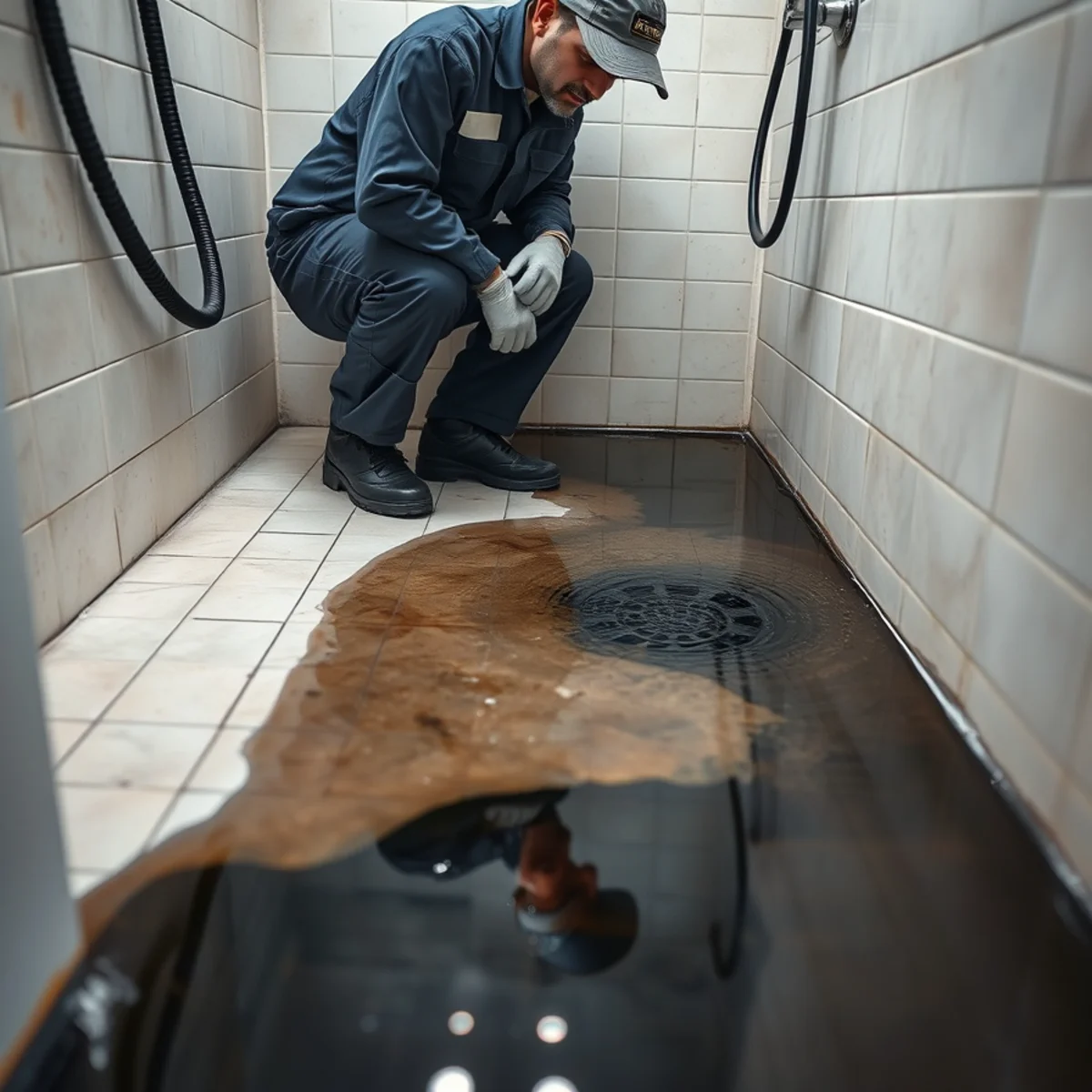
The shower is the lowest opening in most houses, which makes it the relief valve for a blocked main line. Here is what that tells you.
The short answer
The shower is the lowest opening in most houses, so it is where a blocked main line relieves itself. It is not a shower problem — it means the blockage is downstream of that fixture. Stop using every drain in the house immediately, because each gallon you send down adds to what comes up.
Sewage in the shower is not a shower problem. It is a main line problem announcing itself at the lowest available opening.
Understanding that changes what you do next, because the instinct — plunge it, pour something down it, run water to flush it through — makes it worse every time.
Dealing with this right now?
Crews dispatched within 60 minutes — on-site in 60–90 minutes, anywhere in Fullerton. Call and we will talk you through the first two minutes while a crew is dispatched.
- 60-minute dispatch, anywhere in Fullerton
- IICRC-aligned · licensed & insured
- Direct insurance documentation
Why The Shower And Not Somewhere Else
When the main sewer line is blocked, everything the house sends down has to go somewhere. It backs up the line until it finds the lowest opening below the blockage and comes out there.
In most single-storey Fullerton homes that is a ground-floor shower pan or a bathtub, because those drains sit at floor level while sinks and toilets sit higher. In houses with a garage or laundry floor drain, it is often that.
So the location tells you something useful: the blockage is downstream of that fixture, in the main line or the lateral running out to the street.
Stop Using Water. All Of It.
This is the whole of the emergency response and it is the instruction people find hardest to follow.
Every gallon that goes down any drain in the house adds to what comes up. The washing machine is the worst because it discharges a large volume very fast — a single load can turn a wet shower pan into a flooded hallway in a few minutes.
Tell everyone in the house. No showers, no laundry, no dishwasher, minimal toilet use. Then call a plumber for the line and a restoration company for what has already surfaced.
Do not pour drain chemicals down it. They do not clear a root mat or a collapsed section, they sit in standing waste water, and they create a caustic hazard for whoever works on it next.
What Is Actually Blocking It
In Fullerton, two causes account for most of what we see, and both track with the age of the neighbourhood.
Root intrusion is the first. Streets across Golden Hills, Chapman Woods, North Fullerton and Lemon Park were planted with ficus, sycamore, liquidambar and eucalyptus decades ago, and those roots have had that long to find the joints in clay-tile laterals installed at the same time. Roots enter at a joint, feed on what passes through, and build a mat that catches solids and paper.
Scale and structural failure is the second. Cast iron laterals scale internally over fifty or sixty years until the effective bore is half what it was, and older clay tile develops offsets and bellies as the ground moves — and Fullerton's expansive clay soil moves every wet and dry season.
A third possibility: a blockage in the municipal main pushing waste into the lowest fixture in your house. If neighbours are having the same problem the same day, that is what happened, and it matters for who bears the cost. Report it to the city immediately and document it.
The Health Side, Plainly
Water from the sanitary line is Category 3 — black water. It carries bacteria including E. coli and salmonella, viruses including hepatitis A, protozoa and fungal spores.
Keep children and pets out of the affected area entirely. Anyone immunocompromised, elderly, pregnant, or with respiratory conditions should stay out of the space until it is contained.
It also goes airborne. Disturbing contaminated water aerosolises pathogens, which is one of the reasons professional remediation starts with containment barriers and negative air pressure rather than with cleaning.
Do not use a household vacuum, a mop, or ordinary cleaning products on it. Those spread contamination rather than removing it, and they push it deeper into porous materials.
How A Proper Cleanup Runs
There is a defined sequence and every step exists for a reason.
Containment and negative air first, so contaminants cannot migrate into clean parts of the house. Crews in full protective equipment. Extraction of waste water and solids with dedicated equipment, disposed of as regulated waste.
Then removal of porous materials: carpet and pad, drywall in contact plus a margin above the contamination line, insulation, and particleboard cabinetry at the base. These cannot be reliably decontaminated.
Then cleaning of everything that stays — framing, subfloor, concrete, tile — followed by an EPA-registered antimicrobial. Cleaning has to come first; disinfectant sprayed over soil does very little.
Then structural drying to a documented dry standard, HEPA air scrubbing, and odour treatment at the source. Then reconstruction.
Preventing The Next One
If your house is original and your street has mature trees, a sewer camera inspection every few years costs a fraction of one Category 3 cleanup. It tells you where the joints are compromised before the line blocks rather than after.
Where intrusion is established, options run from periodic clearing through to lining the existing pipe or replacing the lateral. Root-killing foams help between services but do not fix an open joint.
And add the water and sewer backup endorsement to your policy. It is a few dollars a month, it is not part of a standard homeowners policy, and it cannot be added retroactively.
What the Symptoms Tell You About the Blockage
Where and how the water surfaces narrows the cause before a camera ever goes in:
- Surfacing in the shower pan or a floor drain but nowhere else: the blockage is in the main line, downstream of that fixture.
- Toilet overflowing when the washing machine drains: classic main-line restriction, because the washer discharges a large volume fast.
- Multiple drains gurgling when one runs: air being displaced past an obstruction rather than venting normally.
- Slow drains across the whole house for weeks beforehand: root intrusion building a mat gradually rather than a sudden blockage.
- Neighbours reporting the same thing on the same day: a municipal main problem rather than your private lateral — report it and document it.
- Sewage smell at the clean-out or in the yard with no backup yet: a cracked or offset lateral, worth a camera before it fails completely.
Frequently asked
No, and it will not help. The blockage is in the main line downstream, not in the shower trap. Plunging agitates contaminated water and aerosolises pathogens without moving the obstruction. Stop using water in the house and call a plumber to camera and clear the line.
The shower pan and tile are non-porous and are cleaned and disinfected rather than removed. What comes out is the porous material around it — affected drywall, insulation, any carpet the water reached, and particleboard vanity bases.
Ask your neighbours. If several properties on the street have the same problem the same day, it is very likely the municipal main. Report it to the city immediately and document everything before cleanup, because that claim lives entirely on evidence gathered at the time.
The bottom line
Stop all water use, keep everyone out of the area, and call. In that order.
Then get the lateral camera-inspected, because a main line that blocked once will block again.