Early 1950s construction sits right on the material transition. Some of these houses got galvanized steel supply, some got copper, and a good number got both in different sections.
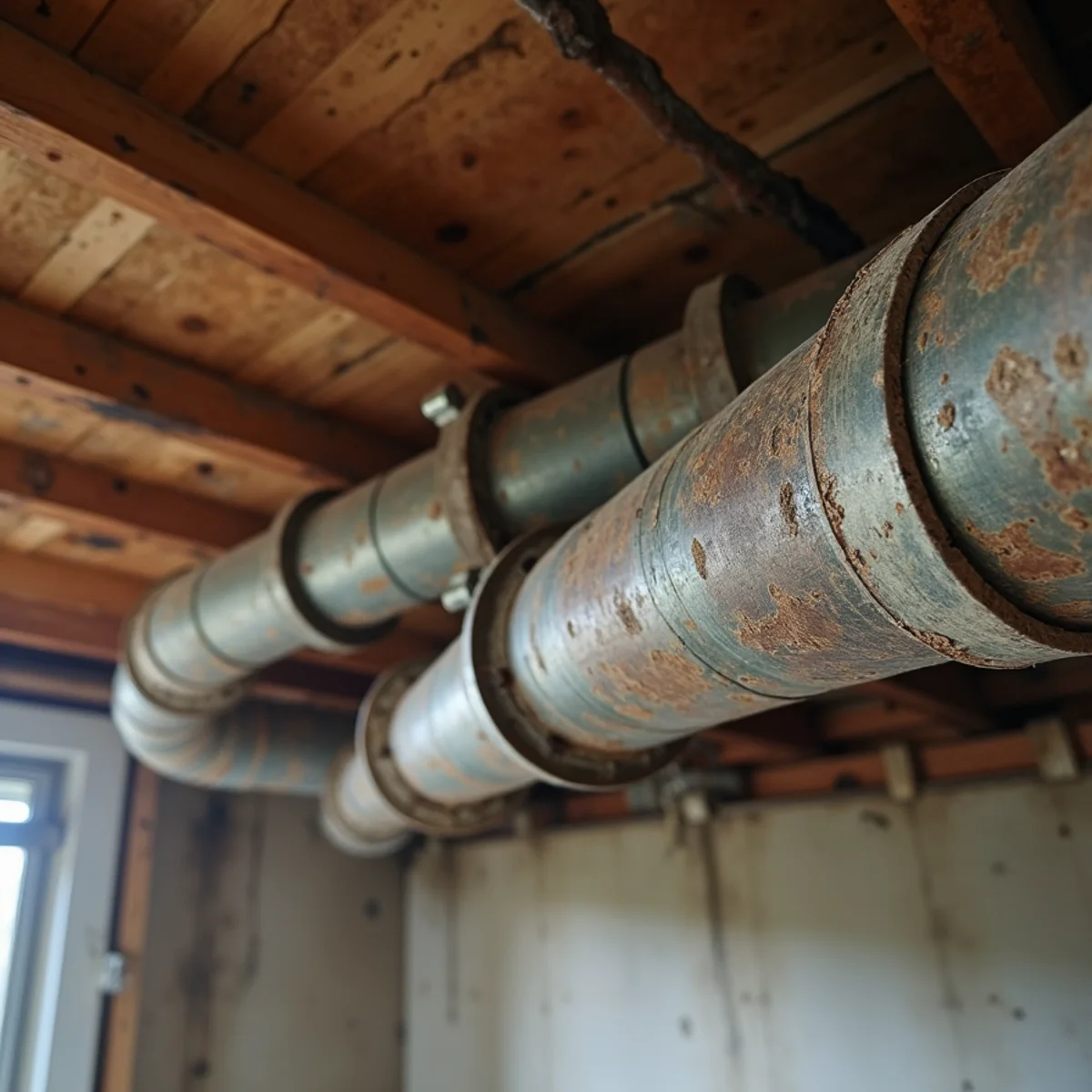
Galvanized fails by internal corrosion — scale builds, the bore restricts, the wall thins, and the pipe weeps and then splits. The warning signs run for years: rust-tinted water first thing in the morning, pressure that has quietly fallen, and corrosion crusting at threaded joints.
The copper of that era has had seventy years of hard water pitting it from the inside, which produces pinhole leaks rather than dramatic failures.
Where both metals are present in one system, the transitions are the weak points. Dissimilar metals in contact corrode preferentially at the junction, which is why so many failures in this housing are at a coupling rather than mid-run.
Add slab-on-grade construction on expansive clay and you get the fourth mechanism — soil movement abrading pipe beneath the slab through every wet and dry cycle.
The practical upshot is that Magnolia-area houses tend to fail earlier and more often than the 1960s tracts a mile away, and homeowners are frequently surprised by that because the houses look similar.