
Problem Solving
Stormwater Got Inside: What's Salvageable After a Flood and What Isn't
Storm water is contaminated by definition. Here is the keep-or-discard list, and how to document what goes before it leaves the house.
The short answer
Non-porous items can be cleaned and disinfected; porous items that absorbed contaminated water cannot. Carpet and pad, upholstered furniture, mattresses, particleboard, insulation and affected drywall all go. Metal, glass, ceramic, hard plastic, solid wood and launderable textiles usually stay. Photograph everything before it leaves the house.
Storm water that gets inside has crossed streets, driveways, lawns and storm drains before it reached your door. It is Category 3 by definition, and that changes what can be saved.
The rule that governs almost everything: non-porous materials can be cleaned and disinfected, porous materials that absorbed contaminated water cannot.
Dealing with this right now?
Crews dispatched within 60 minutes — on-site in 60–90 minutes, anywhere in Fullerton. Call and we will talk you through the first two minutes while a crew is dispatched.
- 60-minute dispatch, anywhere in Fullerton
- IICRC-aligned · licensed & insured
- Direct insurance documentation
Document First, Discard Second
Before anything leaves the house, photograph it. This is your contents claim.
Wide shots of the room with everything in place, then individual items showing the damage and the water line on them. Capture serial numbers on appliances and electronics, and any purchase documentation you can find.
Then make a written inventory as you go: item, approximate age, approximate value, and disposition. It is tedious and it is the difference between a paid contents claim and an argument.
Do not throw anything out until it is documented, even things that are obviously ruined.
What Has To Go
These are not judgement calls on a Category 3 loss:
- Carpet and carpet pad. Both, without exception.
- Upholstered furniture, mattresses, pillows, cushions and soft toys.
- Particleboard and MDF furniture and cabinetry — it swells irreversibly and cannot be decontaminated.
- Insulation of any type that got wet.
- Drywall in contact with the water plus a margin above the line.
- Food, including anything in sealed packaging that was submerged, and anything in a refrigerator that lost power for an extended period.
- Cosmetics, medicines, and baby items that contacted the water.
- Books, paper documents and photographs, unless they are irreplaceable — in which case freeze them immediately and consult a document restoration specialist.
What Can Usually Be Saved
Anything non-porous that can be physically cleaned and then disinfected.
- Solid wood furniture, if it can be cleaned and dried before it delaminates or the joints fail. Value and sentiment justify the effort here.
- Metal, glass, ceramic and hard plastic items — dishes, cookware, tools, glassware.
- Clothing, curtains and linens: launderable in hot water with detergent. Anything dry-clean-only should go to a cleaner who is told it was flood-exposed.
- Jewellery and hard non-porous valuables.
- Tile, sealed concrete, and hardwood in some cases — hardwood is borderline and depends on how long it was submerged.
- Electronics: sometimes, by a specialist, and never by switching them on to test. Water and residue inside a device will cause a short.
The Borderline Cases
Solid hardwood flooring: it can occasionally be saved with mat drying systems if the exposure was brief. Once it has cupped and then dried in a cupped shape, sanding it flat removes too much material and the damage is permanent. Speed is everything.
Antiques and heirlooms: a specialist conservator, not a general restoration crew, and the conversation is about what can be stabilised rather than what can be made new.
Appliances: the exterior can be cleaned but the motor, controls and insulation may be compromised. Have them assessed by a technician before use, particularly anything gas-fired.
Wet documents and photographs: freezing halts deterioration and buys you time to consult a specialist. This genuinely works and it is worth doing immediately for anything irreplaceable.
How To Handle What Stays
Cleaning has to come before disinfection. Disinfectant applied over soil and sediment does very little — it needs a clean surface to work on.
So: physically remove sediment and soil first, wash with detergent, rinse, then apply an appropriate EPA-registered disinfectant and allow the contact time on the label. That contact time is not optional; most products need several minutes wet to do anything.
Wear gloves, eye protection and a mask while handling anything flood-exposed. And keep salvaged items out of the house until the building itself has been cleaned and dried, or you are reintroducing contamination into a clean space.
The Insurance Complication
Worth being blunt about, because it affects how you handle all of the above.
Storm flooding — surface water entering from outside — is excluded from standard California homeowners policies and requires separate NFIP or private flood coverage.
If you do not carry flood insurance, this is likely out of pocket, and the documentation still matters for tax purposes and for any disaster assistance that becomes available.
If wind created an opening and water entered through it, that may be a covered wind loss rather than an excluded flood loss — which is exactly why the entry point and the direction of flow need photographing before anything is cleaned up.
The Documentation That Decides Whether You Get Paid
Almost every disputed contents claim comes down to the same thing: the adjuster cannot verify what was discarded or what it was worth. Once an item is in a skip, it effectively stops existing for insurance purposes.
This takes about an hour and it is the single highest-value hour of the entire cleanup. Do it before anything leaves the house.
- Photograph each room wide before touching anything, so the water line and the position of items is on record.
- Photograph individual items close enough to read model numbers and labels, especially on appliances and electronics.
- Keep a written list as you go: item, approximate age, approximate purchase price, and why it was discarded.
- Cut and keep a small sample of any carpet, pad or upholstery you dispose of — a hand-sized piece is enough for grade and quality.
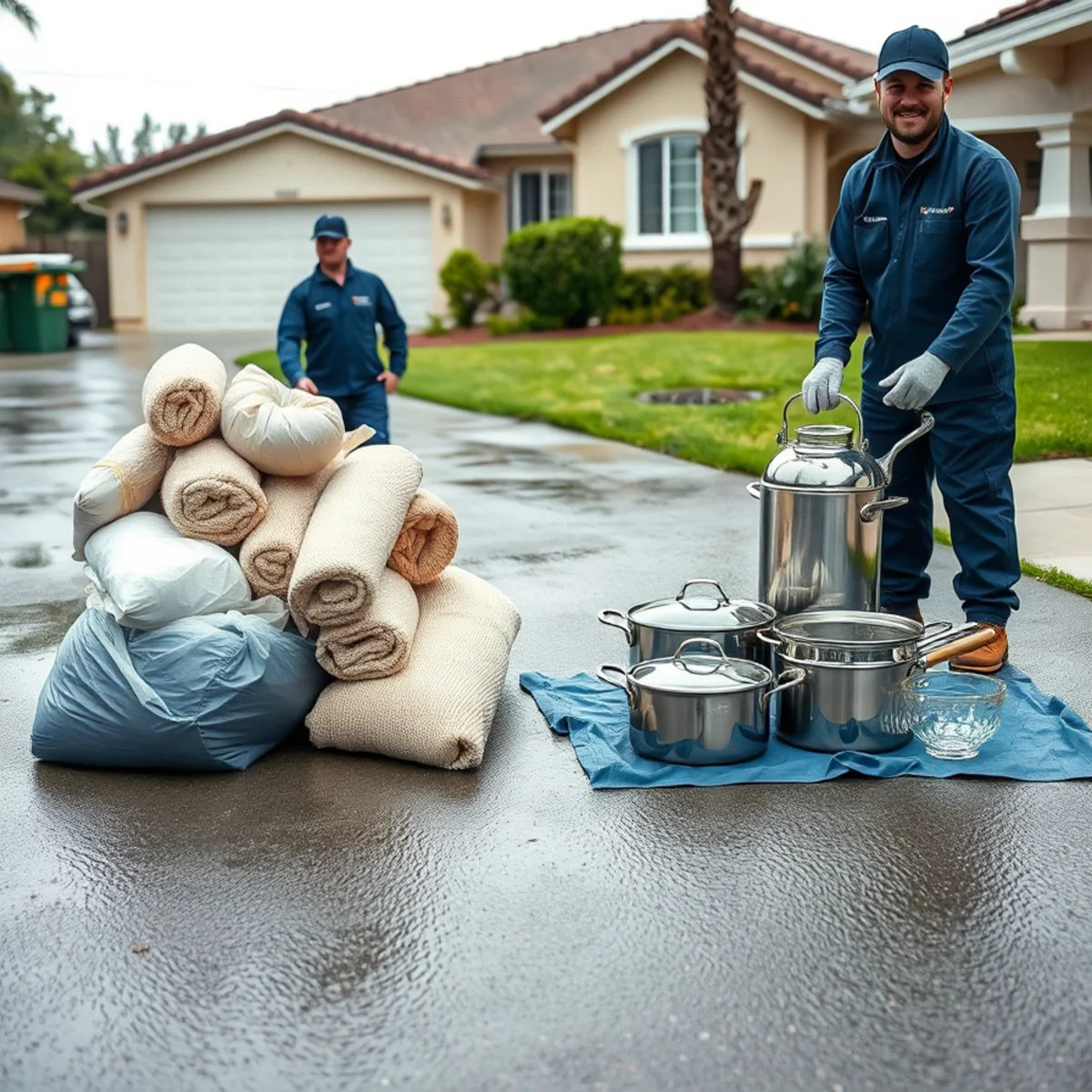
- Photograph the pile of discarded contents before it is collected, as a single verifiable record of volume.
- Do not dispose of anything at all until your adjuster has confirmed in writing that they do not need to inspect it in person.
Handling What You Keep Without Contaminating It Again
Salvage is not just a decision about what to keep. Items that survive the water are routinely lost afterwards by being stored wet, stacked together, or cleaned in a way that drives the contamination further in.
Set up a staging area on a hard surface outside the affected zone before you start moving anything into it.
- Never stack wet items. Air needs to reach every surface, and a stacked pile stays wet in the middle for days and grows mold there first.
- Get salvageable contents out of the wet room entirely. Leaving them in high humidity while the structure dries undoes the salvage.
- Hard non-porous items: wash with detergent and water first, then disinfect. Disinfecting over soil does not work — the soil protects what is underneath it.
- Clothing and soft goods from Category 2 or 3 water: hot wash separately, more than once, and accept that some will not come back.
- Wet paper, photographs and documents: freeze them in sealed bags if you cannot deal with them within a day. Freezing stops the deterioration and buys you weeks.
- Electronics that were submerged: do not power them on to test. Set them aside for a technician, and note them for the claim.
Frequently asked
Yes, in hot water with detergent, ideally washed separately from unaffected laundry and run through twice. Anything dry-clean-only should go to a cleaner who is told it was flood-exposed. Items that were submerged in obvious sewage are a harder call and worth discussing with your carrier.
Upholstered furniture and anything with particleboard, yes — the contamination is inside the material where you cannot see or reach it. Solid wood is different and often salvageable if cleaned and dried before the joints fail. The distinction is porosity, not appearance.
Freeze them, immediately, in a zip bag. Freezing stops deterioration and buys you weeks or months to consult a document restoration specialist. Do not try to separate stuck photographs while wet — that destroys them.
The bottom line
Non-porous cleans, porous goes. That single rule covers most of the decisions.
Photograph everything before it leaves the house, and freeze anything irreplaceable while you work out what is possible.