
Emergency Guides
Standing Water in the House: Is It Safe to Stay, and Who Do You Call First?
Three questions decide whether you stay: where the water came from, whether it has reached electrical, and whether the structure is sound. Here is how to answer each.
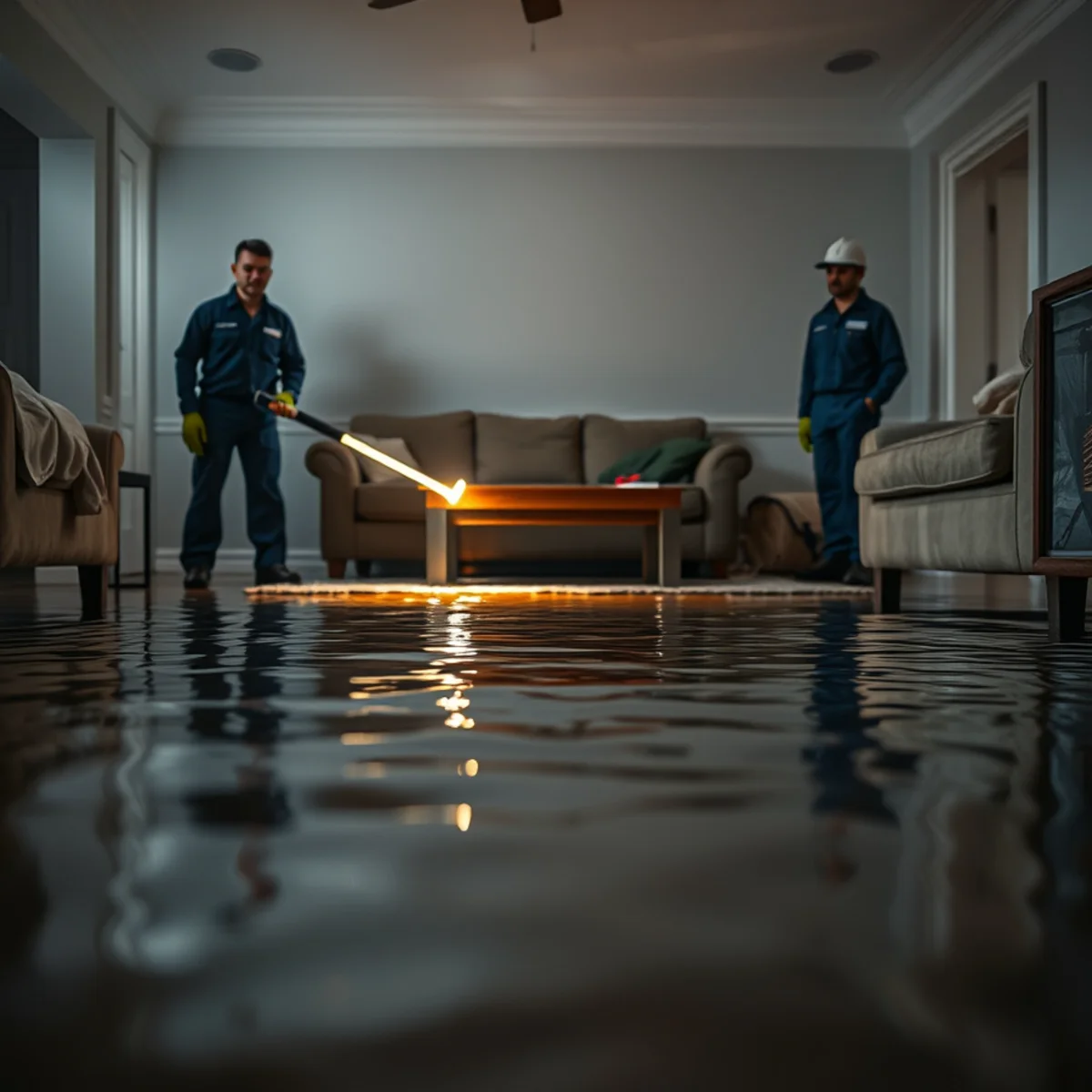
The short answer
It depends on three things: where the water came from, whether it has reached electrical, and whether anything is sagging. Clean supply water with the electrics clear usually means you can stay. Sewage, storm water from outside, compromised wiring or a bulging ceiling all mean leave and call from outside.
There is standing water in your house and you are trying to work out whether this is a nuisance or a reason to leave.
Three questions answer it. Work through them in order, because the first one changes the answer to everything else.
Dealing with this right now?
Crews dispatched within 60 minutes — on-site in 60–90 minutes, anywhere in Fullerton. Call and we will talk you through the first two minutes while a crew is dispatched.
- 60-minute dispatch, anywhere in Fullerton
- IICRC-aligned · licensed & insured
- Direct insurance documentation
Question 1: Where Did The Water Come From?
This determines whether the water is a mess or a health hazard, and the industry classifies it in three categories.
Category 1 is clean water from a supply line, a water heater, or a toilet tank. It is drinkable water that ended up in the wrong place. Safe to be around, and materials it touched are often salvageable if extraction happens quickly.
Category 2 is grey water — washing machine or dishwasher discharge, toilet bowl water without solids, a failed aquarium. It carries contamination that can cause illness. Avoid contact, keep children and pets out.
Category 3 is black water — sewage, any water from the sanitary line, and any water that came in from outside. Storm runoff is Category 3 by definition because it crossed streets, driveways and landscaping before it reached you. This carries genuine pathogens and the affected area should be treated as off limits.
A useful rule: Category 1 water does not stay Category 1. Sitting for more than about 48 hours, or running through building materials and picking up contamination, moves it to Category 2.
Question 2: Has It Reached Electrical?
This is the one that decides whether you go back in at all tonight.
Look at where the water is relative to outlets, appliances, the electrical panel and any garage sub-panel. Standard outlets sit low on the wall, and water at that height is a serious hazard.
If water has reached any energised equipment or you cannot tell, shut the affected circuits off at the panel — but only if you can reach the panel without standing in water. If you cannot, leave the house, and say so when you call. That information changes how the crew arrives and what they do first.
Never wade through standing water to reach an appliance. Never unplug something sitting in water. And if you can hear buzzing, see sparking, or smell burning, get everyone out and call the fire service.
Question 3: Is Anything Sagging Or Bulging?
Water travels down and it collects. Look up before you look down.
A ceiling with a bulge, a sag or a shiny bubble is holding pooled water. Saturated drywall gains a great deal of weight and fails all at once rather than gradually. Keep everyone out from under it.
Look at floors too. On raised-foundation homes — much of Downtown Fullerton, Lemon Park and parts of North Fullerton — prolonged water in the crawl space can affect subfloor and support. A floor that feels springy or has developed a dip where it did not have one is worth mentioning.
If there is any question about structural integrity, that is a leave-and-call decision rather than a wait-and-see one.
So Can You Stay?
For most losses, yes. A clean-water failure contained to part of the house, with electrical clear and no structural concern, is a stay-and-live-around-it situation. Drying equipment will run for several days and it is loud, but people manage.
You should relocate when any of these apply: the water is Category 3, the electrical service is compromised, there is structural damage, the loss has taken out your only bathroom or kitchen, or anyone in the household is immunocompromised, elderly, pregnant or has respiratory conditions and the water was not clean.
Additional living expenses coverage is a standard part of most California homeowners policies and it exists exactly for this. Carriers expect the call to be made on professional advice, so ask your restoration company to document the recommendation — that makes the claim straightforward rather than a negotiation.
Who To Call, In Order
There is a correct sequence and it is not the obvious one.
Restoration company first
They stop the loss growing. Extraction is time-critical in a way that nothing else on this list is, and your policy already requires you to take reasonable steps to prevent further damage.
Plumber second, or let the restoration company coordinate one
The source repair matters, but once the water is shut off it is not an emergency in the same way.
Insurance carrier third
File the claim once the water has stopped and you can talk without standing in it. Starting mitigation before you call does not prejudice anything.
Utility company if relevant
If the loss involves gas, or if you suspect a municipal main break rather than your own plumbing.
What To Do While You Wait
Photograph and video everything before anything moves. Wide shots of each room, close-ups of the source, and the water lines on the walls — those lines establish how high the water stood and adjusters use them to set the scope.
Lift what you can. Electronics, documents, photographs, anything irreplaceable. Foil or blocks under furniture legs on carpet so finish does not bleed.
And leave the big things alone. Do not pull up carpet, do not cut drywall, do not run a shop vac over standing water. Those decisions are better made with a moisture map than with a guess, and undoing a well-intentioned mistake costs more than the mistake saved.
When to Leave Regardless of the Water
The questions above cover the ordinary decision. There are a handful of conditions where the answer is simply leave now and ask questions from outside, because the risk is not proportional to how much water you can see.
None of these are judgement calls. If any one of them applies, get everyone out, including pets, and make the calls from a neighbour's house or the car.
- Any smell of gas, or a water heater or furnace that has been submerged. Water and gas appliances together is an evacuation, not an assessment.
- Visible sparking, buzzing from an outlet or panel, or any tingling sensation when touching a wet surface or appliance.
- A ceiling that is sagging, bulging or holding a visible pocket of water. That is hundreds of pounds and it fails suddenly.
- Sewage across a floor in a home with infants, elderly residents, anyone pregnant, or anyone immunocompromised or on chemotherapy.
- Any structural sound — cracking, popping, or a door frame that has visibly moved since the water arrived.
- Floodwater from outside the building, which may carry sewage, pesticides and fuel regardless of how clean it looks.
All 4 steps, in pictures
Each image matches the numbered item above it in the same order.
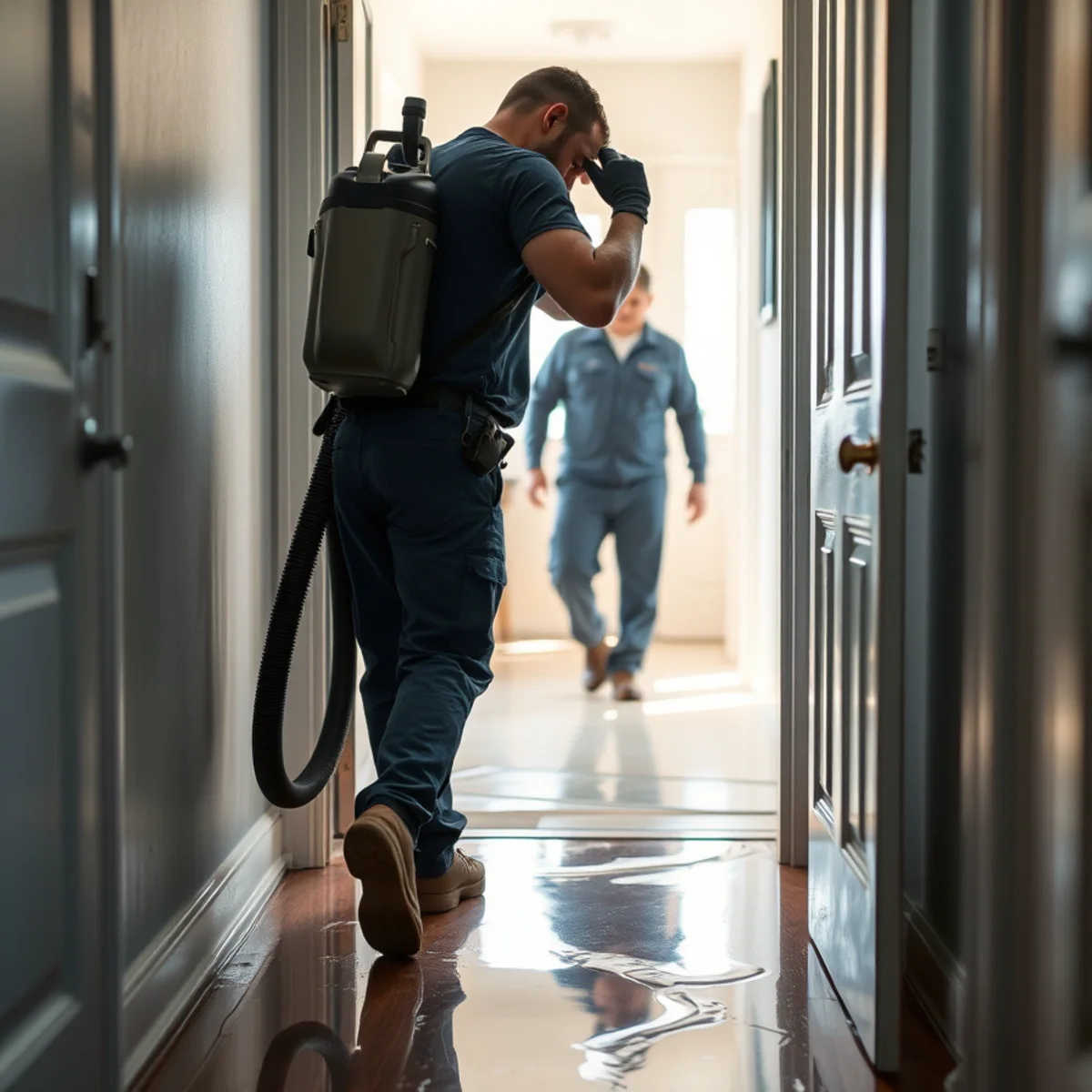
Calling a restoration company first to stop a water loss spreading
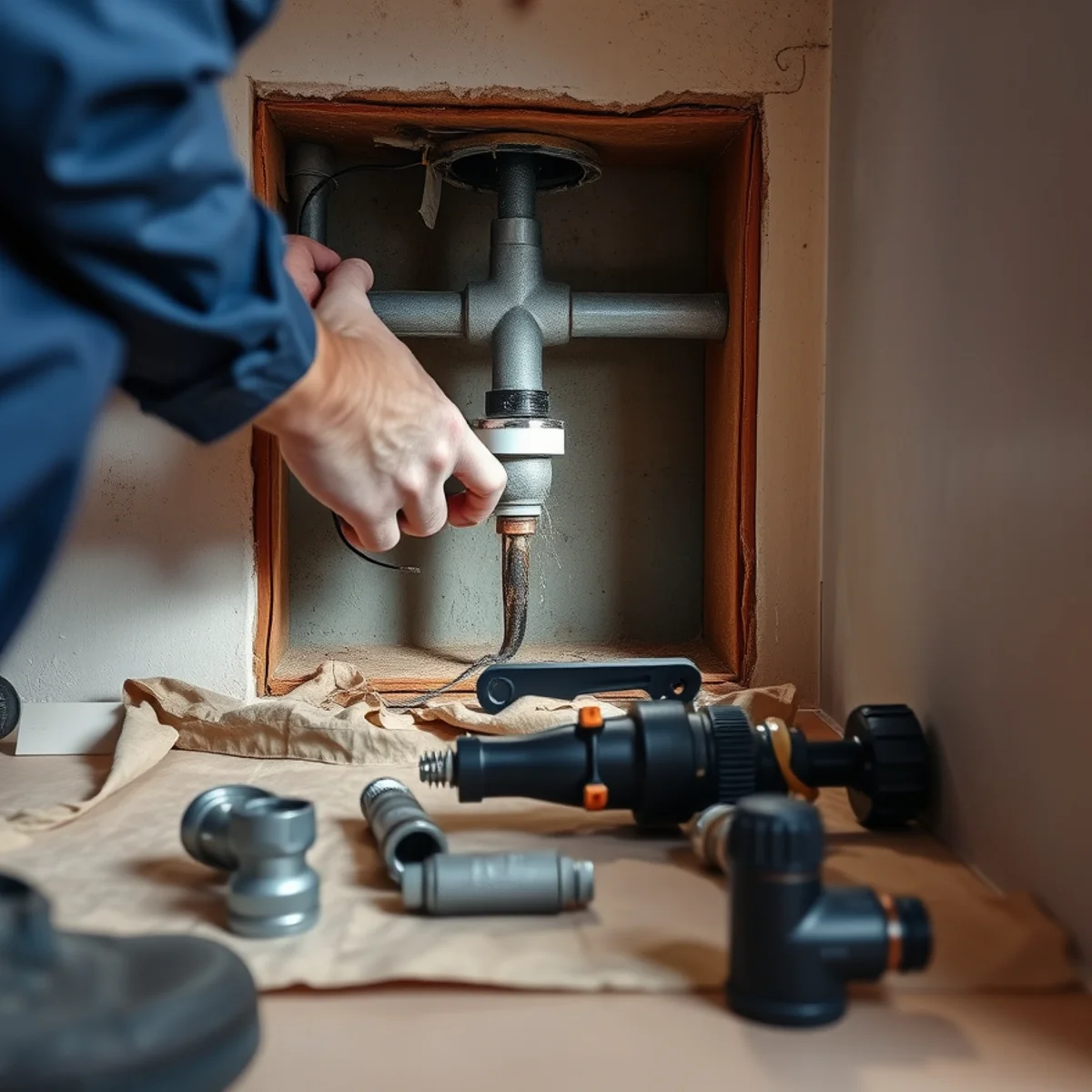
A plumber repairing the source of a water leak in a home

Reporting a water damage claim to an insurance carrier
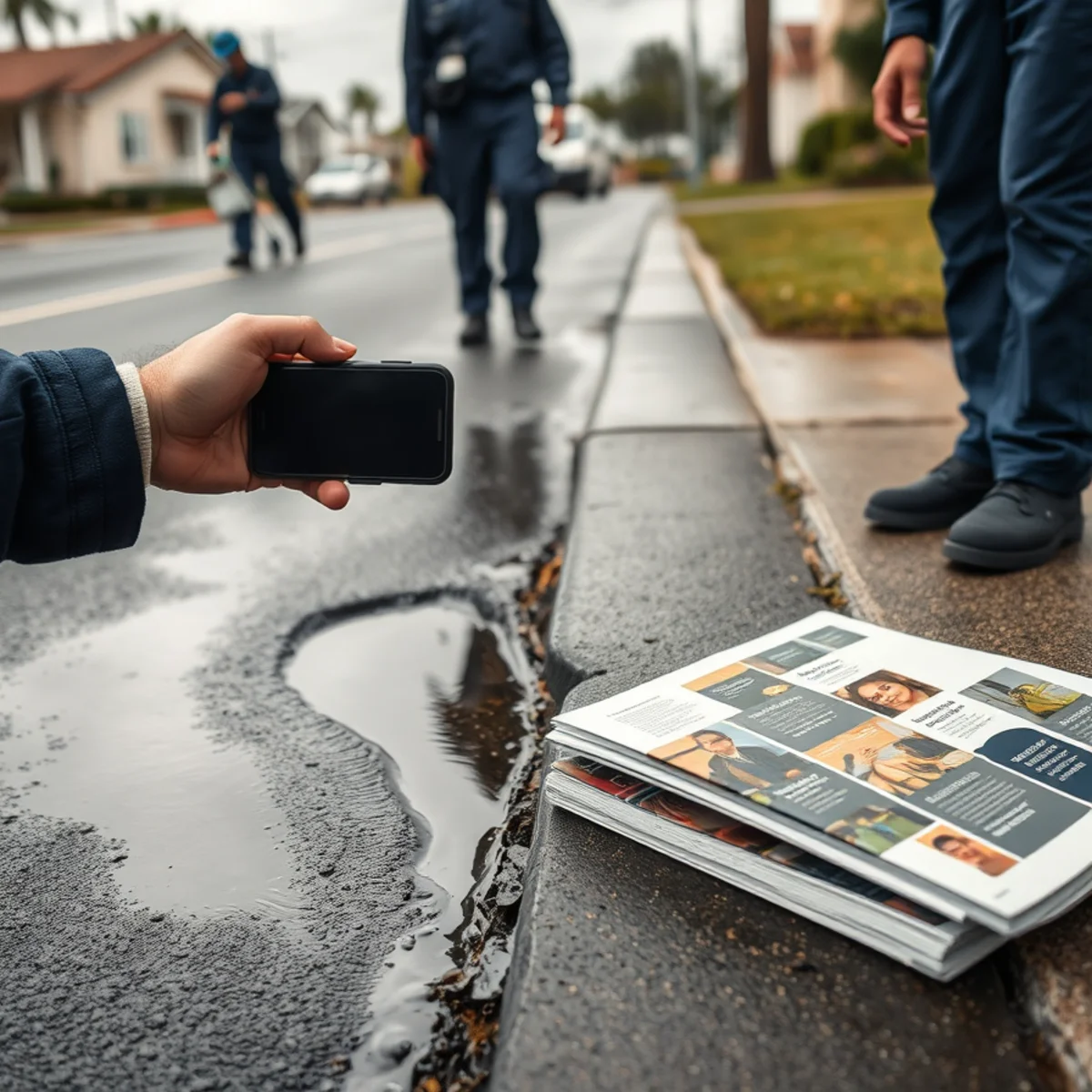
Contacting the utility company about a suspected main break
Frequently asked
Clean supply water degrades to Category 2 within roughly 48 hours as it picks up contamination from building materials and whatever was on the floor. Mold colonisation on wet cellulose materials begins in the same 24 to 48 hour window. Category 3 water is hazardous from the moment it arrives.
Most standard California homeowners policies include additional living expenses coverage for exactly this situation. Carriers generally expect the decision to be based on professional advice, so have your restoration company document why the property is not habitable — that turns it into a straightforward claim.
Yes, for a clean-water loss with electrical clear. It is loud — air movers run around 60 to 70 decibels — but there is no hazard. Please do not switch the equipment off overnight, though; drying is cumulative, and eight hours of stalled evaporation typically adds a full day and gives mold a window.
The bottom line
Water source, electrical, structure. Those three answers tell you whether to stay.
If any of them come back badly, leave and call from outside. Nothing in the house is worth more than the household.