Category 1, 2, or 3? Why the Type of Floodwater Changes the Entire Cleanup
The category is the first thing a restoration crew establishes, because it decides what gets dried, what gets removed and what the job costs.
Read the guide24/7 emergency line — crews dispatched within 60 minutes
1500 S Raymond Ave, Fullerton, CA 92831

11–16 minutes from our Fullerton base
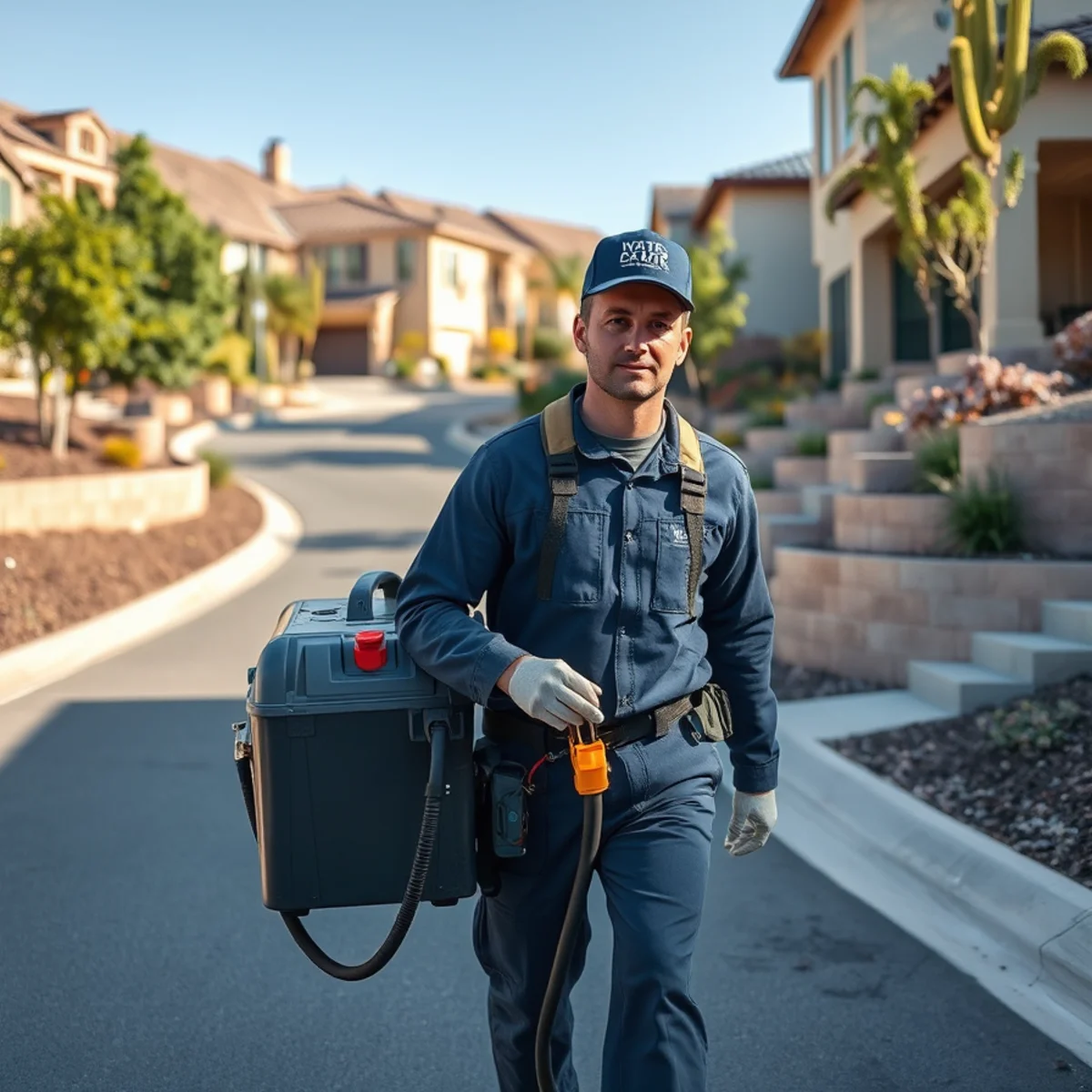
West Coyote Hills is newer development on the western hills, built on land that spent most of the twentieth century as an oil field. It is eleven to sixteen minutes from our base.
Newer homes on graded ground have a specific pair of problems, and neither of them is the corrosion story that dominates the rest of Fullerton.
West Coyote Hills: 11–16 minutes · dispatch within 60 minutes
+1 (201) 277-9344Nothing is corroding here. The supply piping is modern, the drains are ABS, and the whole-system decline that drives our work in Valencia and downtown does not apply.
What fails is components. Angle stops, flexible supply connectors, toilet fill valves, water heater fittings, appliance supply lines — service lives measured in years rather than decades. Newer homes also have more of them, because they have more water-using appliances and more bathrooms than the 1960s houses down the hill.
The plans are large and usually two-storey, frequently with upstairs laundry. A small failure on a second floor puts water into the floor assembly and through the ceiling below before anybody notices, which is why the ceiling losses here are so much bigger than the failures that cause them.
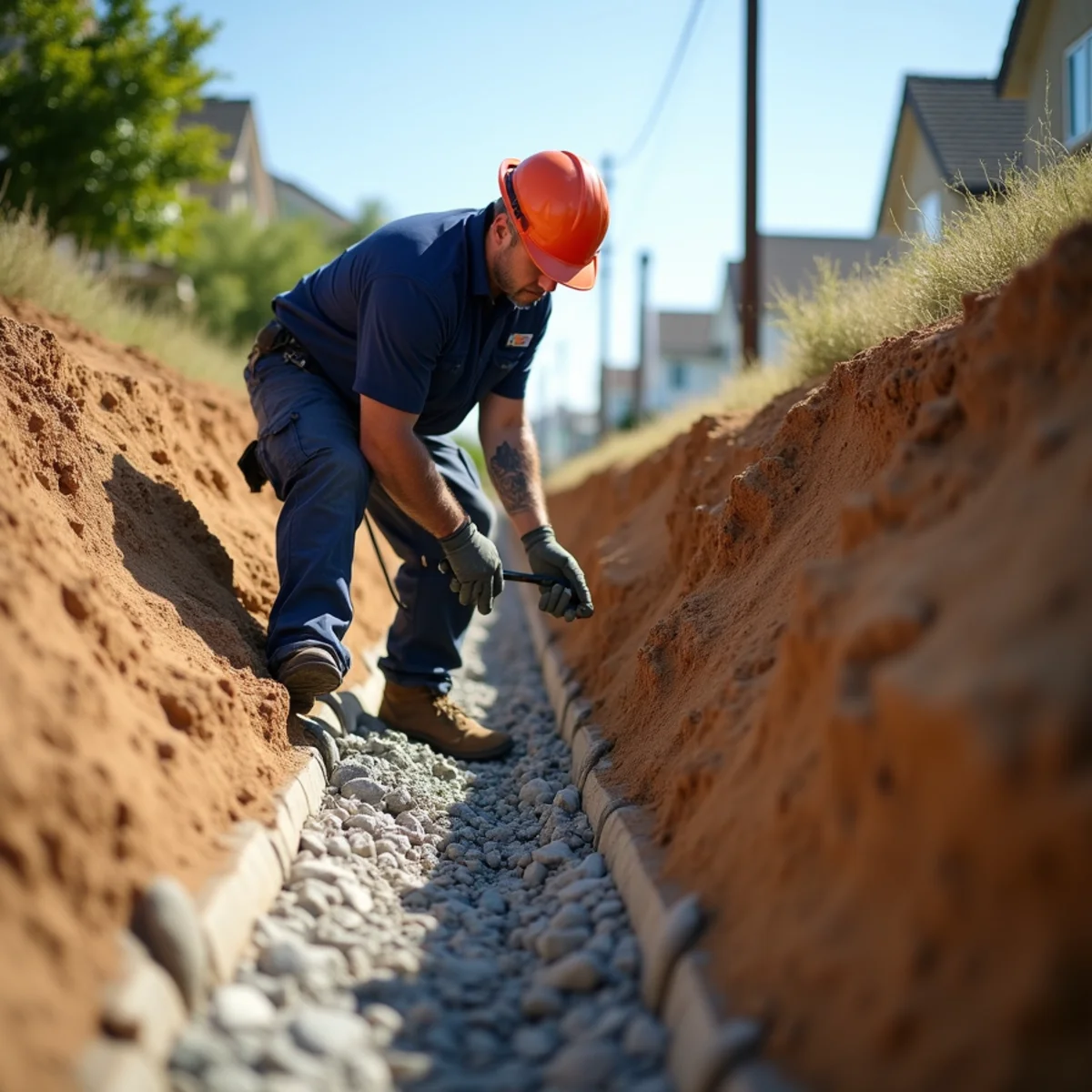
The site is the second factor. Development on hillside ground involves substantial grading and engineered fill, and the drainage that manages surface water on a graded slope — swales, area drains, subdrains, terrace drains — is essential rather than optional. Those systems are new enough to work now and will need maintenance long before anyone thinks about them.
Newer homes may also still be within builder warranty periods for certain components, which is worth checking before assuming a loss is entirely a claim.

The classic call is an upstairs laundry or bathroom into a downstairs ceiling. The failure is trivial and the damage is not.
What matters technically is the floor assembly between the two levels. Drying the ceiling below and the room above while leaving the joist bay wet is the most common way these jobs get done badly, and it is the reason for a musty smell six weeks later. We meter the cavity.
On the drainage side, the advice for a newer hillside property is to know where your area drains and swales are while they are still visible, and to keep them clear. Landscaping installed after handover very often buries or redirects the drainage the site was engineered with, and that problem surfaces in a storm five years later.
For any two-storey plan with upstairs plumbing, leak sensors and an automatic shut-off on the main are the highest-value preventive spend available.
The scopes we run most often at this address type. Every one is available 24/7.

Find the source, dry the cavity, then repair the ceiling — including asbestos-aware handling of pre-1980 textured ceilings.
Ceiling Water Damage in FullertonA real person answers at 3 a.m. Crews dispatch within 60 minutes, on-site in 60–90, with extraction gear on the first truck.
Emergency Water Removal in FullertonEmergency tarping and board-up first, then extraction, drying and repairs — with the wind-versus-flood documentation your claim depends on.
Storm Damage in FullertonOne company from the first extraction to the final coat of paint — no handoff between a mitigation crew and a rebuild contractor.
Residential Restoration in FullertonBalanced air movers and dehumidifiers, daily moisture logs, and a documented dry standard — so nothing is left wet behind the wall.
Structural Drying in FullertonNew homes on engineered ground: component failures inside, and drainage that has to keep working outside.
From our S Raymond Ave base, dispatched inside the hour.
The joist bay between storeys holds most of the water and is the part most often left wet.
Graded hillside lots depend on swales, area drains and subdrains. Landscaping added after handover frequently buries them.
On newer West Coyote Hills homes some component failures may still fall under warranty — worth checking before assuming it is purely a claim.
About different things. New homes do not corrode, but they fail at components — connectors, valves, appliance hoses — and they have more of those than older houses. Large two-storey plans with upstairs laundry also mean a small failure travels through a floor assembly before it becomes visible.
Possibly, depending on the age of the home and what failed. Structural and system warranties vary in length and coverage. It is worth checking before assuming the loss is purely an insurance claim — we document cause and origin either way, and that documentation supports a warranty claim as readily as an insurance one.
Because the site was engineered to move surface water in a particular way, and that design depends on swales, area drains and subdrains staying clear and unaltered. Landscaping added after handover frequently buries or redirects them, and the consequence only appears during a heavy storm years later.
Possibly, depending on the age of the home and what failed. Structural and system warranties vary in length and coverage, and it is worth checking before assuming the loss is purely an insurance claim. We document cause and origin either way, and that documentation supports a warranty claim as readily as an insurance one.
We cover West Coyote Hills alongside the surrounding neighbourhoods and cities.
Homes adjacent to the Coyote Hills golf course and creek corridor; the highest flood exposure in Fullerton plus clay-soil movement.
2000s–2010s master-planned community near downtown; newer homes with builder-grade components now in their first repair window.
1960s–70s view homes on elevated terrain; wind-driven rain penetration and expansive clay-soil foundation cracks.
1950s–70s tracts toward the Buena Park border; uniform construction era means simultaneous repipe demand across whole blocks.
A mix of 1940s–50s ranches and 1960s–70s tracts; older sewer laterals and mature landscape root intrusion across two construction eras.
The category is the first thing a restoration crew establishes, because it decides what gets dried, what gets removed and what the job costs.
Read the guideCrews dispatched within 60 minutes — on-site in 60–90 minutes. Fullerton Water Damage Pros · 1500 S Raymond Ave, Fullerton, CA 92831 · +1 (201) 277-9344.